
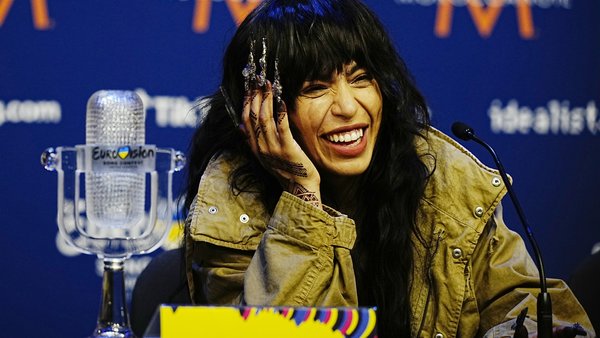
Eurovision has long ceased to be a one-shot contest. Every year, artists who have represented their countries before return to the stage — sometimes after a few years, sometimes after decades. For some, it's a chance for revenge, for others, a way to consolidate success or restart their careers in front of a multimillion-dollar audience.
Public Culture recalls the most famous cases of such comebacks and explains why returning to Eurovision has become a systemic practice, not an exception.
Why artists return to Eurovision
Eurovision is one of the largest television formats in the world, attracting hundreds of millions of viewers every year. For example, in 2024, over 163 million viewers watched the event on public broadcasting channels, and votes were received from 156 countries.
That's why returning to the competition has pragmatic reasons. It often happens for several reasons.
Relaunching a career : participating in the contest attracts the attention of a large audience, so re-participation provides excellent listening to songs, as in addition to the contest song, listeners study the artist's discography. A striking example is the representative of the United Kingdom, Sam Ryder, who before participating in Eurovision was popular thanks to his covers on TikTok, but after winning silver at the contest, he gained great popularity in Europe.
This also includes changes in musical image – a new style and a new era of the artist. Here, an example is the two-time winner from Sweden, Lorin. In 2012, the singer won with the song Euphoria , but in 2023 she took to the stage in a new image. Her songs became more electronic, and her image added long nails, which became her calling card.
 Swedish singer Loreen during the Eurovision Song Contest awards ceremony in 2012 in Baku (left) and in 2023 in Liverpool (right). Getty Images
The political and image factor at Eurovision is about controlled risk. Countries don't always want to experiment, so they choose already well-known artists to guarantee a result, media attention, and a clear signal to the outside world. An example here is Sergey Lazarev from Russia, who represented the country before being suspended in 2016 and 2018 — in both cases he came in third place.
The King and Queen of Comebacks
Sweden can without a doubt be called one of the strongest countries in Eurovision. In its 62 years of participation, it has won seven times. It shares this record with Ireland. In addition to its victories, Stockholm can boast that its representative Lorin is the only woman to have won the contest twice.
The first time was in 2012 in Baku, Azerbaijan. Since then, Euphoria has become a Eurovision manifesto and has received over 178 million streams on Spotify and over 120 million on YouTube Music.
However, this success was not immediately consolidated. In 2017, the singer tried to return to Eurovision through the national selection Melodifestivalen with the song Statements , but could not even reach the final. This was a revealing moment: even after a resounding victory, an attempt at a comeback does not guarantee a result.
A full comeback only took place in 2023. Lorin won the Swedish selection again and went to the contest with the song Tattoo . Her comeback was not just successful – it solidified her status as one of the most influential artists in the history of the contest and showed that even after unsuccessful attempts, it is possible to return to the top.
Before Lorin, the only artist to win Eurovision twice as a solo artist was Johnny Logan , representing Ireland, who won in 1980 and 1987 with the songs What's Another Year and Hold Me Now , respectively.
His first win in 1980 was a breakthrough for Ireland, which went on to become one of the most successful countries in the contest. But Logan's real phenomenon was his comeback. Seven years later, he returned to the Eurovision stage and won for the second time, which at the time seemed an almost impossible scenario.
What's more, his influence on the contest is not limited to his performances. In 1992, he wrote the song Why Me? for Linda Martin, which also brought Ireland victory. Logan thus became the only person in Eurovision history to have won three times – two as a performer and one as a writer.
That is why he is called the “King of Eurovision”. His case remained unique for a long time: for more than 30 years, no one could repeat the double triumph as an artist. And only in 2023, this status was partially shared by Lorin, but even then Logan retained his exclusivity thanks to his third victory as an author.
Successful and unsuccessful returns
Returning artists to Eurovision is a systematic practice that spans dozens of countries and different periods of the contest. It is most often resorted to by broadcasters who want to combine experience, recognition, and predictable results. Participants who have already performed on this stage better understand the format and audience expectations, which reduces the risk of failure.
Alexander Rybak from Norway
The performer became one of the brightest winners of Eurovision in the 21st century. In 2009, he represented Norway with the song Fairytale and set a record: he scored 387 points – the highest result according to the voting system at the time. His performance won over audiences across Europe, and the song topped the charts in many countries, turning Rybak into an international star.
Nine years later, in 2018, Rybak decided to return to the Eurovision stage, representing Norway with the song That's How You Write a Song . However, the result was more modest – fifteenth place. The return was not as triumphant as expected. In his performance, he again used the key element of the previous performance – the violin. But this time it did not bring victory.
Mahmoud and Marco Mengoni from Italy
In 2019, Mahmoud represented Italy with the song Soldi (“Money”) , coming in second place and making a real breakthrough with an international audience. Thanks to this performance, his career reached a new level: the song topped the charts in Europe, and the artist himself became famous not only in Italy.
Three years later, in 2022, Mahmoud returned to Eurovision in a duet with Blanco with the song Brividi , again representing Italy. Although this time he came in sixth place, it was a logical step in maintaining his popularity and strengthening Italy's image as a country that sends strong and recognizable artists.
Marco Mengoni is also an example of an artist who returned to the contest after many years. In 2013, he made his Eurovision debut, representing Italy with the song L'essenziale . He came in seventh place. The performance cemented his status as one of the leading Italian vocalists, and the song was highly praised by critics and audiences.
Ten years later, in 2023, Mengoni returned to the competition stage to represent Italy once again. The return was part of the broadcaster's strategy to rely on well-known and proven artists who could represent the country with dignity – he came in fourth place. His return attracted the attention of the media and fans, showing that experience and recognition can work as a strong factor in success at Eurovision.
Lena Mayer-Landrut from Germany
The singer became one of the most famous Eurovision contestants from Germany thanks to her victory in 2010 with the song Satellite . Leni was 18 years old at the time of her victory, making her one of the youngest winners of the contest in recent decades.
Her performance captured the attention of millions of viewers across Europe, and the song itself topped the charts in several countries. Lena's victory gave Germany its first triumph at the contest in 28 years.
A year later, in 2011, Lena returned to the Eurovision stage with the song Taken by a Stranger . This time, she took tenth place.
Poli Genova from Bulgaria
Polly Genova is one of the most famous Eurovision contestants from Bulgaria. She first represented the country in 2011 with the song Na inat , but did not make it to the final.
Five years later, in 2016, Poli returned to the contest stage with the song If Love Was a Crime . This performance was one of the most successful for Bulgaria: she reached the final and took fourth place – the country's best result at that time. In 2017, she was surpassed by Kristian Kostov (second place).
Her participation demonstrated how a repeat appearance at Eurovision can dramatically change an artist's success and attract international attention.
Polly Genova became not only a performer, but also an important figure in the development of Eurovision culture in Bulgaria. After her second successful performance, she began to actively participate in the national selection, sometimes as a commentator or expert for the broadcaster BNT (Bulgarian National Television). She was also the host of the Junior Eurovision Song Contest in Sofia in 2015.
Sakis Rouvas from Greece
Sakis Rouvas , one of the country's most famous pop artists, has represented Greece twice. In 2004, he represented Greece with the song Shake It and came in third place in the final, one of the country's best results at the time and cementing his status as a national star.
Five years later, in 2009, Rouvas returned to Eurovision with the song This Is Our Night . His second entry was less successful, finishing seventh in the final. Nevertheless, both performances confirmed the effectiveness of this comeback approach.
Duo Jedward from Ireland
Ireland became one of the few countries to have selected the same duo twice in a row, Jedward. In 2011, they represented the country with the song Lipstick and came in eighth place, Ireland's best result in over a decade. The following year, broadcaster RTÉ selected them again. In 2012, Jedward performed with the song Waterline , again qualifying for the final, but came in nineteenth place.
Valentina Monetta from San Marino
Valentina Monetta is one of the most famous contestants from San Marino. She has participated in the contest four times. She debuted with the satirical song The Social Network Song (2012) and did not make it to the finals, and in 2013 she performed with the track Crisalide – again without making the finals.
The real breakthrough came in 2014 with the song Maybe , when she first reached the final and took twenty-fourth place – the country's first final in Eurovision history. In 2017, with the track Spirit of the Night, Valentina reached the final again, improving her result to nineteenth place. Her participation demonstrates that even representatives of small countries can become noticeable on the international stage and consolidate the status of permanent participants, albeit with not very successful positions.
Dima Bilan from Russia
Dima Bilan is an example of a comeback that turned into a triumph. He first represented Russia in 2006 with the song Never Let You Go and came in second place. Even then, he was considered a potential winner. In 2008, Bilan returned with the song Believe – a performance complemented by the propagandist figure skater Evgeni Plushenko and violinist Edwin Marton . The strategy worked: Russia won its first and only victory in the contest.
In the following years, the artist's image changed significantly. After the start of Russia's full-scale invasion of Ukraine, Bilan publicly supported the aggression and participated in events related to the state cultural policy of the Russian Federation.
Under a different flag
There are also cases when artists return, representing other countries. For example, singer Anna Vissi has appeared on the stage of the contest three times: in 1980 from Greece with the song Autostop (eighth place), in 1982 from Cyprus with the song Mono I Agapi (fifth place), and in 2006 again from Greece with the song Everything .
Her return in 2006 was one of the most high-profile comebacks of the time: Vissi was already a big star on the Greek pop scene, and the country consciously bet on her name as a guarantee of a strong result. Despite high expectations and extensive preparation, she took ninth place in the final. Her case is indicative in that it combines several aspects of Eurovision at once: multiple participation, representation of different countries and the use of already famous artists as an image resource.
Anne-Marie David is another prime example of multiple Eurovision entries and country changes. In 1973, she represented Luxembourg with the song Tu te reconnaîtras and won, giving the country one of its five wins in the contest's history.
Later, in 1979, the singer returned under the French flag with the song Je suis l'enfant soleil . Despite her status as the previous winner, this time she came in third place in the final, which was still a strong result. Her case demonstrates that successful artists can remain competitive even after winning.
In the end, such cases only emphasize: returning to Eurovision is not an exception, but a separate strategy that countries are actively using.
Return in 2026
This trend has been renewed in 2026. Estonian band Vanilla Ninja is returning to the contest after participating in 2005 (representing Switzerland), but this time under the Estonian flag with the song Too Epic To Be True.
Their case demonstrates two trends at once: a comeback after a long hiatus, and a change of country of representation. This is an example of how broadcasters can work with nostalgia for the zeros, adapting artists to modern sound and audience expectations.
A similar logic can be seen in San Marino, where they are once again betting on Senhit , an artist who already has Eurovision experience. In 2026, she returns with the song Superstar in a duet with Boy George . In this case, it is not just a comeback, but also an attempt to strengthen the performance with an international name, which should attract additional attention to the country.
She first represented the country in 2011 with the song Stand By , but failed to reach the final. After that, her name disappeared from the Eurovision agenda for a while, but she remained associated with the contest and the music industry.
Her comeback came in 2021 with the song Adrenalina , recorded with American rapper Flo Rida . This performance was much more successful: Senhit reached the final and took twenty-second place, and the song itself received widespread media attention due to international collaboration. It was a clear signal that San Marino was betting not only on participation, but also on global recognition through collaboration.
In conclusion, the stories of Eurovision comebacks show that the contest has long since turned into a complex system of strategies — from career restarts to image decisions of states. Repeat participation can either consolidate success or completely change the trajectory of an artist. And as long as Eurovision remains a global platform with an audience of millions, the practice of comebacks will continue.
Follow us on Facebook, Instagram and Telegram, watch our YouTube and TikTok
Share your story with Suspilne Kultura. You can contact us on social networks and by mail: [email protected]