
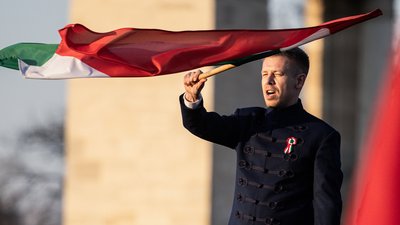
“As Hungarians, we reject war and violence and leave intimidation and warmongering in the past. We are not afraid! We have learned from our ancestors that nothing lasts forever,” said Peter Magyar during a large-scale demonstration in downtown Budapest on March 15. Indeed, the “eternity” of his main opponent, the current Prime Minister of Hungary, Viktor Orbán, in power has come to an end. After 16 years of uninterrupted tenure as Prime Minister, Fidesz suffered an unprecedented defeat in the parliamentary elections on April 12: Magyar’s party, Tisza, won not just a majority in parliament, but more than two-thirds of the seats, which will allow him to change the country’s constitution.
Magyar appeared in Hungary's “big politics” suddenly – before the 2024 European Parliament elections – and quickly gained unprecedented support. A lawyer, an official with experience in Brussels and Budapest, a relative of Hungarian ex-president Ferenc Madl and the former husband of Justice Minister Judit Varga in two governments of Viktor Orban, Magyar came from the same power vertical that he has been consistently destroying in his statements since 2024. In particular, he points to corruption in key state offices and the fact that Orban's belligerent rhetoric is fueled by Moscow. Suspilne tells about Magyar's path to the election campaign and how he reached the prime minister's chair in a country where it has been held by one person for more than a decade and a half.
An unexpected rival
“We have won such a great victory that it can be seen from the moon, not to mention Brussels,” Viktor Orban declared after the results of the 2022 parliamentary elections in Hungary became known. The ruling bloc of the current Hungarian Prime Minister then confidently overtook six parties of the united opposition. His opponents won 57 seats in parliament out of 199, Orban's political force – 135. Celebrating his triumph, Orban kept reminding himself that he would remember this victory for the rest of his life, because “so many of them turned against us.” By everyone, he meant the opposition within the country, the “bureaucrats in Brussels,” and – even then – the President of Ukraine Volodymyr Zelensky, who asked for a more pro-Ukrainian position towards the country at war.
On the eve of the 2022 elections, six opposition parties in Hungary united around Peter Marky-Zay, a non-partisan conservative mayor of the provincial town of Godmezévasárhely. The United for Hungary coalition was frankly fragile and extremely heterogeneous: it included both center-left pro-European and right-wing Eurosceptic parties like Jobbik. This was all too obvious to the Hungarian voter. After the elections, the opposition coalition did not survive the internal struggle and eventually fell apart. Support for the opposition in Hungary reached a historically low level. And although inflation led to the impoverishment of the population, Fidesz continued to remain the most popular party in the country.
This was until February 2024. Then a major shock hit the Hungarian political scene — a scandal over a pardon in a pedophilia case. The director of an orphanage near Budapest was sentenced to eight years in prison for abusing and abusing children. But his deputy, also convicted of covering up for the director, was found on the list of 25 pardoned on the occasion of the Pope's visit to Hungary. The decision to pardon was made by Hungarian President Katalin Novak, an ally of Orban and one of the main faces of the Fidesz party. When this was learned, a scandal erupted. Novak announced her resignation, as did the then Minister of Justice, Judit Varga, who Orban had already announced as the leader of the Fidesz list in the European Parliament elections, which were due to take place in a few months.
Judit Varga is the ex-wife of Peter Magyar. And on February 10, when it became known about the resignations, Magyar published a viral post on his Facebook, where he claimed that Orban had unfairly “shedded” all the consequences of the pardon on two women in his team, and he himself tried to distance himself from this story. Magyar decided to act: he announced his resignation from management positions in all government or government-related structures — and at that time he was a member of the supervisory board of the state bus carrier, as well as one of the largest banks in Hungary, MBH Bank Nyrt.
Then Magyar went on to interview popular YouTubers: his conversation with the large independent channel Partizán has already garnered over 2.8 million views — almost a third of Hungary’s population. In it, Magyar emphasized that he had evidence of the government’s role in covering up corruption at the highest echelons of Hungarian power.
At first, Magyar allegedly did not declare any political ambitions, but soon announced the creation of the movement “Rise, Hungarians!” This was not just a protest slogan: Magyar used references to the slogan of the Hungarian revolution during the “Spring of Nations” A period of active emergence of nation states in Europe. In Hungary there was also a national liberation movement, during which the Hungarians achieved the abolition of serfdom and greater autonomy. However, the joint forces of Austria and the Russian Empire in 1849 suppressed the movement of the Hungarian people for independence. 1848. In 2024, tens of thousands of people took part in anti-government demonstrations with him.
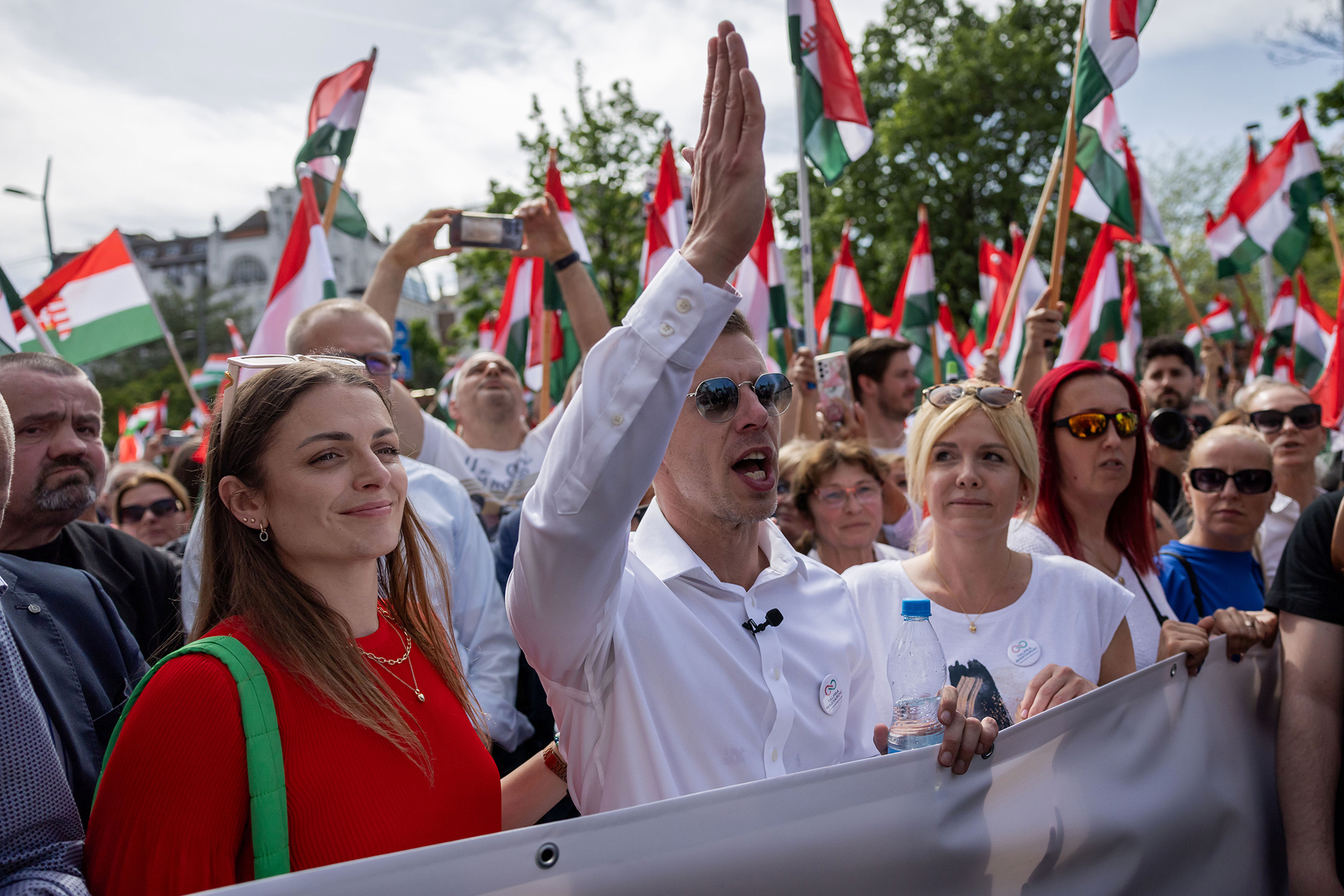 Peter Magyar with his supporters during a demonstration in Budapest on April 6, 2024. The pardon scandal in a pedophilia case, which also involved Magyar's ex-wife and Justice Minister Judit Varga, has sparked a wave of anti-government protests in Hungary. Getty Images/Janos Kummer
There were only a few months left before the European Parliament elections, and despite his considerable personal popularity and public support, Magyar did not have time to register a new political force. Therefore, he decided to run under the banner of the TISZA party, an existing, albeit little-known political force in Hungary. Its name, in addition to its similarity to the Tisza, one of the largest rivers in Hungary, is also an abbreviation of the phrase “Party of Respect and Freedom”. Previously, “Tisza” was a center-right party, but Magyar tried to avoid such a definition in order to reach as many voters as possible. He positioned it as the main political force that seeks to remove “Fidesz” from power. The party’s slogan in the campaign for the European Parliament was “Tisza is overflowing”.
The party then received 29.5% of the vote. Fidesz’s victory was still undisputed: Orbán’s party won 44.6% of the vote and 11 out of 21 MEPs, while Tisza won 7. However, this result was Fidesz’s worst performance in the European Parliament elections in two decades and was significantly lower than the expectations shown by opinion polls. “Although the history of this party [Tisza] is less than two years old, Magyar demonstrated real, genuine political talent and dedication to the cause, enormous work capacity and diligence. He convincingly stated that he really wants to overthrow this regime, and that he really has no other choice, because he has become its enemy,” says Gabor Toka, a sociologist and senior researcher at the Blinken OSA Archivum at the Central European University.
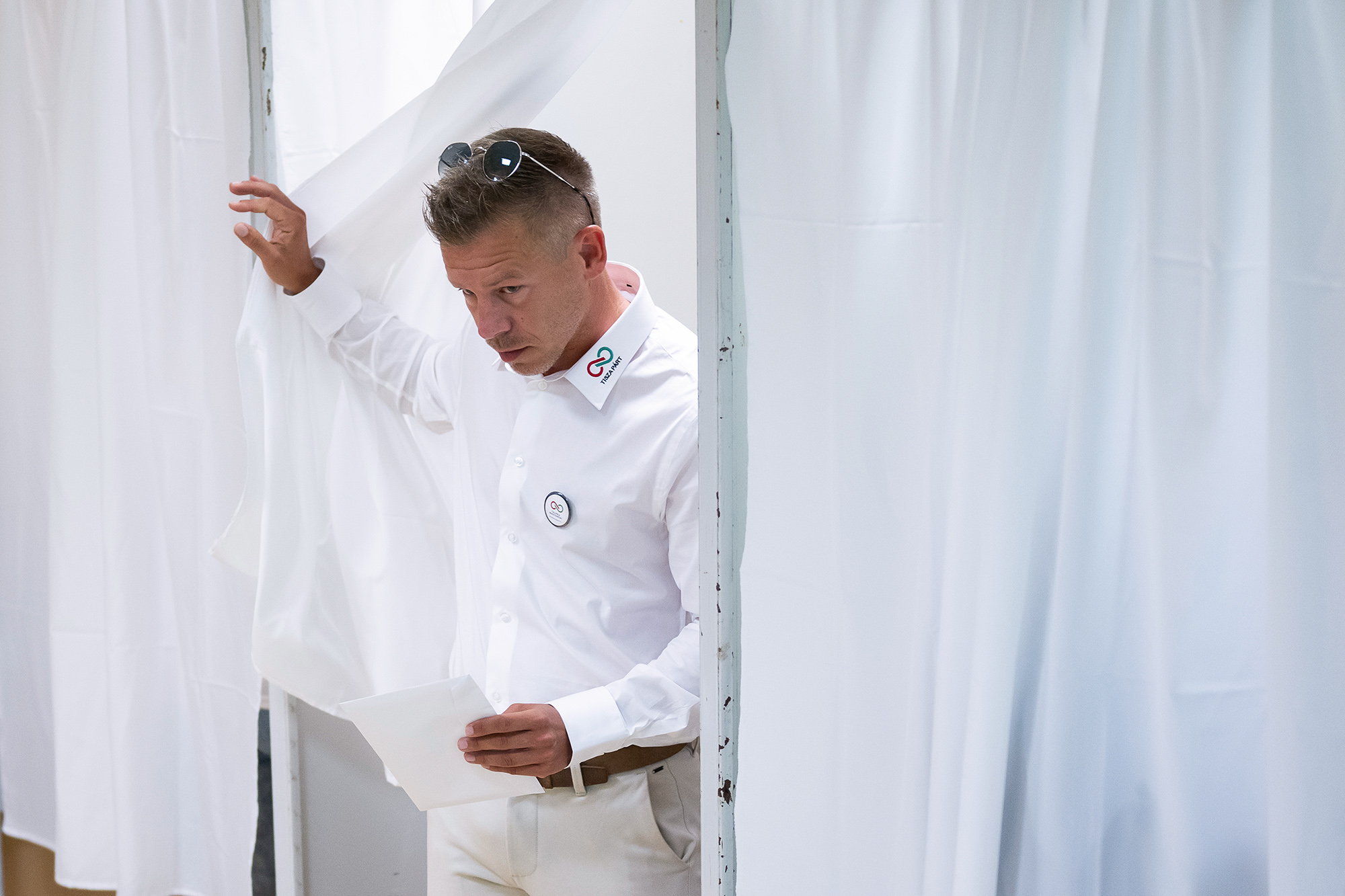 Peter Magyar votes during the European Parliament elections on June 9, 2024. His Tisza party won seven seats in the European Parliament at the time. AP/Denes Erdos
From Orban's passions to “big politics”
Peter Magyar is 45 years old and originally from Budapest. He comes from a family with a legal background. His mother served as Secretary General of the Supreme Court and Vice President of the National Judicial Administration. His grandfather was a Supreme Court judge. And his grandmother’s brother, Ferenc Magyar, was the president of Hungary from 2000 to 2005. According to Reuters, when Peter Magyar was a child, he stuck a photo of Viktor Orban, then a leading young anti-communist politician, on the wall of his bedroom. Orban was a hero not only to the young Magyar, but also to the Hungarian pro-democracy movement in general: in 1989, he was among those who publicly demanded the withdrawal of Soviet troops from the country.
“There was a surge of energy around the regime change that captivated me as a child,” Magyar recalled in the Fokuszcsoport podcast. In 2004, Peter graduated from law school and began his career as an assistant judge at the Metropolitan Court. He then went into the private sector, advising foreign companies on investment in Hungary. After the Fidesz party came to power in 2010, he worked at the Ministry of Foreign Affairs. As the then director of the Institute for Central European Strategy, an expert on Ukrainian-Hungarian relations, Dmytro Tuzhansky, told the podcast “The World is Not Sweet” in 2024, Magyar comes from “the political stratum that built Fidesz.”
He joined the party's initiatives even when it was not yet in power, that is, until 2010. However, it would not be entirely correct to say that Magyar is a person from the core of the party and Orbán's close circle. “Peter Magyar is a kind of new generation of “Fideszists”. He belongs to the generation of Peter Szijjártó,” explained Tuzhansky. According to him, Magyar was part of the “Order of National Cooperation” (NER) – a political and social system in Hungary introduced by Orbán after the victory of “Fidesz” in 2010. It provides for the centralization of power, significant state influence on the economy and public life, as well as an ideological focus on national sovereignty. “This system controls and redistributes funds – what to allocate where, builds appropriate loyalty to “Fidesz”. Peter Magyar worked in this system,” Tuzhansky said.
During Hungary's EU presidency, Magyar was assigned to the Permanent Representation of Hungary in Brussels. Since 2015, he has worked in the Prime Minister's Office, where he was responsible for supporting relations between the Hungarian government and the European Parliament. Since 2018, he has held a number of senior positions in state institutions and companies, including the Hungarian Development Bank, the Student Loans Center, and the transport companies Hungarian Roads and Volánbusz. Another important thread connecting Magyar to Orbán's political establishment was Judit Varga, the former Minister of Justice of Hungary. Magyar was married to her from 2006 to 2023, and the couple had three children.
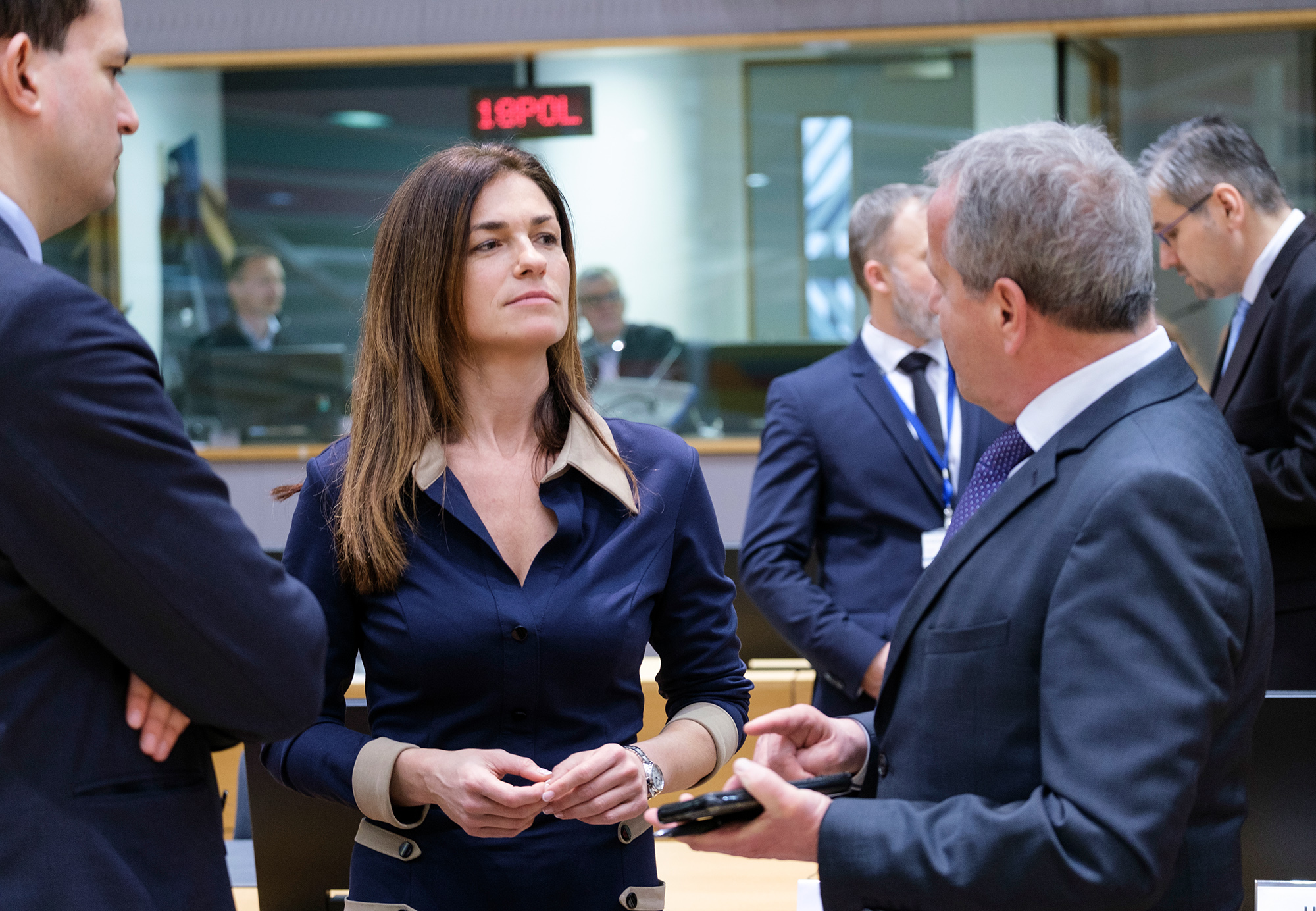 Former Hungarian Justice Minister Judith Varga speaks with colleagues before a meeting of justice ministers at the EU Council headquarters in Brussels on March 10, 2023. Getty Images/Thierry Monasse
According to Politico, while Judit Varga was in the spotlight, building her political career, Magyar mostly stayed in the shadows. He was considered a key but unobtrusive “insider” while he worked in Brussels and Budapest. As Tuzhansky said, Varga and Magyar were “a stellar, ideal couple.” “They have three children, they are young, beautiful, professionals. At the time, Peter Magyar was only remembered as an exemplary husband. And they divorced quite quietly, by the way. My assessment is that even if Magyar had not been Varga’s husband, he would have felt very comfortable in the Orbán or Fidesz system. His family, environment, education already gave him entry into this system. And the key [to it] was not Judit Varga, but Gergely Gulyas and his family,” Tuzhansky said. Gulyas has been Prime Minister Orban's chief of staff since 2018, and at one time he and Magyar built their path together in Fidesz, were friends and associates.
Premier's campaign
Last year, Peter Magyar was often described as a “Teflon politician” who is immune to scandal, although there have been many attempts to discredit him amid his growing popularity. Just a few weeks after Magyar’s bright appearance on the political scene in 2024, Judit Varga gave an interview about how she allegedly suffered domestic violence from her ex-husband. But this only united Magyar’s supporters in defense of him and his party: there were claims that Varga, who continues to support Fidesz, had launched a smear campaign against the politician.
Soon, a new similar story unfolded around Magyar, this time with accusations from his girlfriend Evelyn Vogel, whom he met after his divorce from Varga. According to Magyar, Vogel had more than 10 hours of voice recordings with the politician’s participation and blackmailed him with them, demanding 70 thousand euros. In November 2024, Magyar had to fend off other accusations against him: incriminating recordings appeared on the Internet, where Magyar allegedly calls the “Tysy” deputies in the European Parliament “brain dead”, declares one of them a “Soros agent”. In another recording, he even threatens a representative of the press to “throw him into the Danube”. Magyar insisted that all these recordings were fakes.
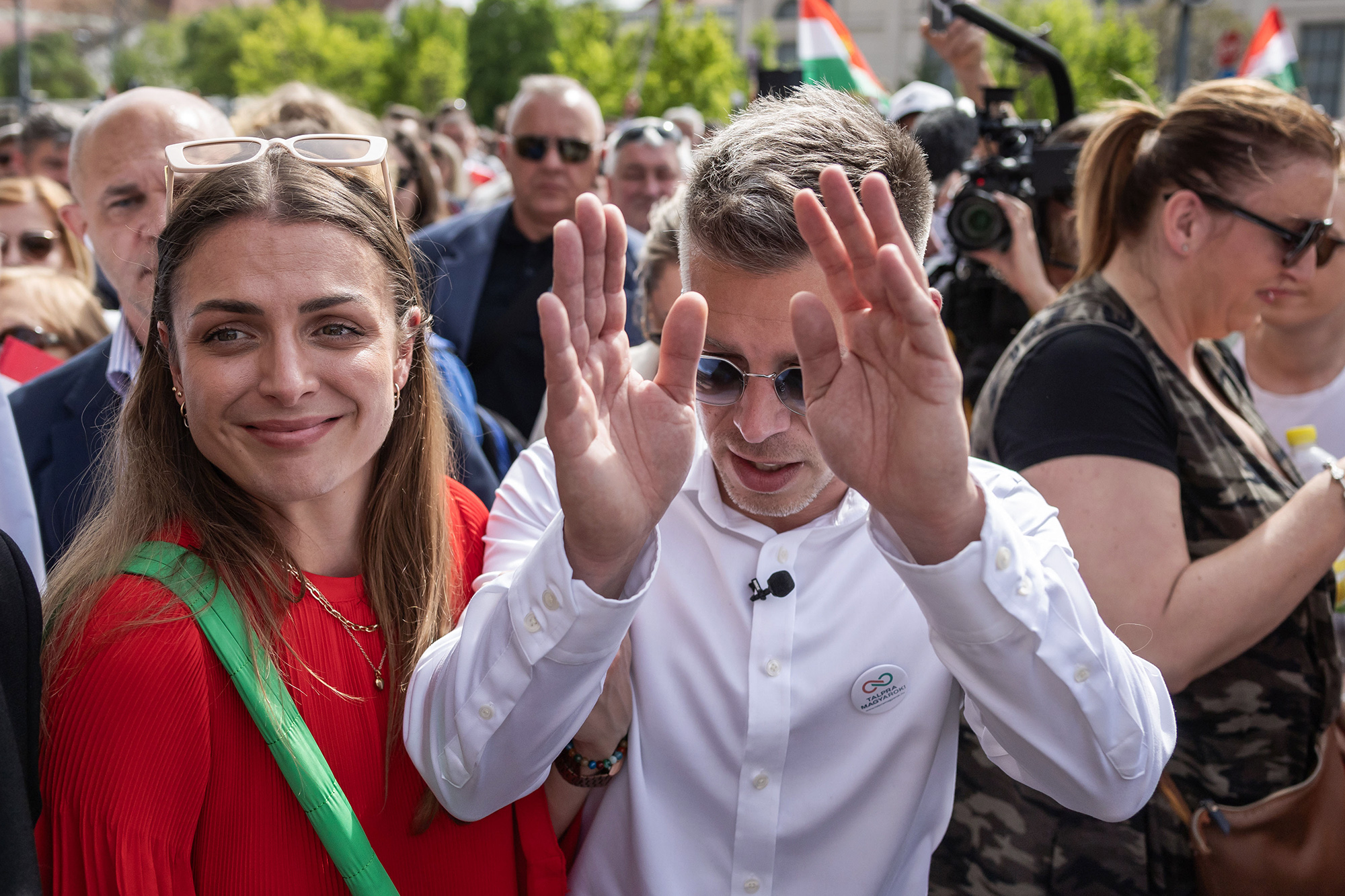 Peter Magyar with his partner Evelyn Vogel during one of the anti-government protests in Budapest on April 6, 2024. Getty Images/Janos Kummer
After the good results for “Tysa” in the European Parliament elections, Magyar devoted most of his attention to “highlighting” those areas of life where Orbán’s government was not successful. He began visiting state institutions and hospitals, demonstrating their poor condition on his social networks. In general, “going to the people” to mobilize the electorate in rural areas became one of the “tricks” of his election campaign: from July to October 2025, Magyar traveled to 128 settlements in Hungary with agitation, moving around in whatever way he could — from a canoe to a small plane.
In October 2024, Tisza led thousands of Hungarians to demonstrate in Budapest for media freedom. Magyar called on protesters to gather outside the headquarters of the state broadcaster MTVA to speak out against the “propaganda factory,” as the opposition dubbed the state-run Fidesz television. Tisza made 16 demands to the authorities, including the dismissal of the head of MTVA and the restoration of genuine public media. “We have had enough of malice, lies, propaganda, our patience has run out. Today, public media in Hungary is an international scandal. We have had enough!” Magyar insisted. He finally secured the status of persona non grata on state television channels, but in July 2025 Tisza launched its own media product, the newspaper “Pure Voice.” It was distributed in print by volunteers in villages to reach potential voters everywhere. Traditionally, small towns and villages are the main electoral base of Orban's party.
In May 2025, Tisza published a manifesto listing 21 steps it would take to change the country if it “received the permission of the Hungarian people” to do so. However, the details of the steps outlined there — such as “increasing pensions for 420,000 elderly Hungarians who receive the lowest benefits” and “announcing a program for restoring strength” — remained unclear. Magyar said he wanted to hold the Fidesz government accountable, raise the standard of living of Hungarians, pursue a pro-European agenda, and improve the country’s international reputation. He promised to reform the education and healthcare systems, as well as to legally limit the prime minister to two terms.
Magyar did not hide: his main goal is to be the complete opposite of Orban and his politicians. “We do not need any enemies. One of our main goals is to unite the nation, stop the propaganda, stop the hate speech and talk about the reality, about the state of affairs in our country. Otherwise, we will not be able to restart the Hungarian economy, rebuild the nation and regain our The European Union has frozen payments to Hungary (a total of up to 30 billion euros from various funds) due to the rule of law mechanism, most of these funds remain blocked. EU funds. We have to talk about reality,” Magyar explained in an interview with DW in March last year.
 A Hungarian unloads boxes of humanitarian aid for a children's hospital in Budapest on August 30, 2024. Getty Images/AFP/Attila Kisbenedek
In July 2025, at the “Tysy” congress in the town of Nagykanizsa, near the border with Croatia, Magyar shared his plans in a speech in case his party wins the 2026 elections. The motto of these plans was chosen: “Change the system peacefully, responsibly.” Magyar called this plan the “Hungarian New Deal” — and its goals were to revive the economy with the help of large-scale investments, EU funds and more predictable policies. “We have a popular program item — ‘the road to prison.’ But it is not for politicians to decide who is guilty,” Magyar said of the program item related to justice. “Our task is to ensure the independence of the judiciary, police and prosecutors. If they work freely, the guilty will be punished.”
The election manifesto of “Tysi”, published in early February this year, assures that Magyar's party is pro-European. It promises to restore trust with EU and NATO allies, and to join the eurozone by 2030. “However, EU leaders should not assume that the likely new Hungarian government will completely reject the approaches to the policies of the Orban era,” analysts at The European Policy Center emphasize. “As for Ukraine, the manifesto of “Tysi” is noticeably weak, in particular, the party is against the country's accelerated accession to the EU. Although Magyar signals his intention to reduce dependence on Russia Here is how the party manifesto puts it: “We are clearly voting for Europe, because due to Hungary's geopolitical location we can only choose between Europe and Russia. Let's stop the debate about the East-West ferry and join the West once and for all! At the same time, Europe is facing serious difficulties and a crisis of competition between macro-regions, while Hungary, especially in the new world order, has a fundamental interest in Europe being strong and competitive. To do this, we must be constructively critical, present and support democratic but effective innovations that go beyond ideological traps.” , its proposed energy timetable for 2035 falls far short of the EU's 2027 target. Tisza also rejects the EU's pact on migration and asylum. For many years, Hungary has been officially hostile to refugees who, for one reason or another, find their way onto its territory.
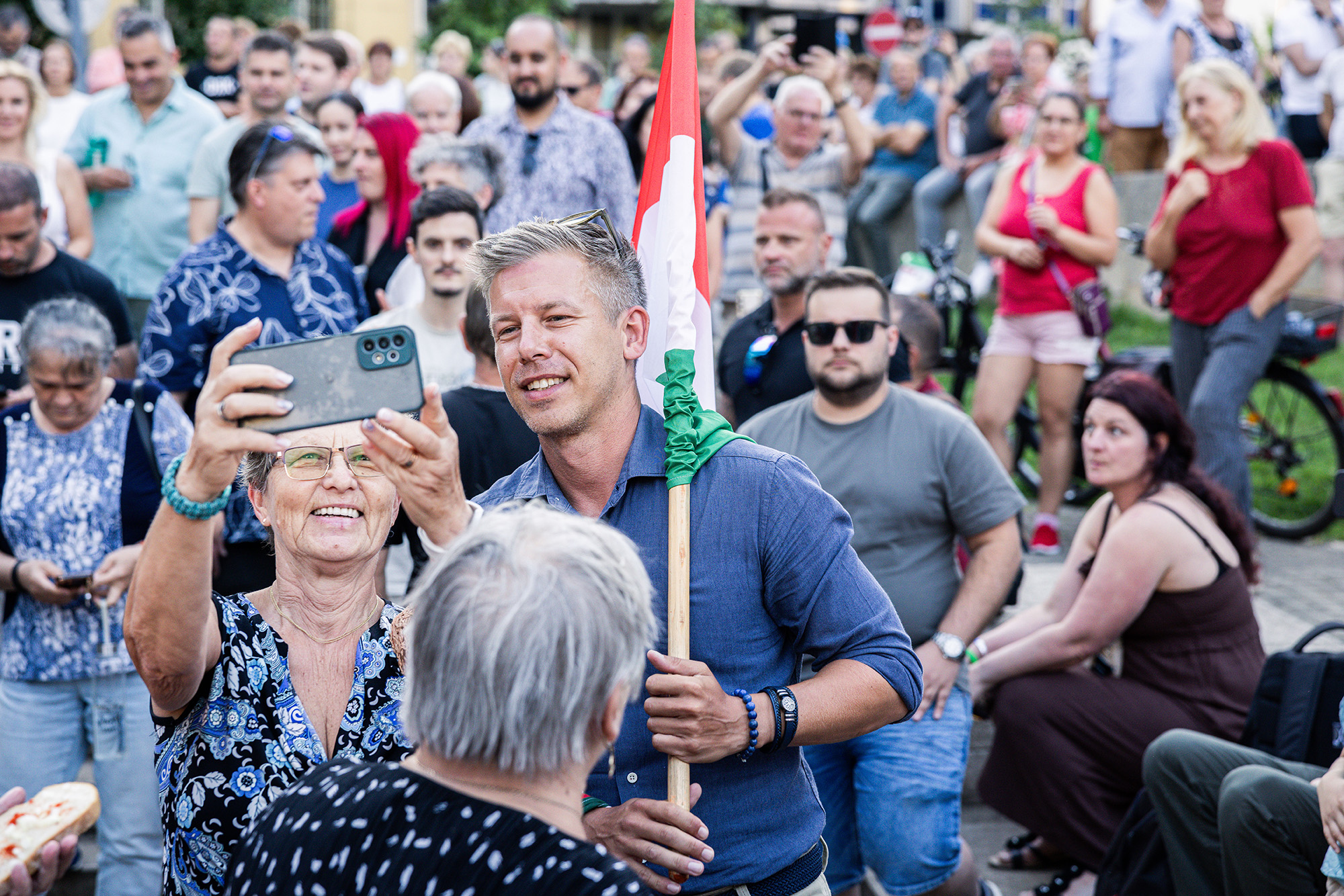 Peter Magyar poses for a photo with supporters during an election rally in Debrecen on July 22, 2025. Getty Images/Bloomberg/Akos Stiller
One step closer to victory
“This party is much more than me. Much more than 1,500 “Tisa islands” The network of local party activists. , much more than our volunteers. It is rather a movement. The movement of the vast majority of the Hungarian people against corruption, lies, propaganda, autocracy,” Magyar shared in an interview with DW. Gabor Toka draws attention to how Magyar, with his own charisma and efforts, managed to rally people around him — in the conditions of political and social life usurped by Fidesz. Here, the winning tactic was that Tisza is a leader-type party.
“In the short term, it’s effective to have this incredibly centralized system, one person who determines the priorities, which way we go with this campaign, which line of communication,” Toka tells Suspilny. “I think this is really necessary given the current circumstances in the country. But we also need to mobilize broad mass support — not only in terms of votes, but also in terms of donations and the free labor that people put into the campaign. And [in “Tys”] they are building it very well.”
To bypass Orban, Tisza had to not just get more votes than Fidesz. It had to show a significant advantage — such is the specificity of the Hungarian electoral system and the location of electoral districts, which Fidesz has repeatedly changed . In 2011, the Orbán government carried out an electoral reform that increased the weight of single-member constituencies. Before the reform, about 46% of deputies were elected in constituencies, but after it this share increased to 53%. This strengthened the element of the “winner takes all” system. The Orbán government also significantly redrawn the boundaries of constituencies: in areas where the opposition is traditionally supported, it enlarged them, and in areas where Fidesz is usually supported, it increased the number of constituencies. Accordingly, fewer deputies are now elected in the former, and more in the latter. so that the advantage remains on the side of the ruling party.
Rightly seeing a threat in “Tysi”, the Hungarian authorities are trying in every way to discredit Magyar. On the eve of the elections, Orban's campaign was an attempt to portray him as an agent of Kyiv (where he only managed to visit at the beginning of his political career in 2024) and Brussels reached its peak. There are enough billboards on the streets of Hungarian cities and villages where Magyar, together with European Commission President Ursula von der Leyen and Volodymyr Zelensky, flush money down the toilet, and on the Internet there are AI videos about how the opposition is dragging Budapest into the war on the side of Ukraine. As Gabor Toka said, Fidesz even tried to claim that the money seized from Ukrainian collectors in early March could have been intended for Magyar – they say, this is how Ukraine finances his election campaign.
Magyar also moved on to more aggressive statements against the authorities: in particular, he accused his rivals of blackmail attempts using a secretly recorded sex video with his participation. And after the high-profile Direkt36 investigation, where the publication received reports of individual cases of attempts to hack the IT systems of the Tisza party, Magyar accused Orbán of inciting the Hungarian special services and police against his opponent. In one of his election speeches, Magyar called the Fidesz ruling circles a mafia and promised that if he won a constitutional majority in the elections, he would remove the prime minister's key allies from their posts – in particular the president and the heads of the Supreme and Constitutional Courts. Magyar is also now talking a lot about Russia's interference in the Hungarian elections, including with the involvement of intelligence representatives.
“Orban invited the most experienced Russian agents to our country to interfere in the elections and once again deprive us of our most sacred property – Hungarian freedom, for which our ancestors gave their lives. […] Lies, deception and persecution – this is what they have prepared for us. Viktor Orban betrayed Hungarian freedom for 30 pieces of silver, for himself and his dynasty. Shame!” exclaimed a Magyar at a large-scale rally a month before the elections. “Provoking war, threatening war, inciting war – this is his last weapon against Hungarians, which he uses in order to stay in power.”