

At least 131 people have died from the Ebola outbreak spreading in the Democratic Republic of Congo. More than 500 more are suspected of having the disease, according to local authorities. One person has died in neighboring Uganda.
According to the WHO, the virus likely began spreading weeks before its official detection in late April, and the actual number of cases may be significantly higher than official statistics. Here's what we know about the outbreak.
In May 2026, the WHO declared the current Ebola outbreak in the Democratic Republic of the Congo and related cases in Uganda a public health emergency of international concern.
As of May 19, there were more than 513 suspected cases in the Democratic Republic of Congo, with cases also reported in Uganda. However, the WHO has stressed that the true scale of the outbreak may be greater.
The Red Cross has warned that the Ebola epidemic could spread rapidly if cases are not detected early and the country's health system is overwhelmed, “which is already happening.” DR Congo President Felix Tshisekedi is appealing for calm and asking citizens to remain vigilant.
WHO representative Anne Ansia, in a comment to BBC Newsday, noted that Ituri province in DR Congo, which became the epicenter of the outbreak, is “a very dangerous area with significant population displacement,” which complicates the fight against the disease.
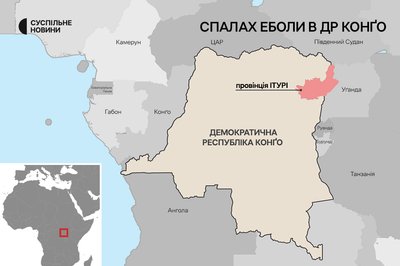 Ituri province on the map of the Democratic Republic of the Congo, where an Ebola outbreak has been recorded. Social News
“The longer the investigation continues, the clearer it becomes that the disease has already spread to other provinces and across the border. The current outbreak is larger than the official figures indicate, and the true extent of its spread remains unknown,” Ancia says.
What is Ebola?
Ebola virus disease (EVD) is a severe viral disease caused by several related viruses in the Filoviridae family. The disease affects humans and some primates and can cause severe bleeding, internal organ damage, and multiple organ failure.
According to WHO, the average fatality rate during outbreaks is around 50%, although it has ranged from 25% to 90% in different epidemics.
The virus is transmitted through:
- blood and other body fluids of an infected person;
- contact with infected objects;
- caring for patients without protective equipment;
- traditional funeral rites involving contact with the body of the deceased.
Ebola is not spread through the air like the flu or COVID-19. It requires direct contact with bodily fluids from an infected person to be transmitted.
Initial symptoms resemble those of influenza, malaria, and other infectious diseases. They include high fever, severe weakness, headache, muscle aches, and sore throat. Some patients may also experience red eyes.
Later, vomiting, diarrhea, rashes, kidney and liver dysfunction may occur. In severe cases, internal and external bleeding develops. Symptoms usually appear most often 8-10 days after infection.
What is special about the current outbreak?
This outbreak is caused by a much rarer variant of the Ebola virus, Bundibugyo ebolavirus, for which there are no approved drugs or vaccines — unlike, for example, the more well-known strain, Zaire ebolavirus.
Also of concern is that the virus was likely spreading for several weeks before its official detection on April 24. According to the WHO, cases have already been recorded not only in the epicenter of the outbreak in Ituri province, but also in other regions of the country, including the city of Goma, one of the largest cities in eastern DR Congo.
Containing the current outbreak is also complicated by the specifics of the region where it originated. Ituri province in eastern Democratic Republic of Congo has been plagued for years by armed groups and a humanitarian crisis. The volatile security situation makes it harder for health workers to find patients and trace their contacts.
Previous Ebola outbreaks
So far, only 17 outbreaks of the disease have been recorded.
The virus was first identified in 1976, with the first outbreaks recorded in Zaire (now the Democratic Republic of the Congo) and Sudan. The virus is named after the Ebola River in the Congo.
The largest Ebola outbreak in history swept through Guinea, Liberia, and Sierra Leone from 2014 to 2016, causing more than 28,000 cases and more than 11,000 deaths. This outbreak spurred a surge in vaccine development and strengthened global response systems.
In 2018-2020, the second largest outbreak occurred in the Democratic Republic of Congo. The fight against it was complicated by armed conflicts in the region, and individual cases were also recorded in Uganda.