
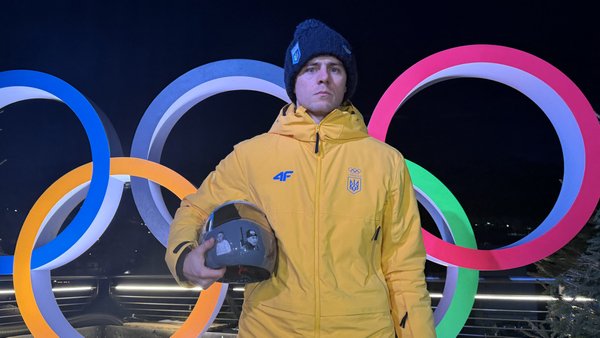
The International Olympic Committee's decision to disqualify Ukrainian skeleton athlete Vladislav Geraskevych due to the alleged non-compliance of his “memory helmet” with portraits of deceased athletes with current rules has caused a wave of indignation among Ukrainian officials, European diplomats, and businessmen.
In particular, Ukrainian Foreign Minister Andriy Sybiga noted that the IOC “banned not a Ukrainian athlete, but its own reputation.”
“Future generations will remember this as a moment of shame. He only wanted to honor the athletes killed during the war. There is nothing in this that contradicts the rules or ethics,” Sibiga wrote.
According to him, the Olympic Committee “intimidated, disrespected, and even lectured our athlete and other Ukrainians on how they should remain silent about “one of 130 conflicts in the world.” He also added that the IOC has systematically failed to confront “the biggest violator of international sport and the Olympic Charter” – Russia.
“A country that launched three invasions during the Olympic Truce over the past three decades, implemented the largest state doping program, killed 650 Ukrainian athletes and coaches, and destroyed 800 sports facilities in Ukraine,” Sybiga noted.
In addition, the head of the Ukrainian Foreign Ministry emphasized that it is the Russians who should be excluded, and not the commemoration of their victims should be prohibited, because, in his opinion, none of them are “neutral.”
“If the Olympic Credo says that 'the most important thing in the Olympic Games is not victory, but participation,' then the International Olympic Committee completely betrayed it by not allowing Vladyslav Geraskevych to participate, and betrayed the 650 Ukrainian athletes and coaches killed by Russia,” Sybiga added.
The Foreign Minister thanked Vladyslav for his principles and courage.
EU Ambassador to Ukraine Katarina Maternova said she was “angry and disappointed” by the news of the disqualification of a Ukrainian skeleton athlete.
“I was captivated by the gesture of Vladislav Geraskevych. He trained in a helmet that depicted the faces of Ukrainian athletes and friends killed by Russia. He wanted to remind the world that the war continues, and that it has names and faces,” wrote Maternova.
According to her, Geraskevych was expelled from the Olympics by the same Olympic Committee that “allowed 20 Russian and Belarusian athletes to compete under a neutral flag.”
Maternova also noted that this year's Olympics did not stop Russia, which continues to attack Ukraine every day.
“They excluded Geraskevych. But the world cannot turn a blind eye to the war in Ukraine. People here are freezing and dying. I am angry. Glory to Ukraine. Glory to Geraskevych,” the ambassador added.
Minister of Youth and Sports Matviy Bidny stated that the IOC's decision “looks like a mistake that they did not dare to correct.”
“We will correct this mistake in the legal field. Vladislav, you did the right thing! This story will definitely continue. We are with you,” wrote Bidny.
Prime Minister Yulia Svyrydenko thanked Vladyslav Geraskevych for demonstrating the true meaning of dignity and courage
“Modern Ukraine stands on the stories and deeds of thousands of heroes – those who gave their lives for us and showed the true meaning of dignity and courage. Honoring the fallen is dignity. Standing up for what you believe in, despite all obstacles, is courage. Thank you, Vladyslav, and all Ukrainian Olympians for this example,” Svyrydenko wrote.
Monobank co-founder Oleg Horohovsky called Vladislav Geraskevych “a worthy person, an outstanding athlete and a true patriot of Ukraine.” He also announced a prize of 1 million hryvnia for the Ukrainian skeleton athlete.
“We are proud, we admire, and we want every athlete who represents our country to know that it is important for all of us that the voice of Ukraine be heard and the whole world know about our struggle,” Horokhovsky wrote.
What preceded the disqualification of Vladyslav Geraskevych
On February 9, Vladyslav Geraskevych showed up for training on the Olympic track wearing a “special” helmet. It depicted Ukrainian athletes who died in Russian attacks. After training, Geraskevych said in an exclusive comment to Suspilne Sport that he had “certain problems” because of the helmet.
Later, in an exclusive comment for Suspilne Sport, Geraskevych talked about how the idea for the helmet came about. At the same time, the skeleton athlete emphasized that he should receive a response from the IOC in the evening regarding permission to use the helmet during starts at the Olympics.
On Monday evening, February 9, Geraskevych announced the IOC's ban on wearing a helmet. Ukrainian President Volodymyr Zelenskyy also reacted to the decision, urging the International Olympic Committee “not to hide the truth” about the victims of the war caused by Russia.
On February 10, the NOC of Ukraine appealed to the IOC for permission to use the “memory helmet” by Geraskevych, emphasizing that it “meets the standards” established by the organization.
In a letter dated February 10, 2026, the IOC informed Geraskiewicz that the helmet was “not in compliance” with the Olympic Charter, as well as other rules, including the IOC's requirements for athletes' self-expression. In order to pay tribute to the fallen athletes, the IOC offered Geraskiewicz a black armband or ribbon instead of wearing a helmet.
That same day, Geraskevych held a special press conference where he emphasized that he would continue to wear a helmet in competitions.
On February 12, Ukrainian skeleton athlete Vladislav Geraskevych was disqualified before the first heat of the final of the 2026 Olympic Games. During a conversation with the head of the IOC, Kirsty Coventry, she tried to convince the Ukrainian skeleton athlete to change his position on the “memory helmet”, to which Geraskevych refused.
The organization stressed that the decision was made after Geraskiewicz refused to comply with the IOC Guidelines on Athlete Expression. It was approved by the International Bobsleigh and Skeleton Federation (IBSF) jury on the basis that the helmet he intended to wear did not comply with the rules.