
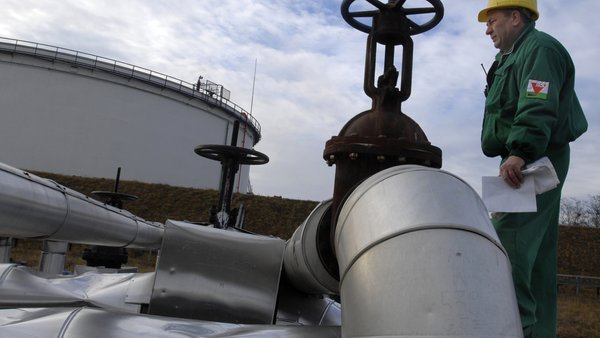
Hungary and Slovakia have suspended diesel exports to Ukraine until the country resumes oil supplies via the Druzhba pipeline. Ukrainian Foreign Ministry spokesman Heorhiy Tykhyi said that Hungary received information about the Russian shelling of the Druzhba pipeline on January 27, and that Ukraine's accusations of a supply delay are illogical.
As Index reports, Hungarian Foreign Minister Peter Szijjártó, during a report at a government meeting on the situation with oil supplies to Hungary, stated that oil supplies have not yet been restored “according to Ukraine's decision” and called it a “purely political decision.”
“We are stopping the supply of diesel fuel to Ukraine, and it will not resume until oil starts flowing again through the Druzhba oil pipeline. We will stop there,” Szijjártó said.
According to the minister, the country currently has strategic oil reserves that last for 96 days, so there is no reason for concern in the short term.
Hungarian government spokesman Zoltan Kovacs also wrote in X about the cessation of diesel fuel supplies from Hungary to Ukraine.
“Diesel fuel exports from Hungary to Ukraine have stopped and will not resume until Ukraine resumes oil transit to Hungary,” Kovacs wrote.
Slovak Prime Minister Robert Fico also announced that the Slovak company Slovnaft is suspending diesel fuel exports to Ukraine and any other exports.
According to him, the government is taking this step in order to save reserves of petroleum products for domestic use.
“Slovnaft is stopping the export of diesel fuel to Ukraine and any other exports, and everything it will now process at home, in Slovakia, will be intended for the Slovak market,” the prime minister said.
According to Fico, the government decided to release 250,000 tons of oil reserves after supplies through the Druzhba pipeline were halted due to Russian attacks.
He assured that there is no threat of a shortage of fuel or other petroleum products in Slovakia, and the release of oil from the state reserve will help Slovnaft survive the period until oil arrives from Croatia.
Statement by the Ministry of Foreign Affairs of Ukraine
Ukrainian Foreign Ministry spokesman Heorhiy Tykhyi said that Hungary received information about the Russian shelling of the Druzhba oil pipeline on January 27, and Ukraine's accusations of delaying supplies are illogical.
“The transit of oil to Hungary has been stopped due to shelling of infrastructure. On January 27, the Russians shelled an oil pipeline near Brody. It is impossible to pump oil there. The Hungarian side was informed on the same day. They knew about it. But for some reason, now there are statements accusing Ukraine. This is absolutely illogical behavior on the part of Hungary,” he said.
According to Tykhy, Ukraine is in constant dialogue on this issue with both the European Commission and the relevant authorities of Hungary and Slovakia.
The spokesman noted that the Russian Federation is constantly attacking Ukraine's oil and gas infrastructure: in 2025, 225 attacks on Naftogaz facilities were recorded, and last year alone, Russia used 1,399 missiles and attack drones to attack Ukrainian oil and gas infrastructure.
“The reason for the supply disruptions is Russian drone attacks on this infrastructure, and Ukraine remains a reliable transit country and steadfastly fulfills its obligations in accordance with current treaties and the EU's sanctions policy towards Russia,” Tykhy said.
He also recalled that Hungary and Slovakia were granted exemptions under EU sanctions banning the import of Russian pipeline oil.
“But these exceptions are temporary. The temporary nature is that they were given time to get off the oil needle. We don't see any attempts to free themselves, but contrary to EU policy, we see an attempt to stay on it as long as possible. They went to Croatia and asked to receive only Russian (oil – ed.). This resembles drug addiction,” the Foreign Ministry spokesman said.
On February 12, Ukrainian Foreign Minister Andriy Sybiga announced a targeted Russian attack on the Druzhba oil pipeline, which caused its operation to stop. According to him, the Ukrainian side is aware that Hungary is preparing to once again complain about problems with the transit of Russian oil through the Druzhba oil pipeline, and advised Hungary to turn to its “friends” in Moscow.
On February 16, Hungary and Slovakia asked Croatia to allow the supply of Russian crude oil through the Adria Adriatic pipeline while the key route through Ukraine remains blocked.
The Hungarian Foreign Minister expressed hope that Croatia would ensure stability in supply and would not exert political pressure, as, according to him, Ukraine does.
Croatia has declared its readiness to ensure stable fuel supplies to Central Europe, refuting accusations of “unreliability” and “speculation on war.”
As Bloomberg previously noted, Slovakia and Hungary, landlocked countries bordering Ukraine, have historically relied on Russian oil and gas. Following Russia's full-scale invasion of Ukraine in 2022, both countries have launched several diversification initiatives.
Slovakia imports about a third of its oil from non-Russian sources via the Adria pipeline, which runs through the Balkans and Hungary, and has a number of flexible contracts with Western gas suppliers.