
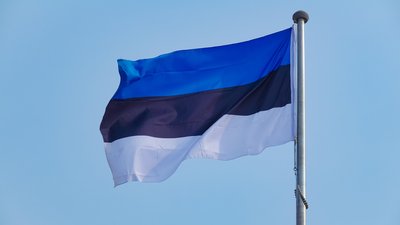
Estonian Foreign Minister Margus Tsakhkna said that Ukrainian President Zelensky's statement about Russia's preparation for an attack on the Baltic countries does not correspond to the intelligence data available to Estonia.
Margus Tsahkna reported this in a comment to the Estonian public broadcaster ERR.
He also stated that such statements by the President of Ukraine “do not simplify cooperation” between the countries.
“Such statements, first of all, do not correspond to our intelligence and our threat assessment. We do not see Russia concentrating its troops or in any way preparing militarily for an attack on NATO or the Baltic countries – quite the opposite. Russia is not in a very strong position on the Ukrainian front, as well as economically,” said Margus Tsakhkna.
He also said that NATO would “react” to a possible Russian attack on Estonia.
“Of course, it does not add strength to the fact that US President Trump is critical of European allies in the context of NATO. But this does not mean that NATO is unable to react. NATO will definitely react if one or another member state is attacked, there is no doubt about it,” said Margus Tsachkna.
Meanwhile, Marko Mikkelson, the chairman of the Estonian parliamentary committee on foreign affairs, accused the Ukrainian president of “spreading Russian narratives.” He noted that this is not the first time that the Ukrainian leadership has stated that the Baltic countries are next.
“Like, look, if we somehow find ourselves in a weaker position or lose, then you or mainly the Baltic countries will be next. This, of course, is unpleasant and clearly fuels the Russian narrative that 'we are the defeated side, we attack, and you retreat, and you retreat,'” said Marco Michelson.
He also stated that Ukrainian representatives raised this topic during meetings with Estonian representatives. But, according to him, “in the event of a serious threat, allies should exchange such messages among themselves, and not make a fuss in the media.”
Zelensky previously reported that the Russian authorities are restricting social networks to curb potential protests that could begin in the Russian Federation due to the announcement of a general mobilization for another major offensive against Ukraine or an attack on one of the Baltic countries.
He suggested that among the reasons for announcing a possible mobilization was the repetition of a major offensive against Ukraine.
“Option “B” is in order to spend less and make less effort and make a small parallel offensive where it is possible to limit ourselves to a smaller number of combat forces. Why? Because this or that state, for example, the Baltics, is not ready for a strong confrontation, because they are small…”, Zelensky added.
Large-scale blocking of Telegram in Russia
As reported by the Russian service “Radio Liberty”, the Russian Federation has been experiencing a large-scale blocking of the Telegram messenger since the beginning of 2026. Users across the country have been reporting a sharp deterioration in its performance: the program does not open, it is impossible to send messages, photos and videos do not load. The largest number of complaints about the messenger's performance come from Moscow, the Moscow region and St. Petersburg.
An interlocutor of the Russian publication “Verstka”, close to the Kremlin, said that the final blocking of Telegram in the Russian Federation is possible in September, when the elections to the State Duma will be held. According to him, the Russian authorities are afraid of a negative reaction from society due to another upcoming victory of the pro-government party “United Russia”, which, according to him, will receive “70% of the vote”. He called the decision to tighten restrictions on the messenger a “test”.
Another journalistic source close to the Kremlin administration said that the debate about the harm or necessity of blocking Telegram has been going on for a long time. The source of the publication pointed to two reasons influencing the ban on the messenger: not only the mood around the elections, but also the attitude towards the course of the Russian Federation's war against Ukraine.
“Now we are starting from whether the conflict will be over or not, and under what conditions. Telegram should not be a destabilizing platform…. Now it should become clear that it is time to look for alternatives. Everyone knows it,” he said, alluding to the state-owned messenger Max.
Telegram founder Pavel Durov, commenting on the blocking, stated that in this way the Russian authorities are forcing Russians to switch to Max, which was created for surveillance and political censorship. He also emphasized that “restricting citizens' freedom is never the right decision,” and Telegram, he said, “stands for freedom of speech and privacy, despite any pressure.”
Blocking other messengers in the Russian Federation
In 2021, Russian authorities restricted access to X (formerly Twitter). In March 2022, after the start of a full-scale invasion of Ukraine, Russia completely banned Facebook and Instagram.
In August 2024, Roskomnadzor blocked the Signal messenger in Russia. The reason was “violation of the requirements of Russian legislation, the implementation of which is necessary to prevent the use of the messenger for terrorist and extremist purposes.”
As reported by Russian media, in August 2025, Roskomnadzor officially announced restrictions on calls to WhatsApp and Telegram.