
Main points
- The US and Israel launched strikes on Iran's military and nuclear facilities, which made it impossible to transfer ballistic missiles to Russia.
- The reduction in supply capacity limits Moscow's arsenal for strikes against Ukraine.
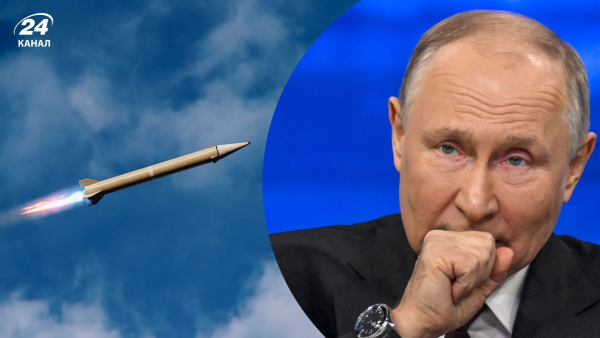
Iran will not be able to transfer ballistic missiles to Russia / Collage by Channel 24 (Photo by Getty Images)
The US and Israel have launched powerful strikes on Iran's military and nuclear facilities, making it unable to provide its ally, the Russian Federation, with ballistic missiles for use in a war against Ukraine.
This assessment was made by Sergey Danilov, deputy director of the Center for Middle Eastern Studies, in a comment to Radio NV. According to him, the remnants of Iran's missile resources will be preserved for its own needs at the most difficult moment.
Why can't Iran transfer ballistic missiles to Russia?
Following strikes by US and Israeli forces on Iranian facilities, which included military and potentially nuclear infrastructure targets, the analyst believes that Tehran has lost the ability to transfer ballistic missiles to Russia for use in a full-scale war against Ukraine.
I think as a result of this campaign we can say with 100% certainty that Iran will no longer transfer ballistic missiles to Russia – potentially because they will either be destroyed or launched,
Danilov said.
According to the expert, “the darkest day has already come,” referring to the scale of operations Lion's Roar and Epic Fury, carried out by Israel and the United States respectively. He believes that these strikes have seriously affected Tehran's missile capabilities.
What does this mean for the war and security of Ukraine?
Iran was previously seen as a potential source of military support for Russia, including ballistic missiles and strike drones, which could support aggressive operations against Ukraine. However, current expert assessments indicate that this threat has been significantly reduced due to the destruction of Iranian military infrastructure.
This could be of strategic importance to Ukraine, as reducing the ability to supply missiles potentially limits the arsenal available to the enemy for future strikes on Ukrainian cities and critical infrastructure.
Analysts also note that Iran continued to be a supplier of strike drones to Moscow, but it was the long-range missiles that could significantly affect the situation on the front.
In conclusion, experts believe that the consequences of strikes on Iran could have a lasting impact not only on the Middle East, but also on the overall dynamics of support for Russia in the war against Ukraine.