
Main points
- The Ministry of Defense of Ukraine is focusing on scaling up drone units and introducing new technologies to increase efficiency at the front.
- The military emphasizes that increasing the number of crews without developing the entire system does not guarantee increased efficiency, so the emphasis is on improving personnel training and the tactic of “destroying the enemy on approach.”
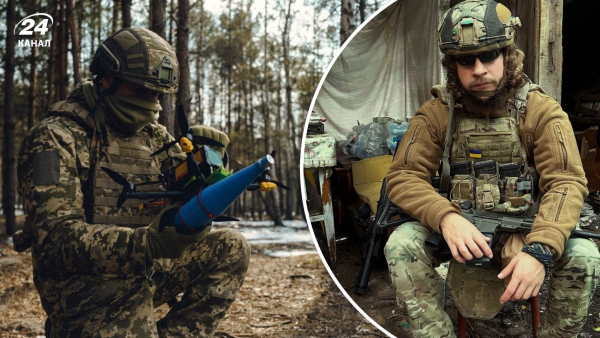
Ukraine plans to increase the number of liquidated Russians / Collage of Channel 24
The Ministry of Defense is focusing on scaling up drone units and introducing new technologies to increase the effectiveness of the Ukrainian military at the front. One of the main areas remains the development of UAV systems that allow destroying Russian forces on the approaches to the positions of the Defense Forces.
Azov fighter “Rishala” spoke about how Russia's losses in the war with Ukraine can be increased in an interview with Channel 24.
How does the Ministry of Defense plan to increase the number of liquidated Russians?
The Ukrainian Defense Ministry is trying to increase the use of drones that will destroy the Russians. In particular, according to the Ministry of Defense, the current strategy involves not only increasing the number of drones, but also expanding the staff of operators and technical personnel, without whom the full operation of UAV systems is impossible.
However, as “Rishala” notes, individual crews are now forced to work almost continuously, which leads to overload, burnout and reduced combat effectiveness. In addition, a significant part of the personnel is involved not only in controlling the drones, but also in their preparation, configuration, transportation and testing before use.

The military emphasizes that simply increasing the number of crews does not guarantee an automatic increase in efficiency if the entire support system is not developed in a complex. That is why the emphasis is on scaling existing solutions and parallel improvement of personnel training.
Separately, “Rishala” emphasizes the tactic of “destruction of the enemy on the approach”, which is key in the conditions of modern warfare. It is about the creation of the so-called “gray zone”, which should prevent direct contact of enemy infantry with Ukrainian positions.
This approach is considered a priority, since it is the infantry that first encounters the enemy in difficult conditions, provides surveillance and information transmission, especially in poor visibility or difficult weather. The military emphasizes that effective deterrence of the enemy at a distance is one of the key factors in the stability of the defense.
Why do drones help maintain defenses?
Unmanned aerial vehicles have become a key element of modern defense, as they compensate for the lack of artillery, provide constant reconnaissance and allow you to destroy the enemy on the approaches to positions. The massive use of FPV drones and quadcopters has turned war into a technological confrontation, where accuracy and speed of response become decisive.
Drones provide 24/7 battlefield surveillance, detecting the movement of equipment and assault groups, including at night or in difficult conditions. This allows for early response to threats and effective coordination of defense.
FPV drones act as “pocket artillery”, destroying equipment, shelter and manpower with high accuracy and low cost. They are also used for remote mining and complicating enemy actions. Separately, heavy drones support infantry, delivering ammunition and necessary resources to the front line.
Russia is actively increasing the production of drones
It’s not just Ukraine that is increasing its drone fleet. Robert “Magyar” Brovdy, commander of the Unmanned Systems Forces, said Russia is actively expanding its drone units and is quickly adapting to “drone warfare.” In recent months, the number of military personnel involved in UAV operations has grown to more than 114,000, and could reach 168,000 or more by the end of the year, according to Ukrainian intelligence estimates.
In addition to the number of UAVs, Russia is already improving those that are actively used on the front. In particular, Serhiy “Flash” Beskrestnov, a non-staff advisor to the Minister of Defense of Ukraine, said that Russian drones of the “Lancet” type began to operate in complete radio silence to make their identification more difficult. These drones integrate autonomous guidance elements using artificial intelligence and Nvidia technologies.