
Main points
- The Russian authorities acknowledge that Ukrainian drones are reaching deep into the country's rear and are strengthening air defense in the Leningrad region.
- There are plans to recruit reservists to create mobile fire teams to protect industrial facilities, and Internet censorship may be tightened before conscription.
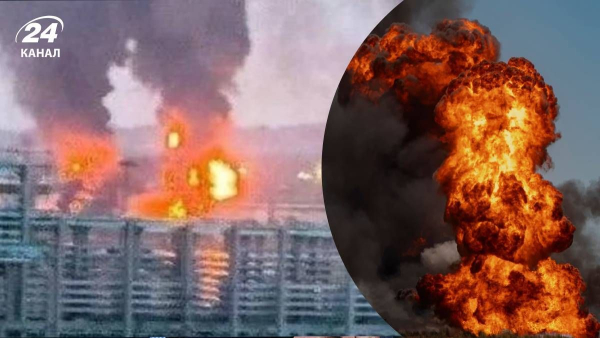
In the Leningrad region, preparations are being made to strengthen air defense / Collage of Channel 24
The Russian authorities are forced to openly admit that Ukrainian long-range drones are already reaching deep into the country's rear. After attacks on ports and oil infrastructure in the Leningrad region, they announced a reinforcement of air defense and the recruitment of reservists to protect strategic facilities.
This is stated in a report by analysts from the Institute for the Study of War (ISW).
How do drone attacks affect Russia?
Leningrad Oblast Governor Oleksandr Drozdenko stated on April 15 that the region had effectively become a frontline region, and recalled recent Ukrainian strikes on economic and port facilities.
Later, he also announced that the authorities would strengthen the air defense system in the Leningrad Region, in particular by providing additional logistical assistance to the 6th Army of the Russian Air Force and the Leningrad Military District.
In addition, he said, it is planned to recruit reservists to create mobile fire groups that will be deployed near industrial enterprises and critical infrastructure.
Drozdenko clarified that reservists will be able to sign service contracts for up to three years through regional military enlistment offices. He separately called on so-called veterans of the war against Ukraine and individuals with combat experience to join.
Ukraine's recent successful campaign of long-range strikes on Russian port and oil infrastructure in the Leningrad region is likely forcing Russian regional authorities deep in the rear to recognize the impact of Ukrainian strikes on critical infrastructure in Russia and Russia's growing need to protect them,
– says the ISW report.
According to analysts, the governor's statements may also indicate preparations for an unpopular limited forced conscription of reservists to protect critical infrastructure.
Important! The Presidential Commissioner for Sanctions Policy of Ukraine, Vladyslav Vlasyuk, recently stated that Ukraine has actually managed to offset Russia's additional revenues from the recent rise in oil prices. All thanks to attacks on key Russian ports.
Back in October 2025, the Russian Ministry of Defense announced its intention to attract an active reserve to protect rear facilities from Ukrainian drones, but these measures appear to have been insufficient.
At the same time, local authorities may also be tightening Internet censorship, partly preparing society for a possible call-up of reservists and trying to make it more difficult to use the network to guide drones.
The Ukrainian strikes are likely forcing Russia to deploy more resources to protect critical infrastructure in the Russian rear, which could prevent Russia from deploying those resources, including reservists, to the front in Ukraine in the future,
– analysts concluded.
Explosions continue to rock Russia: latest news
-
On the night of April 18, drones attacked an oil refinery in Novokuybyshevsk, Samara Oblast. Eyewitnesses reported a series of explosions and flashes in the sky. Previously, a fire broke out at the facility.
-
The occupied Crimean peninsula also came under attack at night, with particular noise in the areas of Yevpatoria, Sevastopol, and others. According to preliminary information, a fire broke out at an oil depot on Cape Manganari.
-
Previously, the Tuapse oil refinery complex, one of the largest in Russia, was under attack. It belongs to the Rosneft company and mainly specializes in primary oil refining.