
Main points
- Ukraine wants to produce Patriot systems, but there are no licenses from partners, and there are difficulties with political and technological complexity.
- The problem with anti-ballistic air defense in Ukraine and Europe remains, as existing systems cannot fully protect against massive Russian attacks.
- 1 What is the problem with anti-ballistic air defense in Ukraine and Europe?
- 2 Is it possible to produce anti-missiles in Ukraine?
- 3 Why should ballistics be intercepted outside the atmosphere?
- 4 What is the role of Belarus?
- 5 Will there be further attacks on the energy sector?
- 1 What is the problem with anti-ballistic air defense in Ukraine and Europe?
- 2 Is it possible to produce anti-missiles in Ukraine?
- 3 Why should ballistics be intercepted outside the atmosphere?
- 4 What is the role of Belarus?
- 5 Will there be further attacks on the energy sector?
President Volodymyr Zelensky confirmed in a February interview with the BBC that Ukraine would like to produce Patriot systems and missiles for them, but has not yet received the necessary licenses from partners. He told the British broadcaster, stressing that the issue of localizing air defense production remains a subject of discussions with partners.
According to Anatoliy Khrapchynsky , director of defense enterprise development and a reserve Air Force officer, the key problem today is not only in licensing policy, but also in the global production capacities of manufacturers of PAC-3 systems.
According to Khrapchinsky, even a large-scale increase in supplies in the short term will not solve all the problems; other protection systems are needed (for example, European projects such as SAMP/T or the Israeli Arrow solution or the American THAAD), as well as deeper industrial cooperation. He points out that the issue of localization of production is technically possible, but politically and technologically complex: not all systems and components are allowed to be copied or transferred, and some technologies are protected due to the risk of leakage.
Read about how Ukraine and Europe can solve the problem of Russian ballistics in the material of Channel 24 .
What is the problem with anti-ballistic air defense in Ukraine and Europe?
Khrapchinsky advises starting a conversation about air defense with the fact that the United States produces PAC-3 (these are Patriot anti-missiles that can shoot down Russian ballistic missiles) in the amount of about 500 units per year . In 2025, the US was expected to reach 650 units per year.
The expert emphasizes that this is not enough to knock down the level of ballistic missiles that Russia is firing at Ukraine. We are talking about about a hundred per month, released during massive attacks.

Anatoly Khrapchinsky
Director of Defense Enterprise Development, Air Force Reserve Officer
It is clear that even the production volumes in the US are not enough to close this gap. There is also depletion of stocks, which is why Europe now has a huge shortage of such missiles – because they are produced only in the United States. Europe, on the other hand, produces PAC-2 – there is such a plant in Germany, but these are anti-missiles for shooting down cruise missiles and aircraft. Therefore, in any case, Europe needs to be told that they must either localize or somehow influence the process of manufacturing these missiles.
Khrapchinsky gives the example of Germany, which purchased two Israeli Arrow missile defense systems. Europe understands that it does not have enough resources, capabilities, so it is looking for additional tools, and in Germany's case, these are Arrow systems. There is the Franco-Italian SAMP/T, which needs funding to improve it. It could become the European Patriot.
At the same time, the US is ready to supply anti-missiles to those who will pay more for them , the expert emphasizes.

Anatoly Khrapchinsky
Director of Defense Enterprise Development, Air Force Reserve Officer
Understanding the rhetoric of the United States, I would still look towards doing something of our own, and in this case, the Franco-Italian SAMP/T could become the system that can be improved, joining forces so that the manufacturers of this system conduct “field tests” in Ukraine.
In addition, it supplied the Ground Master 200 and Ground Fire 300 radar systems, which are part of the SAMP/T complex, the expert adds.
Interestingly, even under Defense Minister Umerov, Ukraine offered the Patriot system manufacturer, Raytheon, investments and expanded cooperation in the defense sector. At that time, the parties discussed Ukraine's urgent need for additional complexes and missiles to protect cities and critical infrastructure. Kyiv declared its readiness to invest in the development of this area and proposed to deepen cooperation, in particular between Ukrainian and American defense companies, in order to accelerate the maintenance of weapons.
Last year, Ukraine was ready to purchase up to ten Patriot systems from the US and was considering the possibility of licensed production, which is still relevant today. At the same time, the production of new systems takes years: for example, the contract for Germany envisages the first deliveries only from 2027. In addition, potential production in Ukraine would remain at risk of Russian strikes.
In February, the current Minister of Defense of Ukraine, Mykhailo Fedorov, during a video conference with representatives of the E5 group – France, Germany, Italy, Poland and the United Kingdom – called on European partners to join efforts to develop means of countering ballistic missiles. The meeting was also attended by EU High Representative Kaia Kallas and NATO Deputy Secretary General Radmila Shekerinska.
Fedorov stressed that the European defense industry must urgently increase production, as current volumes remain critically low. Ukraine proposed launching joint projects with European countries to develop and produce anti-ballistic solutions, while simultaneously implementing its own initiatives in this area.
Separately, the Minister called for continued funding for the PURL program as a key mechanism for obtaining PAC-3 missiles for Patriot systems. Fedorov, in particular, noted Germany's initiative for additional missile supplies, emphasizing the importance of the rapid implementation of the agreements.
Is it possible to produce anti-missiles in Ukraine?
Khrapchinsky calls the question raised by Zelenskyy fiction.

Anatoly Khrapchinsky
Director of Defense Enterprise Development, Air Force Reserve Officer
This is more of a fantasy, because the States are not deploying production even in Europe, except for the German production of the PAC-2. And the PAC-3 is a new modern technology, which is unique, because it is a kinetic interception of ballistic super-complex targets. And this is the logic of the United States, so that there is no leakage of information and technology.
In addition, the expert emphasizes, some rare earth elements needed for the production of missile bodies in Europe depend on China.
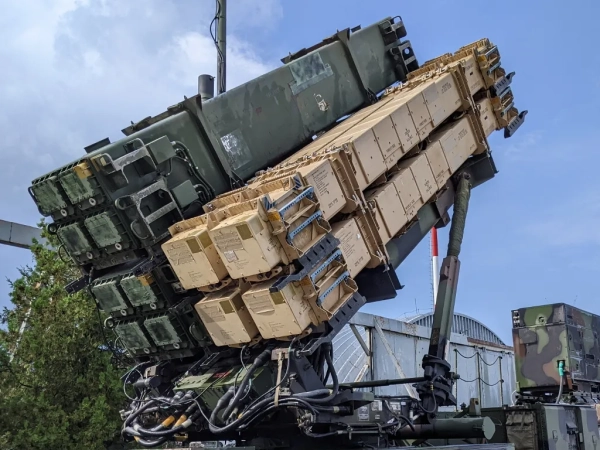
Patriot System / Photo Wikimedia
Important! In August 2025, the US was going to sell Patriot to Denmark for $8.5 billion for two complexes. At the last moment, the amount was reduced to $3.2 billion. However, this did not convince Copenhagen either – Denmark ultimately preferred SAMP/T, Defense Express wrote last year.
Why does ballistics need to be intercepted outside the atmosphere?
From 2019 to 2025, Russia has increased the production of complex missiles several times, says Khrapchinsky. It is said that in 2019 about 40 Iskander-Ms were produced, now it is 120 missiles. Eight Kinzhals in 2019 and 40 in 2025.

Anatoly Khrapchinsky
Director of Defense Enterprise Development, Air Force Reserve Officer
Russia understands that if we have ballistics, they will not be able to counter it. They are trying to make the S-500, S-400 systems, but this will not save them. Ballistics take a matter of seconds to intercept. Why did Israel, for example, build the Arrow system? This is a prototype of the THAAD system. Why are ballistics intercepted outside the atmosphere? So that there are no consequences. Because for every ballistic interception we have, there are consequences in the form of debris.
Khrapchinsky adds that Arrow or THAAD are more effective against “Oreshnik”, because they intercept the missile before the warhead has separated . There is no such missile defense in Ukraine, and there is only partial one in Europe, the expert says.
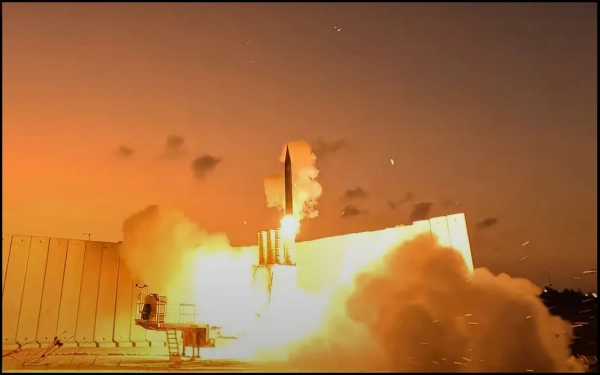
Israeli Arrow / Photo Wikimedia
As for the ” Zirkons “, with which the Russians have recently been attacking the Kyiv region, according to Khrapchynsky, this is a difficult target to intercept and is used to overload air defenses.

Anatoly Khrapchinsky
Director of Defense Enterprise Development, Air Force Reserve Officer
They are raking in sophisticated missiles to exhaust the resources of our systems, our PAC-3s. The Russians understand the volume of production in the United States and the remaining stockpiles in Europe. This is beneficial to Russia, because now it can once again actualize the war next to Europe.
“The critical mistake is that we do not offer the right interaction. It is worth offering – “let's unite together, let's defend Europe together, let's build,” – believes Khrapchinsky. After all, Europe needs our war experience, we need to build the right mutually beneficial conditions for communication and interaction. This should be an alternative to NATO in Europe.
What is the role of Belarus?
In the conversation, Khrapchinsky mentions that “Oreshnik” is already being deployed in Belarus, aimed at Europe. Among the goals in general is the Suwałki Corridor, which connects Poland with Lithuania, Latvia, and Estonia.
Ukraine recently shot down repeaters on Belarusian cell towers that were helping Russian drones carry out raids on Ukraine. But Khrapchinsky believes that restoring them is a matter of time.

Anatoly Khrapchinsky
Director of Defense Enterprise Development, Air Force Reserve Officer
This is a fine line. The US is lifting sanctions on Belarus, and Belarus is one of the suppliers of components for electronics, old Soviet electronics or more modern ones for Russian military equipment. All altimeters, all navigation systems are equipped with electronics produced by the Impulse plant in Belarus. They are very actively helping Russia – with food supplies for the military, oil. At the same time, they are strengthening the protection of their refineries, because they understand that there may be a threat. In particular, from Russia.
Will there be further attacks on the energy sector?
In previous years, Russia has shifted from shelling Ukraine's energy sector in the fall and winter to shelling defense industries in the summer. Anatoliy Khrapchinsky believes that this will continue this year.
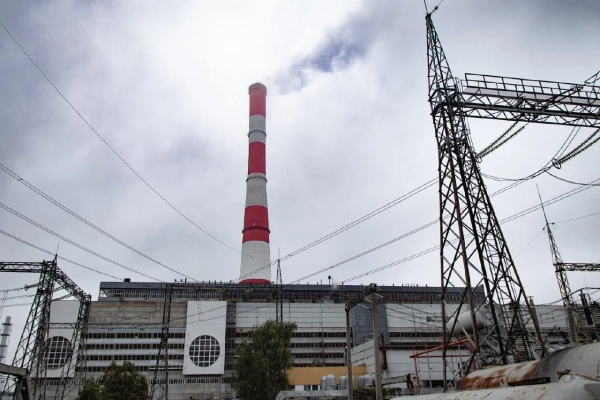
Kyiv CHP-6 / Photo by Kyiv City State Administration

Anatoly Khrapchinsky
Director of Defense Enterprise Development, Air Force Reserve Officer
Winter – accordingly, they are hitting the energy sector. In the summer, they will hit production facilities – factories. Russian canned goods are openly working. Look at how much frank slander is being spread against Ukrainian companies that produce weapons now. It should be noted that in order to understand, it is important to simply take the Gerasimov doctrine into the assessment criteria. In addition, Russia has significantly strengthened its capabilities in terms of middle strikes, which allow them to knock out our front-line zone.
At the same time, as a result of the blocking of the “starlinks”, Russian capabilities have significantly decreased, although it is a matter of time before they can fix this, Khrapchinsky believes.