
Main points
- Ukrainian legislation provides grounds for the release of mobilized individuals based on age, health, family circumstances, and other valid reasons.
- Mobilization in Ukraine continues, and martial law has been extended until May 9, 2025, according to signed laws.
- Family reasons for dismissal include childcare, child support, caring for disabled family members, and other valid reasons.
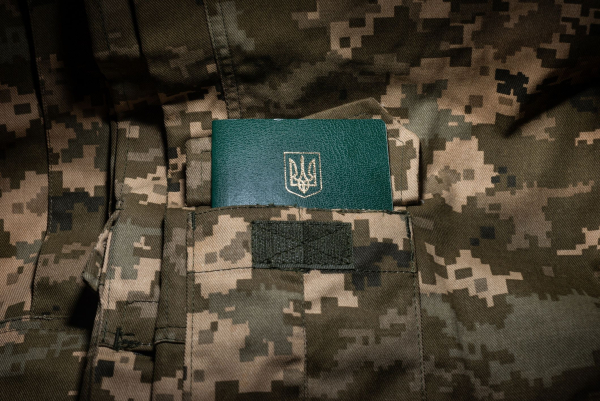
Mobilization in Ukraine / GettyImages
General mobilization and martial law are ongoing in Ukraine. However, there are certain grounds for dismissing those who were called up to defend Ukraine.
The law provides for a number of grounds for the release of mobilized persons during martial law, ensuring a fair and clear procedure. 24 Channel writes about this with reference to the relevant law.
What are the valid grounds for dismissal?
The regulations contain grounds for dismissal based on age, health, family circumstances, and other valid reasons. Each of these needs to be considered in more detail.
The last time changes were made to the mobilization process was in May 2024.
Grounds for dismissal:
- by age – in case of reaching the age limit for military service;
- based on the conclusion of the Military Medical Service on complete or temporary unfitness for military service with a review after 6-12 months;
- in case of disability (if servicemen do not wish to continue military service);
- in connection with the entry into force of a court verdict of conviction imposing a penalty of imprisonment or restriction of liberty.
- in connection with release from captivity (if servicemen did not express a desire to continue military service);
- in connection with staff reductions or organizational measures – in case of impossibility of using them in service (for senior officers);
- in connection with the election to the position or tenure of a judge, judge of the Constitutional Court of Ukraine, member of the High Council of Justice, member of the High Qualification Commission of Judges of Ukraine, head of the disciplinary inspectors service of the High Council of Justice, his deputy, disciplinary inspector of the High Council of Justice.
- due to family circumstances or other valid reasons.
Family or other valid reasons are considered to be:
- military personnel who are on leave to care for a child until the child reaches the age of three, as well as if the child requires home care for the period specified in the medical certificate, but not longer than until the child reaches the age of six;
- wife, if both spouses are serving in the military and have a child(ren) under the age of 18;
- the serviceman is supported by three or more children under the age of 18, except for those who have arrears in alimony payments, the total amount of which exceeds the amount of payments for three months.
- military personnel who have a child (children) under the age of 18, if the other parent of such child (children) has died, been deprived of parental rights, has been declared missing, has been declared deceased, is serving a sentence in a prison, and also when a person independently raises and supports a child by court decision or an entry about the father of such child in the Birth Registration Book is made on the basis of part one of Article 135 of the Family Code of Ukraine;
- adoptive military personnel who have a child (children) who, before adoption, was (were) an orphan (children) or a child (children) deprived of parental care under the age of 18, guardians, custodians, adoptive parents, foster parents, guardians in whose care the child (children) or child (children) deprived of parental care, under the age of 18;
- raising a disabled child under the age of 18 by a military serviceman, in the absence of other persons who are obliged to raise him/her;
- maintenance by a military serviceman of an adult child who has a disability of group 1 or 2;
- raising a seriously ill child who is not disabled by a military serviceman, provided that such persons do not have other able-bodied persons obliged by law to support them;
- the need to provide constant care for a spouse (husband) with a disability of group I or II;
- the need to care for a spouse (husband) with a disability of group III, established as a result of cancer, the absence of limbs (limbs), hands (hands), feet (feet), one of the paired organs, or the presence of a spouse (husband) with a disability of group III, cancer, mental disorder, cerebral palsy or other paralytic syndromes;
- the need to provide constant care for one of the parents or the parents of his/her wife (husband), who are disabled people of group I or II, provided that there are no other family members of the first or second degree of kinship of such a person or if, according to the conclusion of the medical and social expert commission or the medical advisory commission of the healthcare institution, other family members of the first or second degree of kinship themselves need constant care;
- the need to ensure constant care for a family member of the second degree of kinship who is a person with a disability of group I or II, provided that there are no other family members of the first and second degree of kinship in the family of such a person or if, according to the conclusion of the medical and social expert commission or the medical advisory commission of the healthcare institution, other family members of the first and second degree of kinship themselves need constant care;
- in connection with the need to provide guardianship over a person recognized by the court as incompetent, if guardianship (trusteeship) of other persons has not been established over him.
Mobilization in Ukraine has been ongoing for four years. Volodymyr Zelensky recently signed laws extending martial law and mobilization until May 9, 2025.