
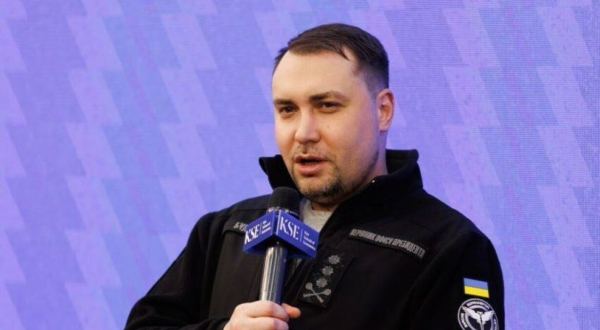
Kirill Budanov 100 days in the OP / photo from open sources
During his first 100 days on Bankova Street, Kyrylo Budanov focused on concrete actions and shifting the state apparatus from reactive to offensive mode. This involves a number of steps.
This is stated in the TSN material “Ten Actions of Budanov in a Hundred Days”.
Budanov's achievements in 100 days in office
Budanov formulated his management philosophy in a conversation with students of the Kyiv School of Economics: the world moves with actions, not words. It is this principle, according to the authors of the material, that determines the style of his work at Bankova – an emphasis not on rhetoric, but on concrete steps and results.
One of the main areas of work for the new head of the OP has been participation in the negotiations. The goal is not just to be involved, but to try to change the very logic of the process – to go from presence to achieving results and return Ukraine to the status of a full-fledged player on the international stage.
In parallel, the prisoner exchange process was centralized. In one hundred days, 659 Ukrainians were returned home, and the direction was integrated into a broader negotiation track – so humanitarian issues are gradually moving into the realm of international diplomacy with the participation of partners.
A separate foreign policy direction was the expansion of Ukraine's presence in Africa. Following the results of an interdepartmental meeting with the participation of the Ministry of Foreign Affairs, the State Duma and the State Duma announced the formation of a systemic policy towards the countries of the continent and the Global South – with clear priorities and mechanisms for promoting interests.
Among the domestic initiatives, the creation of the National Pantheon, a space of historical memory in Kyiv, to which the ashes of prominent Ukrainians from different parts of the world are planned to be returned, stands out. According to preliminary data, dozens of such burials have already been identified.
Another block is the economy. Kyrylo Budanov headed the Council for Entrepreneurship Support and set a course according to which the economy is perceived as a component of national security, and the state is not a controller, but a partner for business.
In the social direction, the affordable housing program “eOselya”, which has already covered over 24 thousand families, is now being considered more broadly – as a tool for returning Ukrainians home, supporting the military, and restoring the economy.
Another priority for the head of the OP was the preservation of cultural heritage. For him, this is not only a humanitarian sphere, but also an element of the country's security and international positioning.
Veteran policy has also been rethought: the emphasis is shifting from social assistance to the integration of veterans as an active resource – with a role in community development and post-war reconstruction.
In addition, the church has been identified as a partner in humanitarian issues, support for the military, and countering Russian influence in the spiritual sphere – cooperation with religious organizations has been highlighted as a separate area.
The key management decision was to reformat the Office itself: fewer internal conflicts, more coordination, and more open interaction with deputies.
In summary, the changes come down to three things: speed of decisions, clear vertical responsibility, and reliance on analytics – and the Office's gradual transition from a reactive model to a proactive one.