
Main points
- China supports Iran verbally, but cannot physically intervene because it lacks the necessary capabilities.
- The protracted conflict in Iran threatens China's oil supplies, which could bring Beijing closer to Washington amid the oil crisis.
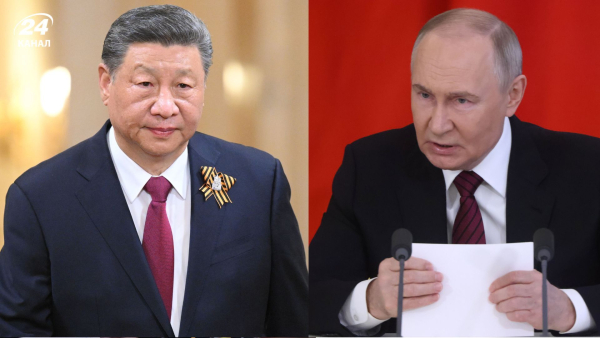
China cannot intervene in the war in Iran, so it limits itself to calls for negotiations and tries to protect its own oil interests. Unlike Russia, which is interested in prolonging the conflict due to rising oil prices.
Political scientist Igor Reuterovich explained to Channel 24 that China is losing from this situation, and this could paradoxically bring Beijing closer to Washington.
Will Beijing side with Iran in the conflict with the US?
China is one of Iran's key partners, and its energy security directly depends on the situation in the Middle East – more than 50% of Beijing's oil imports come from there, of which 13% are directly from Iran through the Strait of Hormuz.
Beijing, on the contrary, has already called the Iranians and demanded that they not block the strait. The problem is that it is now unclear who to call in Iran at all – the new leadership has not been officially confirmed. For now, China is waiting, but the longer the conflict lasts, the more actively it will act – up to and including putting pressure on Tehran behind the scenes.
Reiterovich said.
China may try to mediate, but it lacks the physical fleet, bases, and capabilities to confront the US outside its territory. Beijing can only watch and hope to maintain its economic influence in the region.
Will China move closer to Washington over the oil crisis?
India has already reacted to the escalation – it is again increasing purchases of Russian oil, although recently the trend was in the opposite direction.
“Where else can they get closer to Russia – maximum cooperation is already possible. But China should pay attention to the key thing: Russia signed a strategic partnership agreement with Iran and did not help it in any way. Russia hopes to make money from rising oil prices, but this is unrealistic – the conflict, we hope, will be short-lived,” said Reuterovich.
China stands to lose from the conflict due to oil disruptions, while Russia stands to gain. This paradox could push Beijing toward rapprochement with Washington ahead of the Trump-Xi Jinping meeting in April.
Pay attention! The former secretary of the Polish delegation to the NATO parliament, Piotr Kulpa, believes that for China, which supports Iran, events in the Middle East can unfold according to two scenarios. The first is that the United States completely subjugates Tehran, changes the regime, establishes its own and destroys Iran as an entity. Iran retains its integrity and remains a strategic ally of China, if only because it is an enemy of the United States.
How do events in the Middle East affect the economy?
- Tensions between the US, Israel and Iran are raising the risk of disruptions to car supplies from Asia due to the possible closure of shipping in the Strait of Hormuz. Asian automakers are heavily dependent on exports to Middle Eastern markets. Therefore, any restrictions on maritime transport in the region could cause significant financial losses for them.
- Due to the war in Iran, one of Qatar's liquefied natural gas plants has been suspended, so the country has begun leasing out some of its tankers. These are the gas carriers Al Thumama and Mesaieed, which are currently located near the west coast of Africa.
- Oil prices have jumped sharply after the US and Israeli strikes on Iran. As of March 6, 2026, the price of oil is: Brent – $86.88 per barrel, WTI – $83.92, Urals – $71.97.