
Main points
- The Chernobyl disaster occurred due to a combination of human error and imperfections in the design of the NPP, which created an uncontrolled situation during a night test on April 26, 1986.
- The consequences of the accident included radioactive contamination of territories in Belarus, Russia, and Ukraine, as well as the creation of an exclusion zone around the station, which still remains almost uninhabited.
- 1 Chronology of the accident: when did the Chernobyl nuclear power plant explode?
- 2 Why is disaster not just one cause?
- 3 Was the experiment really a mistake?
- 1 Chronology of the accident: when did the Chernobyl nuclear power plant explode?
- 2 Why is disaster not just one cause?
- 3 Was the experiment really a mistake?
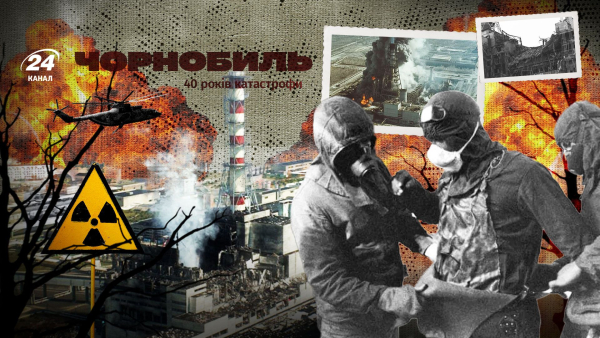
40 years ago, on April 26, 1986, an explosion occurred during a night test at the fourth power unit of the Chernobyl nuclear power plant. The fire in the destroyed reactor lasted for ten days, and a large amount of radioactive substances were released into the atmosphere. For Ukraine, this date has long become not only a day of remembrance of the largest man-made disaster, but also a reminder of the price of mistakes, silence and haste.
The official version of the causes of the accident was formed gradually. Initially, the Soviet commission placed the main responsibility on the station personnel – they said that it was the operator's errors and violations of the regulations during the experiment that led to the explosion. Later, in particular, after international investigations, this approach was revised: the list of causes was added to the design features of the reactor, which in certain modes could sharply increase reactivity. As a result, the official explanation today boils down to a combination of the human factor and the imperfection of the RPC design, which together created an uncontrolled situation.
The Chernobyl spill did not stop at the borders of Ukraine. According to the IAEA, the contamination covered approximately 150,000 square kilometers in Belarus, Russia, and Ukraine, and the radioactive substances were carried over great distances; a radioactive cloud actually passed over Europe. The exclusion zone around the station covers a radius of approximately 30 kilometers, and a large part of it still remains almost uninhabited.
This place, 36 years after the accident, has again become a risk zone: in February 2022, the Chernobyl NPP site came under the control of Russian troops, and the occupation lasted until the end of March. And in February 2025, the Russian “Shahed” hit the new safe confinement.
As part of the special project “Chernobyl. 40 Years of the Disaster,” Channel 24 spoke with experts about what caused the Chernobyl disaster, which changed the attitude towards nuclear energy not only in Ukraine but also in the world.
Chronology of the accident: when did the Chernobyl nuclear power plant explode?
On the night of April 26, 1986, at 1:23 a.m., an accident occurred at the fourth unit of the Chernobyl nuclear power plant, destroying the reactor core and part of the building. At that time, personnel were conducting tests in a mode that was intended to check whether the turbine could continue to power critical equipment for some time after the reactor was shut down. After a sharp increase in power and temperature, two explosions occurred, followed by a fire that lasted ten days; it was this that released a huge amount of radioactive materials into the atmosphere.
Pay attention! Especially for the 40th anniversary of the Chernobyl disaster, Channel 24 will publish a series of materials that will tell about the largest man-made disaster and its consequences. As part of the project “Chernobyl. 40 years of the disaster” , the liquidators and their children will recall what happened immediately after the accident and how it changed their lives. Also, together with experts and historians, we will find out how the Soviet Union did everything to ensure that the disaster became the largest possible scale.
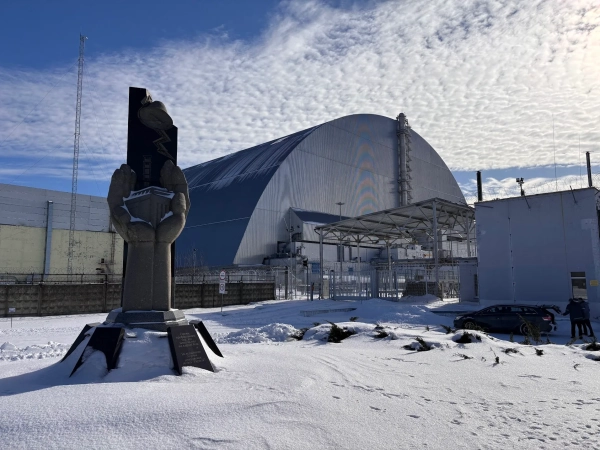
Arch – a new safe confinement / Photo by Lev Shevchenko, 24 Channel
The consequences were visible not only near the station. Already on April 28, increased radiation levels were recorded in Sweden and Finland, and later traces of the release were detected in other countries in Europe and throughout the northern hemisphere. The IAEA notes that radioactive substances carried by the wind affected Scandinavia and other parts of the continent, and the products of the accident were measured in all countries of the northern hemisphere.
Pripyat was evacuated only 36 hours after the accident. According to the IAEA, the entire city with a population of about 50 thousand people was completely evacuated at that time, and later another 67 thousand were resettled from the contaminated areas; in total, about 200 thousand people were resettled due to the disaster. An exclusion zone was formed around the station, but the consequences of the release went far beyond its borders: the contamination affected large areas of northern Ukraine, southern Belarus and part of Russia, and traces of radionuclide fallout stretched for hundreds of kilometers from the station site.
For reference! The RVPK is a high-power channel-type reactor developed in the USSR. It uses graphite as a neutron moderator and water as a coolant, and the fuel in it is placed in separate channels, which allows it to be reloaded without a complete shutdown. This design provided economic and production advantages, but it also had weaknesses: in particular, a positive steam reactivity coefficient, due to which, under certain conditions, an increase in temperature could accelerate the nuclear reaction. Some of these problems were discovered during operation and began to be corrected, but at the time of the accident, not all changes had been implemented.
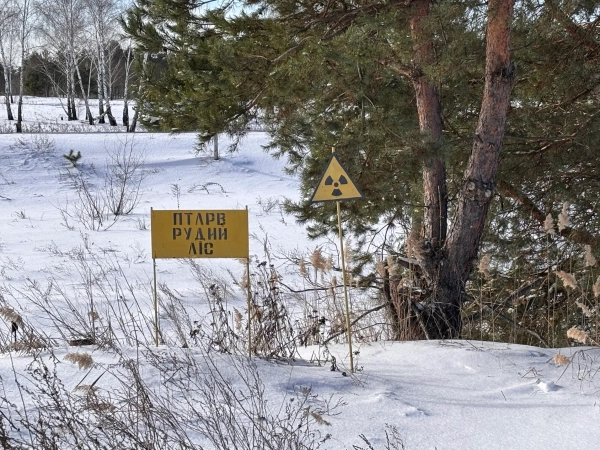
Red Forest / Photo by Lev Shevchenko, 24 Channel
Where did the RVK work?
- Chernobyl NPP (Ukraine). 4 power units with RVPK-1000. After the accident in 1986, they were gradually decommissioned (the last one in 2000).
- Leningrad NPP (Russia). One of the first plants with RPC. Some of the units have already been closed, but some modernized ones are still operating.
- Kursk NPP (Russia). Also RVPK-1000. Some of the units are still in operation, gradually being replaced by new reactors.
- Smolensk NPP (Russia). Three units with RPC, which continue to operate after modernizations.
- Ignalina NPP (Lithuania). Two powerful RVPK-1500 units (larger than Chernobyl). Closed in 2004 and 2009 – this was a condition for Lithuania's accession to the EU.
After Chernobyl, no new RPVs were built outside the USSR, and those that remained outside Russia were gradually closed. Today, this type of reactor is virtually the only one left in Russia, where it has been modernized and its service life has been extended.
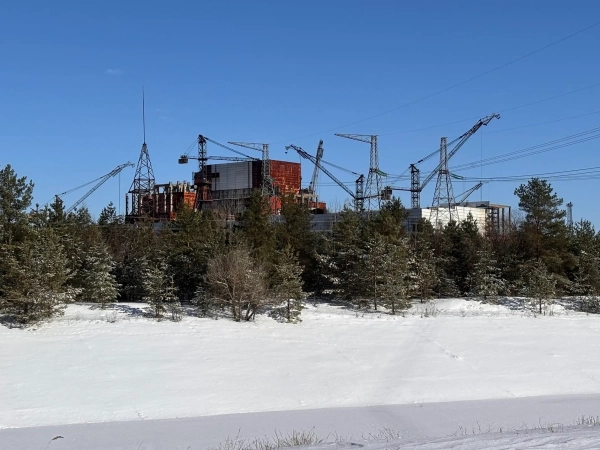
Unfinished power units 5 and 6 / Photo by Lev Shevchenko, 24 Channel
Why is the disaster not just one cause?
Yevhen Maly , Candidate of Physical and Mathematical Sciences, member of the Board of the Ukrainian Nuclear Society, in a commentary for Channel 24 suggests looking at Chernobyl not through the search for one “correct” version, but as a coincidence of several processes that overlapped at one moment. According to him, it is incorrect to talk about alternative explanations – we are talking about a set of factors that worked simultaneously.
Maly explains that the key element was an experiment that had long been planned but was constantly postponed due to the need for electricity.

Yevhen Maly
Candidate of Physical and Mathematical Sciences, Member of the Board of the Ukrainian Nuclear Society
The cause of the accident is a combination of many different factors that happened at the same time. An experiment was supposed to be conducted there, but it was postponed. What kind of experiments did they want to conduct? The task was to check whether the turbine could still produce electricity for some time after the reactor shut down.
According to Maly, the date of the experiment itself was more of a coincidence. It was conducted on the night of April 26 after another postponement – and it was at this moment that several factors converged at one critical point.
During the test, the reactor's power began to increase sharply, the temperature rose to critical values, after which explosions occurred. The scientist also emphasizes the role of the reactor's design: the emergency protection system, which was supposed to stop the reaction, worked differently than expected under specific conditions and actually stimulated it.
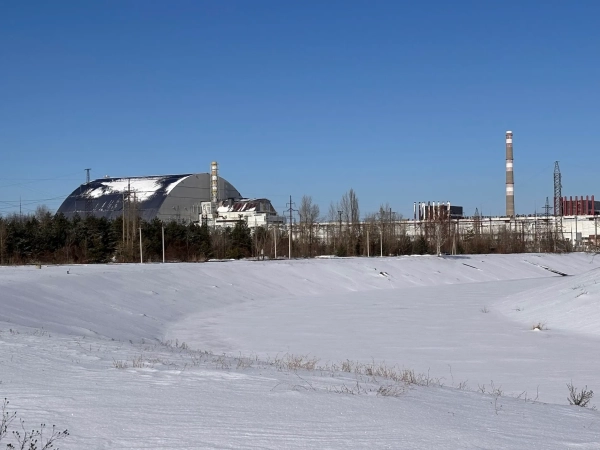
General view of the Chernobyl NPP in 2026 / Photo by Lev Shevchenko, 24 Channel

Yevhen Maly
Candidate of Physical and Mathematical Sciences, Member of the Board of the Ukrainian Nuclear Society
During this experiment, the reactor's power began to increase sharply, the temperature rose to critical values, and two explosions occurred. The following factors coincided: a flaw in the reactor design, multiplied by an attempt to carry out the experiment at any cost, AND multiplied by the fact that instead of eliminating the flaws that were discovered in time, they were hidden. That is, everything was hidden, hushed up.
Was the experiment really a mistake?
Oleksandr Kupny , a radiation safety expert, explained to Channel 24 that such tests had been conducted before, including at other Chernobyl units, but not always successfully. Their essence was quite pragmatic: to check whether the turbine would be able to generate electricity for a certain period of time after the reactor was shut down to support the operation of critical systems.

Oleksandr Kupnyi
radiation safety expert
These tests themselves are an additional element of the safety of the power unit. More precisely, not of the reactor, but of the unit itself. When the reactor no longer produces steam in the required amount, the turbine continues to rotate by inertia for a certain period of time and produces a certain amount of electricity.
This primarily concerns the power supply of the main circulation pumps, which ensure the circulation of water in the primary circuit. The problem was that the diesel generators then started slowly – up to 40-50 seconds, and this gap had to be bridged.
The cities of Pripyat and Chernobyl / Photo by Lev Shevchenko, 24 Channel


Kupny adds that such tests were usually carried out on new power units – immediately after launch. Why this was not done on the fourth – he says bluntly that he does not know, but considers it an important detail.
According to the expert, the RVK was put into operation without a gradual increase in capacity, as was done with other types of reactors, for example, VVER. This is the only type currently used at Ukrainian nuclear power plants.

Oleksandr Kupnyi
radiation safety expert
The RVPK was launched too quickly. I always give the example of the VVER: first there was 280, then 320, 440 megawatts and only then 1000. And the RVPK was immediately launched at 1000 megawatts, and already on the go, shortcomings began to appear, which they began to correct.
As a result, a significant part of the problems had to be solved already during the operation of the reactor. In particular, in the control and protection system. Due to the high height of the active zone, the rods were inserted from above for too long, which created the risks of uneven energy release. Therefore, later they began to introduce additional rods that are inserted from below. This was not the case on the first units. On the fourth, they were already prepared, but they did not have time to install them.
Kupny emphasizes that if they had already been installed, perhaps such an accident would not have happened. He also points out that graphite reactors are not a unique Soviet story. Kupny mentions the Canadian version – with horizontal fuel loading and the ability to operate on natural uranium – to show that the problem was not in the idea, but in the implementation.

Oleksandr Kupnyi
radiation safety expert
The mistake in the RVPK was that it was launched into series production too quickly, in a hurry. And only then did they finally start correcting the design errors and improving it.
In Kupny's version, the Chernobyl disaster is not the failure of a single experiment, but the result of a complex system being launched faster than it could be brought to a safe state.
Today, the Chernobyl disaster looks like one of the stages of Russia's many years of conscious and unconscious bullying of Ukraine. The experiment, the reactor design, the pace of launch, the culture of silence – each of these factors individually does not necessarily lead to a disaster. But together they formed on the night when the system lost control. Things of this scale have not happened at similar Russian nuclear power plants.
Almost 40 years later, Russia occupied the Zaporizhzhia NPP, turning it into high-tech scrap, occupied the exclusion zone for a month, and regularly attacks substations associated with the NPP in the fall and winter. All of these are elements of a single chain that must stop.