
Main points
- On April 15, 2025, it was officially announced the creation of two corps in the National Guard – “Azov” and “Charter”;
- During the year, the corps were involved in combat operations in the Kharkiv and Donetsk regions and inflicted serious losses on the Russians.
- In the article, we tell you how the process of forming corps is going, what challenges they face, and whether the reform has been justified.
- 1 Are the hulls fully formed?
- 2 Main challenges in reform
- 3 Advantages of the corps system using the example of the National Guard
- 4 Dobropil operation and the 1st Corps of the NGU
- 5 Kupyanskaya operation and the 2nd corps of the NGU
- 6 People and/or equipment – what do corps need?
- 7 What are the corps' plans for the future?
- 8 Has the corps reform been justified?
- 1 Are the hulls fully formed?
- 2 Main challenges in reform
- 3 Advantages of the corps system using the example of the National Guard
- 4 Dobropil operation and the 1st Corps of the NGU
- 5 Kupyanskaya operation and the 2nd corps of the NGU
- 6 People and/or equipment – what do corps need?
- 7 What are the corps' plans for the future?
- 8 Has the corps reform been justified?
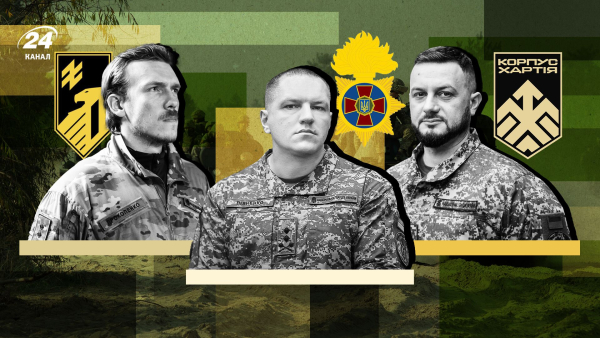
On April 15, 2025, the Ministry of Internal Affairs of Ukraine announced a historic decision – the creation of the first two corps in the National Guard based on the Azov and Charter brigades. In fact, this became part of the largest wartime reform, namely, the transition to a corps-based management system in the Defense Forces.
A year has passed since the announcement of the creation of the corps. During this time, the 1st and 2nd National Guard Corps have already conducted successful operations in the Kharkiv and Donetsk regions in cooperation with other units of the Defense Forces. However, the formation process is still not complete, because reform during a major war also has many challenges.
How were the corps formed, what are their main achievements this year, what obstacles were on the way, and what risks did they have to face? Read about all this and more in the material of Channel 24 .
Are the hulls fully formed?
One year – a lot or a little? The answer to this question depends on what exactly is being discussed. A year for reform is probably a lot, but if it is changes in the army, what is fighting? The question is open.
A year ago, the creation of the 1st Corps of the Azov National Guard and the 2nd Corps of the Charter National Guard on the basis of the 12th and 13th brigades of the same name was officially announced. The order to create the corps was signed by the Minister of Internal Affairs Ihor Klymenko on March 7, 2025. The corps included the operational brigades of the Azov National Guard (the Offensive Guard brigades), as well as other brigades that were involved in performing tasks at the front.
And this was the first difficulty of the reform. It necessitated the need to move brigades to their corps in a single zone of responsibility. And to do this in conditions of great activity of enemy assaults in many areas.
However, the commander of the National Guard, Oleksandr Pivnenko, is confident that the pace of formation of the corps is good. In a comment to Channel 24, the major general emphasized that since the creation of the corps, it has been necessary to act quickly, but the results are noticeable.
During this time, we managed not only to build management and establish work with units, but also to make it effective. At first, we had to form headquarters very quickly, build logistics, and strengthen artillery. Later, artillery brigades, assault regiments, and unmanned systems regiments were added. These are the means that are needed to strengthen capabilities and respond promptly to threats in one direction or another… Are they fully formed? I would say this: these are already integral organisms with clear management, but development continues.
– says Pivnenko.
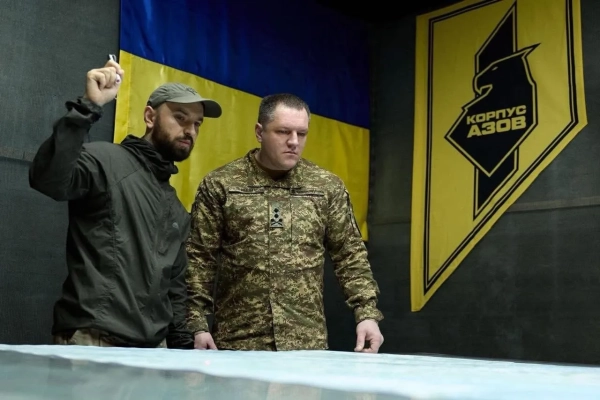
Oleksandr Pivnenko / Photo from the social networks of the commander of the NGU
The corps themselves say that the formation process is ongoing. For example, the chief of staff of the 1st Corps “Azov” Arsen “Lemko” Dmytryk says that in a year they managed to implement half of the plan that was created earlier.
We are at the equator of forming a corps, because the plan we have prescribed for ourselves is for years. Such a reform cannot be done in a year, especially in combat conditions, because it is a whole system and a strategy is needed for it to be effective. Why did we create corps at all? To restructure the control systems, to determine a section of the front held by a specific unit, which has its own units that can hold this section,
– explains “Lemko”.
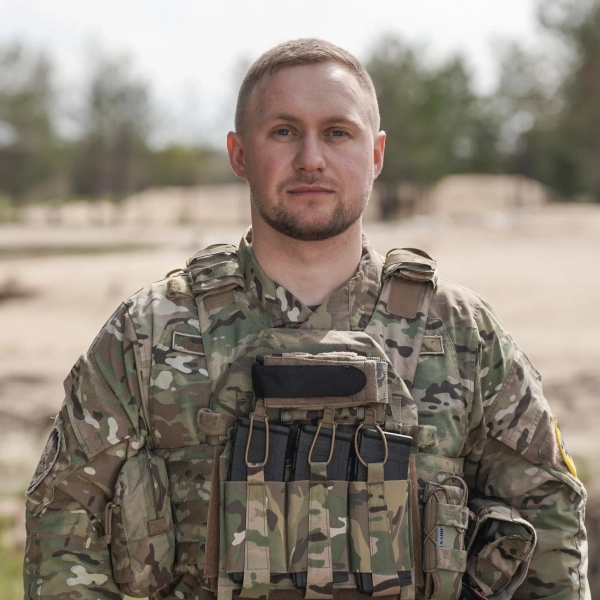
Arsen “Lemko” Dmytryk / Photo from social networks of the 1st Corps Chief of Staff
In the 2nd Corps “Charter”, the development of several areas is underway at once. Deputy Corps Commander Volodymyr Lysyuk told Channel 24 that work is currently underway to create its own units under the command of the corps commander, develop a training and education program for personnel, which is being implemented jointly with the 3rd Army Corps, and develop technologies.
Main challenges in reform
Reform during wartime has several challenges. And they have been known since last year:
- the need to conduct a rotation to assemble corps units in a designated area of responsibility;
- the need for a large number of officers to manage the corps and units;
- the need for personnel against the backdrop of a shortage of people in the army as a whole.
The 1st Corps of the NGU says that over the past year, they have managed to gather almost all of their brigades in the area of responsibility. The process is ongoing, as rotations need to be carried out in a way that has as few negative consequences as possible.
The reform of the units is still underway to gather all the brigades in the corps. We are working on this and it is one of the strategic tasks. Because sometimes the removal of a unit from one area and its replacement leads to losses of personnel and territory. Therefore, the processes are going in stages and are carried out where the current situation allows,
– says Arsen Dmytryk.
In the 2nd Corps, the situation is more complicated – a significant part of the units have not yet been transferred to the Charter Corps' area of responsibility. The deputy corps commander says that this is a serious challenge, but right now the No. 1 priority is to gather all the units.
Our main task now and our efforts are directed at this. But for now, our main brigades are stationed in important areas and without them, the front may crumble. Therefore, we have not yet gathered them in our operational zone,
– says Volodymyr Lysyuk.
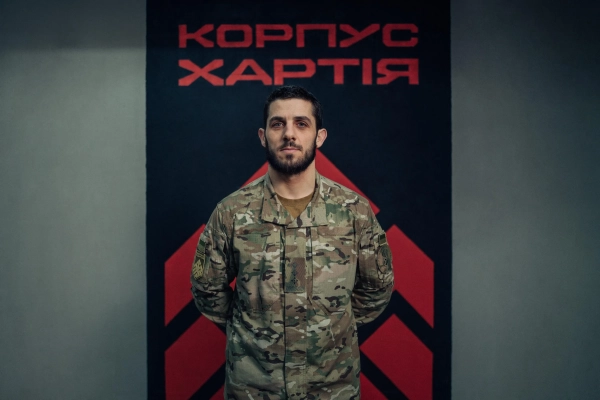
Volodymyr Lysyuk / Photo of the 2nd Corps “Charter”
National Guard Commander Oleksandr Pivnenko says that the priority now is the stability of the front, which is why the brigades are being moved gradually. However, last year it was possible to do this even on difficult sections of the front in the Donetsk region. The Major General emphasizes that the work of units within one corps has a noticeable effect.
When units operate within the same corps, it is much easier to coordinate artillery, reconnaissance, and support. This is already having a tangible effect. There is still no complete connection of all brigades to the corps, but we are systematically moving towards this. But the priority is the stability of the front,
– emphasizes Pivnenko.
Another challenge is people, or rather their shortage. We are talking not only about personnel, but also about officers. At the same time, the chief of staff of the Azov corps says that there is also significant progress in providing personnel, because the command of the National Guard and the leadership of the Ministry of Internal Affairs have paid significant attention to the formation and provision of the corps this year.
There are currently a huge number of young officers in the corps, and many of them came to the 1st Corps not only from the NGU, but also from other structures.
Advantages of the corps system using the example of the National Guard
Arsen “Lemko” Dmytryk, Chief of Staff of the 1st Corps “Azov”, notes that the reform allowed the creation of subject units that will replace temporary formations – operational-tactical grouping of troops, operational-strategic grouping of troops, etc. And brigades, regiments, and battalions will not be transferred to temporary subordination.
We created a subject unit that has its own staff units that manage, understand and see what needs to be invested. And this is the main thing. Because before we had a situation where you could invest in any brigade, and then it would be taken to another group,
– says “Lemko”.
Deputy Commander of the 2nd Corps “Charter” Volodymyr Lysyuk notes that in temporary structures both units and officers were on a rotational basis. At the same time, this is not the case in the corps, and this allows the leadership to understand the capabilities of the units and be fully aware of the situation.
In temporary associations, specialists from different areas arrived for a certain period, entered the general state of affairs, but then there were replacements again, new people arrived with a new vision and understanding. Now you know the people, you know the teams, you know the capabilities,
– notes Lysyuk.
Oleksandr Pivnenko emphasizes that, first of all, corps commanders gained a time advantage – that is, a significant part of decisions can be made quickly at the corps level, which has a significant impact in wartime.
Commanders now have the necessary tools: their own headquarters, intelligence, artillery, logistics. They see the bigger picture and can act faster. Previously, many decisions required additional approvals. Now a significant part of the issues are closed at the corps level. This saves time, and in war it is critical,
– emphasizes the commander of the NGU.
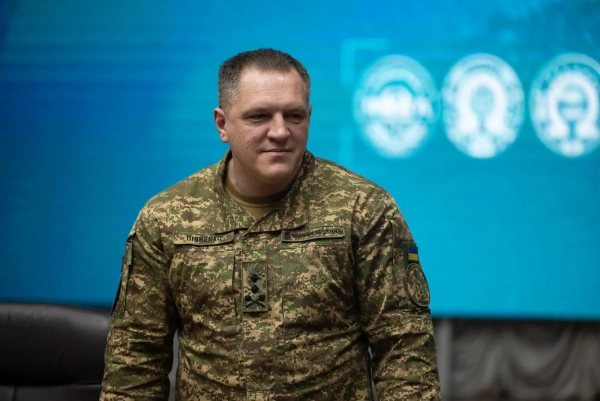
Oleksandr Pivnenko / Photo from the social networks of the commander of the NGU
The corps create their own strike units, including UAVs and artillery. Azov explains that the brigades are a shield that holds the front, but units are needed for attacks. In the 1st corps, this is an artillery brigade, a UAV regiment, an air defense division, and the Tuman special forces unit.
Also, an artillery brigade, a regiment of unmanned systems “Lava” and a drone assault regiment were created in “Charter”. The commander of the BPS regiment, Volodymyr Mirchuk, says that the corps played an important role in the formation of the unit, because now it is quite difficult to form the necessary backbone. However, “Charter” succeeded.
It is very difficult to form the backbone of a unit for the fifth year of a full-scale war. The backbone of a unit is formed from people who have combat and management experience. Actually, there is a great merit in this to the corps and one of its tasks is to provide the command, headquarters, relevant services and sections of a particular unit, including the unmanned systems regiment, with the right personnel. You can't do it yourself. The corps provided candidates, we contact them, conduct interviews, and if we are on the same page, have the same views, and they have the appropriate experience, then we select them,
– explains Mirchuk.
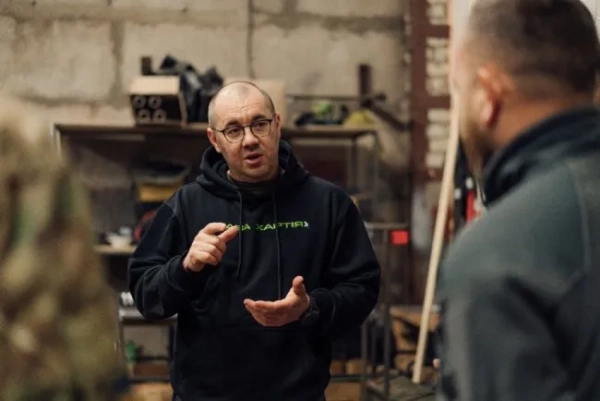
Volodymyr Mirchuk / Photo of the 2nd Corps “Charter”
The Lava Regiment operates with various types of UAVs, including “wings,” i.e. aircraft-type drones, and multirotors. However, the regiment also has a company of NRCs, which already has experience of successful operations in the corps' area of responsibility.
Dobropil operation and the 1st Corps of the NGU
Last year, the 1st and 2nd Corps of the National Guard were involved in two of the most significant operations of 2025.
In August, Russian troops infiltrated near the town of Dobropillya in the Pokrovsky direction. In a matter of days, the enemy infiltrated more than 10 kilometers and occupied settlements that were relatively rear areas. However, until the Russians brought up reserves, artillery, and UAV operators and established full control over the breakthrough zone, the Defense Forces began an urgent response.
In particular, the 1st Corps of the Azov National Guard, in coordination with other units of the Defense Forces, managed to clear several villages and stop the enemy breakthrough in a matter of days. Over the next 2 months, the so-called “Dobropil breakthrough” was completely eliminated and the territory was cleared.
The Dobropil operation is significant not only for the 1st Corps, but for the entire country or even the world. We have the very trump card that one president spoke about. It was also significant because the operation united different structures and it was one of the new types of interaction, which gave its result. The forces of unmanned systems, the DShV, the Assault Troops, the National Guard, the police, the Armed Forces of Ukraine, and the Security Service of Ukraine united and created a joint center and everyone worked for a common task. This gave a great result – liberated territory, tens of thousands of enemy casualties and the replacement of two Russian generals,
– says “Lemko”, the chief of staff of the “Azov” corps.
Combat operations of the 1st Corps and related units in the Dobropil direction: watch the video
NGU Commander Oleksandr Pivnenko says that the Dobropil operation is one example of how important rapid response is, which the corps system provides.
Units of the 1st Corps “Azov” were able to quickly respond to the difficult situation in the Dobropol direction and stabilize it together with other defense forces. In fact, in the conditions of an enemy offensive, every minute and hour matters, especially when it comes to making decisions, using units and available firepower,
– says the major general.
During the Dobropil operation, the 1st Corps of the Azov National Guard destroyed;
-
7,575 Russians (+4,995 wounded);
-
41 tanks (+15 damaged);
-
139 armored combat vehicles (+24 damaged);
-
114 guns (+146 damaged);
-
8 mortars (+11 damaged);
-
4 self-propelled artillery mounts;
-
2 multiple launch rocket systems (+4 hit);
-
2 air defense systems;
-
1,725 aircraft-type UAVs;
-
524 UAV copters;
-
59 UAV launchers (+99 hit);
-
1,220 units of automotive equipment (+143 damaged);
-
3 units of special equipment (+1 damaged);
-
2,135 engineering and fortification structures and command posts (+481 hit);
-
39 fuel storage warehouses;
-
42 ammunition storage warehouses;
-
503 means of communication and electronic warfare (+24 affected).
Also, 114 Russians were captured. Chief of Staff of the Azov Corps Arsen “Lemko” Dmytryk emphasizes that these are only those losses that have been accurately confirmed, so the numbers could be higher.
Interesting! During the Dobropil operation, it was possible to liberate about 180 square kilometers of Ukrainian land. Over 200 square kilometers were cleared during the operation.
But if we talk about enemy losses, then from August 1, 2025 to April 13, 2026, units of the Azov NGU corps managed to eliminate and destroy;
-
18,641 enemy (+ 11,561 wounded and 223 prisoners);
-
74 tanks (+34 hit);
-
234 armored combat vehicles (+58 damaged);
-
220 guns (+421 hit);
-
15 mortars (+19 hit);
-
7 self-propelled artillery mounts (+10 hit);
-
21 multiple launch rocket systems (+12 damaged);
-
9 air defense systems;
-
11,283 aircraft-type UAVs;
-
2,629 copter-type UAVs;
-
215 UAV launchers (+673 damaged, 6 captured);
-
2,552 units of automotive equipment (+368 affected);
-
196 units of special equipment (+15 damaged);
-
3,069 engineering fortifications and command posts (+4,496 affected);
-
87 fuel storage facilities (+41 affected);
-
110 ammunition depots (+18 hit);
-
2,165 means of communication and electronic warfare (+8 affected).
Kupyansk operation and the 2nd corps of the NGU
In the fall, the 2nd Corps of the NGU “Charter” became part of another landmark operation for Ukraine. Together with units of other branches of the armed forces, the NGU Corps created a joint center within which actions were coordinated and further steps were planned. The result was the liberation of Kupyansk from the Russians and the return of the villages of Myrne, Radkivka, Kindrashivka and the surrounding territories under control.
We managed to achieve our goals, destroy more than one and a half thousand enemy personnel and stop the infiltration to the north of Kupyansk. This is a prime example of the quality of management, planning, organization and coordination. This is what we call intelligence, decision and strike,
– says Deputy Corps Commander Volodymyr Lysyuk.
The search and strike group “Charter”, which included the 13th operational brigade of the Ukrainian Armed Forces, the 475th assault regiment CODE 9.2 of the 92nd ODShBr, the Foreign Legion of the GUR of the Ministry of Defense and the 144th separate mechanized brigade, coped with its task and prevented the attempted occupation of Kupyansk, although Russia refused to accept reality and claimed complete control over the city. However, the address of President Volodymyr Zelensky, recorded on the outskirts of the city, shattered all the propaganda fictions that tried in every way to deny the result of the Ukrainian army.
The company of the NRK of the Lava BPS regiment also participated in the combat operation in Kupyansk. The robotic complexes performed tasks related to logistics and evacuation, but there was also successful combat use.
The enemy was detected in certain fortifications – these were buildings. Therefore, a combined operation was carried out using fire and ground drones to destroy these shelters,
– says the commander of the Lava regiment, Volodymyr Mirchuk.
Combat work in Kupyansk: watch the video
National Guard Commander Oleksandr Pivnenko notes that the main difficulty of the Kupyanskaya operation was the need to seize the initiative and knock the Russians out of the city. However, the Defense Forces, in particular the fighters of the 2nd Corps, coped with their task.
The 2nd Corps of the Charter National Guard in the Kupyansk direction acted quite effectively. There it was important not only to restrain the enemy, but also to seize the initiative. And then – to knock out the remnants of the enemy forces from the urban development. Such a task in the conditions of the front that we have now is a fairly comprehensive approach. It involves a large number of drones in the air, kill zones, thorough reconnaissance, well-thought-out assaults,
– emphasizes the Major General.
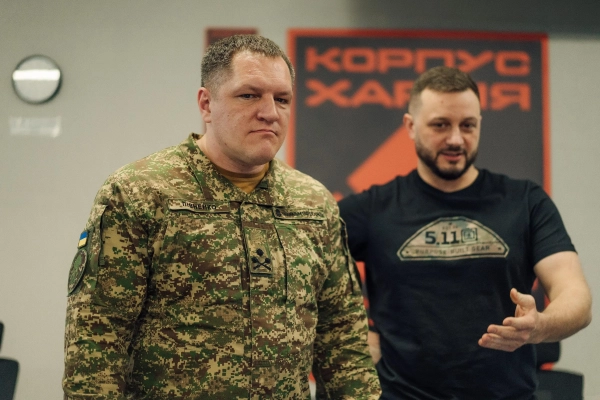
Oleksandr Pivnenko and the commander of the “Charter” corps, Ihor Obolensky / Photo of the 2nd corps of the NGU
During the Kupyansk operation, the 2nd Corps of the Charter NGU destroyed 1,027 Russian invaders, wounded 291 occupiers, and took another 13 prisoners.
Since August 2025, the 2nd Corps “Charter” in its area of responsibility in the Kharkiv region has destroyed:
- 4,269 occupiers;
- 161 weapons;
- 1,838 units of equipment;
- 17,187 drones and ground robotic complexes;
- 8,486 fortifications and structures.
People and/or equipment – what do corps need?
The commander of the NGU, Oleksandr Pivnenko, says that among the current challenges is the growing role of drones in the war. For example, in some areas the enemy has increased the use of UAVs by 3-5 times. Because of this, it is necessary to constantly scale up not only the training of future pilots, but also the units themselves. The situation is similar with artillery and armored vehicles.
While active hostilities are ongoing, it will not be possible to say that it is enough. The need remains constant. I regularly visit the units, and all key issues are resolved in close cooperation with the leadership of the Ministry of Internal Affairs, with the Commander-in-Chief of the Armed Forces of Ukraine,
– says Pivnenko.
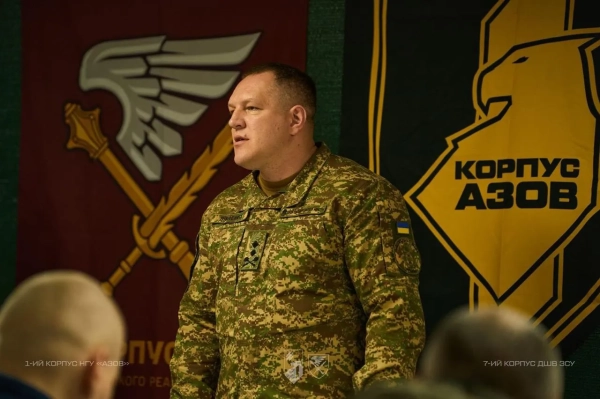
Oleksandr Pivnenko / Photo of the 1st Corps “Azov”
Although with the transition to corps, the procurement of weapons and equipment has become more systematic, the growing role of UAVs stimulates the creation of new unmanned regiments. And this already requires new specialists, so recruiting and mobilization continue, because the corps need various specialists from operators to technical specialists.
Deputy Commander of the 2nd Corps “Charter” Volodymyr Lysyuk notes that now, as in the entire army, there is a noticeable shortage of people. And this is a challenge, especially when it is necessary to create new units within the corps. However, the “Charter” has found a way out.
We went the other way – when it is necessary to create an artillery brigade, we create units, for example, divisions, in our brigades and from there we take the skeleton and fill it with new people. When creating regiments, we reduced certain battalions, formed a skeleton that has combat experience and skills and develop it further. This is a complex process,
– explains Lysyuk.
The Chief of Staff of the 1st Corps “Azov” “Lemko” emphasizes that the corps needs 3 things – all their units, human resources and technical resources. And in the last two points there is no “or”, because the presence of equipment without people and people without equipment is equally disastrous. And not only resources are important, but also how to use them.
We explain even to our partners that we need not only technical, but also human resources, and above all, tactics are important. For example, Russia is a world hegemon with huge resources. But this war shows that if you are up against a smart enemy, it is difficult to fight. Therefore, the tactics of using both people and drones are important,
– says “Lemko”.
What are the corps' plans for the future?
It is obvious that both NSU corps will continue the process of gathering all their units and creating and scaling up existing ones. Modern warfare requires instant response to challenges, searching for new solutions and approaches, so this is a priority.
The 1st Corps created a plan last year, the implementation of which, as the Lemko Corps Chief of Staff notes, will take about 2 more years.
One of the principles currently followed in the corps is the preservation of the history of the units. Although the core of the corps was the 12th Azov Brigade, the brigades united in the corps have their own history and achievements.
We have adopted a global strategy regarding the history of the units so that there is no kind of absorption. For example, we have the “Burevaya” brigade. It continues to work, it continues to be an entity, it has something to show, it has experience. We exchange it within the corps and help each other,
– says “Lemko”.
The 2nd Corps “Charter” also has ambitious plans for the future. Of course, they are not disclosed, but the deputy commander of the corps, Volodymyr Lysyuk, says that the main philosophy being implemented is based on mission command, that is, on managing units through setting tasks, but at the same time the executors have a certain freedom of action.
As for the plans, Charter keeps them secret for obvious reasons.
Of course, we strive to reach the state borders. However, I will not reveal the maps any further. We will continue to work, we know our goal, our mission, and everyone is forming their own action plan on the ground. There are their own limitations, there are their own deadlines, and we are moving according to the strategic plan of the corps commander. And I think that everything will work out,
– emphasizes Volodymyr Lysyuk.
Has the corps reform been justified?
The Commander of the National Guard is satisfied with the process of forming the corps, despite all the challenges, the corps themselves assess the reform positively. And the corps have already proven themselves in operations.
That is, the corps reform has clearly justified itself, if we talk about the case of the National Guard. Moreover, this confirms the idea that war is the best time for changes and reforms. “Lemko” from the 1st Corps is generally sure that we should implement all the reforms of the army while the war is ongoing, because after its end we will need to deal with other challenges and then reforming the army will be a priority for few people.
The NGU Corps are among the first in the Defense Forces to appear as part of the new reform. They cooperate with other corps that were also created as part of the military reform. For example, the 1st Corps works with the 7th Corps of the Ukrainian Armed Forces, and the 2nd Corps works with the 3rd Army Corps.
However, the corps still need time to fully form, which will allow this system to be finally approved and move away from temporary OTUV, OSUV, UV, OK. However, the start is there and it is quite successful.