
Main points
- On the night of May 17, the Moscow region and the Russian capital came under a massive attack by Ukrainian weapons, which reached a number of important facilities for the occupation army.
- The SOU used, in particular, strike drones and simulator drones to mislead the Russian air defense, which failed to cope, and even more so, caused damage to Russian residential buildings.
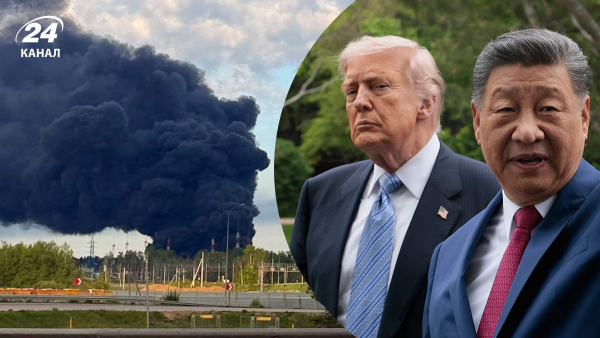

Moscow and the region experienced massive shelling. In particular, the Angstrem enterprise for the production of microcircuits for precision weapons, the Solnechnogorskaya pumping station, and the Moscow Oil Refinery were targeted. Despite the Kremlin's restrictions on the Internet, Russians filmed and actively shared the aftermath of the strikes on social media.
This was pointed out by Serhiy Bratchuk, a spokesman for the Ukrainian Volunteer Army, during a conversation with Channel 24 , emphasizing that Ukraine has clearly demonstrated that it is capable of reaching Moscow and that the parade in the Russian capital on May 9 passed peacefully – this is the merit of Kyiv, which allowed this event to take place, but now Moscow will never sleep.
Attack on Moscow: Russians will fear their air defense
Analyzing the list of military targets that were hit by the Ukrainian Defense Forces in Moscow and the region, the UDA spokesman stressed that all of them were of great importance to the Russian army and the enemy's military-industrial complex. He explained that it is too early to speak about the extent of the damage to the facilities, as additional reconnaissance is ongoing.
If we talk about the oil pumping station, everything is on fire there, so the hit obviously happened. As for the Angstrem plant, it was engaged in microelectronics, chips, this is necessary for rocketry. Bratchuk emphasized that we are talking about cruise missiles, with which Russia attacks Ukraine and kills Ukrainian citizens.

As for the military-political assessments, I think they are already on Trump and Xi Jinping's desk in the form of reports. Beijing, which is expecting Putin's visit, will have something to say with a slight oriental smile. We see that Russian air defense systems, and this is the most important thing, miss our winged weapons,
– stated Bratchuk.
The UDA spokesman added that the Defense Forces attacked the Moscow region with strike UAVs, and also used probably simulator drones that misled the enemy air defense. Bratchuk noted that, given the consequences of the attack, Russians should be afraid of Russian air defense, which tried to jam the drones and because of this, some of them hit residential areas, not reaching the intended target.
For your information! Russians in various areas of the Moscow region complained about residential buildings being hit. Residents posted relevant videos and reported such incidents in central Moscow, Khimki, and Zelenograd, outraged that Russian air defense was shooting down drones over their homes. The civilian population panicked, and people said they did not know where to hide and seek shelter.
What weapons were used to attack Moscow and the region?
The mayor of the Russian capital, Sobyanin, reported that the attack on Moscow began on May 16 and continued on the 17th. The SOU used various types of UAVs, including jet-powered ones. Later, the General Staff of Ukraine stated that the following domestic developments were used to strike targets in the Moscow region: RS-1 “Bars” (cruise missile drones), FP-1 “Firepoint” (aircraft-type kamikaze drones), BARS-SM GLADIATOR (long-range missile drones).
What objects were affected?
The Angstrem plant in Zelenograd, Moscow Region, was attacked and a fire broke out. The enterprise produces high-tech products and microcircuits for precision weapons. This facility is an important component of the Russian military-industrial complex, involved in the production of microelectronics, radio electronics, optical systems and robotics for Russia's military needs.
In the Moscow region, the Solnechnogorskaya pumping station was also hit, which is a critical part of the ring oil pipeline around the Russian capital and is used for pumping, storing, and shipping significant volumes of gasoline and diesel fuel, which is also used by the Russian army.
There was also preliminary information that the Raiduga engineering design bureau in Dubna could have been hit. It specializes in the development of cruise missiles and rocket technology. The Moscow Oil Refinery in Kapotno, which was considered one of the most highly protected facilities, was also targeted. This oil refinery is one of the largest in Russia.
Partisans weakened Russian air defense
Agents of the partisan movement “Atesh” reported that they managed to disrupt the functioning of a number of communication towers in the following areas of the Moscow region: Domodedovo, Kommunarki, Putylkovo. These facilities were equipped with electronic warfare modules that provided control of low-flying targets, data transmission and coordination between air defense units.
After the sabotage, the air defense system on the approaches to the Russian capital lost some of its observation points. Without these devices, data on targets moving at low altitudes cannot arrive in a timely manner, as a result, it is impossible to react promptly and a number of routes remain unprotected.