
Main points
- Xiaomi has ended support for MIUI and is moving to a new HyperOS system to unite smartphones, smart appliances, and electric vehicles.
- HyperOS combines Android with the Xiaomi Vela IoT platform, providing higher performance and stability, and creating a single ecosystem space for different devices.
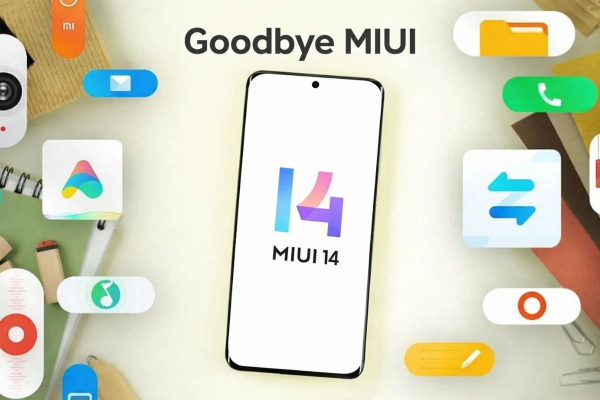
An era is over – Xiaomi has stopped supporting MIUI / Gizmochina
Xiaomi has officially ended support for its proprietary MIUI shell, which has been one of the most popular add-ons on Android for many years. Its place is gradually being taken by the universal HyperOS system, designed to unite smartphones, smart appliances, and even electric cars.
This is reported by the Gizmochina portal.
When was MIUI “killed”?
After many years of development, Xiaomi has finally stopped updating MIUI. In 2026, only two budget smartphones received new patches – Redmi A2 and Redmi A2+ , which previously had Android 13 installed. After a series of small updates, support for these models ended on March 24, 2026 , which effectively put an end to the shell's life cycle.
A brief history of MIUI
MIUI was the company's first truly iconic product long before Xiaomi started producing its own smartphones. It debuted back in August 2010 as a custom firmware based on Android 2.2 Froyo for devices from other manufacturers.
The community quickly appreciated its capabilities: regular beta updates, experimental features, root access support, and extensive customization.
The shell offered significantly more customization than “pure” Android. Over time, it introduced proprietary applications for calls, messages, notes, music, and gallery. One of the key features was its own theme engine, which allowed you to change icons, fonts, sounds, lock screens, and interface elements – something that competitors did not offer at the time.
Other interesting innovations included the ability to clone and hide applications, lock them, and built-in call recording.
As MIUI became more popular, Xiaomi began releasing smartphones under the Mi brand, first in the Chinese market and later in India and around the world. The number of users of the shell grew rapidly: from over 100 million in 2015 to 200 million in 2018, 300 million in 2019 and 400 million in early 2021.
By November of the same year, the audience had surpassed 500 million monthly active users. At the peak of its popularity, about 15% of the world's population used Xiaomi, Redmi, and Poco smartphones with MIUI.
Why did Xiaomi abandon MIUI and what will replace it?
As the ecosystem grew, the company encountered challenges. Connecting hundreds of millions of devices across more than 200 categories—from smart speakers and air conditioners to electric vehicles—required a new platform. Different firmware stacks made it difficult to unify and interoperability.
That is why in October 2023, Xiaomi announced the transition to a new operating system, HyperOS. Just a few days after the announcement, the Xiaomi 14 flagship was released on the market with the new system pre-installed.
The company began work on HyperOS back in 2014. Today, it is positioned as a human-centric OS that combines Android with Xiaomi's own Vela IoT platform based on the Linux kernel. The new system takes up less memory, provides higher performance and stability.
The main idea of HyperOS is to create a unified environment for personal electronics, smart home and cars. One of the key elements is HyperConnect technology, which is responsible for instant discovery and interaction of devices on the network, as XiaomiTime explains.
Thanks to this, a smartphone can act as a digital car key, transmit images from a camera to a TV, or control smart home elements without complicated settings.