
Main points
- Wispr Flow is an AI speech-to-text service that simplifies text input with a floating bubble button.
- The application supports over 100 languages, has high typing speed and accuracy, but so far can make mistakes with highly specialized terms.
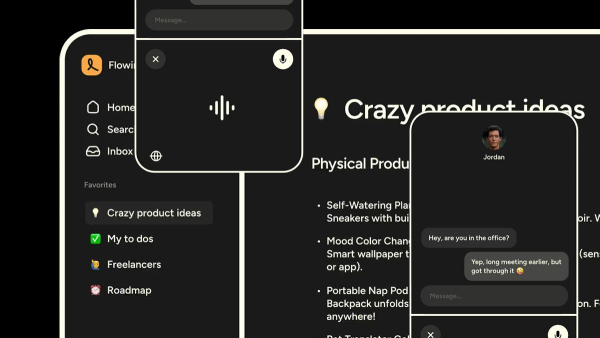
Wispr Flow brings revolutionary voice input / Collage 24 Channels/Wispr Flow
The world of technology is on the verge of a major change in the way we interact with our smartphones. The familiar on-screen keystrokes are gradually giving way to a much more natural way of communicating. A new solution, finally available to Android users, promises to turn chaotic thoughts into perfectly structured text, making you forget about the limitations of traditional keyboards.
What is Wispr Flow and why do you need it immediately?
Wispr Flow is not just another speech-to-text program. It is an artificial intelligence-based service that has already proven itself on Mac, Windows, and iOS platforms, and has now opened its doors to a huge audience of Android users. The main idea of the developers is to give people the opportunity to communicate with their devices as naturally as they think, without being distracted by the exhausting mechanical work of their fingers, writes 24 Kanal .
Unlike the iPhone version, where Wispr Flow functions as a separate keyboard, the Android application has a completely different interface. Now it is a floating bubble button that can move freely around the screen and appear on top of any other application. This allows the user not to give up their favorite Gboard or Samsung Keyboard, but to use the power of artificial intelligence only when they need to dictate a large amount of information.
Just click on the bubble, express your thoughts, and the program will instantly insert ready-made, professionally edited text into the desired field.
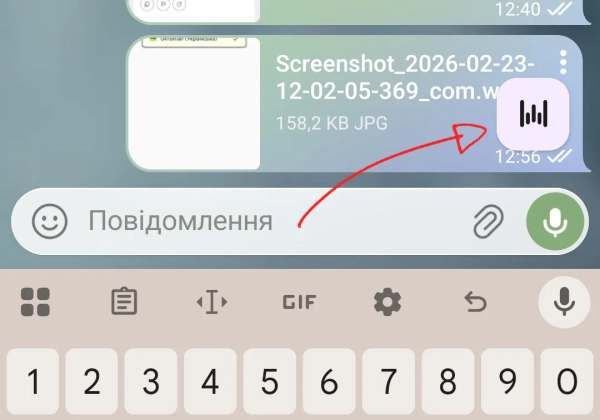
How Wispr Flow works / Screenshot of Channel 24
Great opportunities
The system works much smarter than the standard dictation tools we're used to in, for example, the Gboard keyboard. It can recognize and independently remove unnecessary parasitic words, correct punctuation, and even structure text depending on the context of the application.
For example, if a person gives the command to create a list, the program will automatically add bullets or bullet points. In addition, the AI understands when the user corrects himself directly while speaking, and leaves only the final, correct version of the phrase on the screen.
According to data provided on the Wispr Flow developers' website, the speed of such input reaches 220 words per minute, which is four times faster than the average keyboard typing speed, which is about 45 words per minute.
A recent infrastructure upgrade has increased the speed of voice processing by another 30 percent, making the process almost instantaneous. Support for over 100 languages, including Ukrainian, as well as the ability to translate in real time, make this tool versatile for international communication.
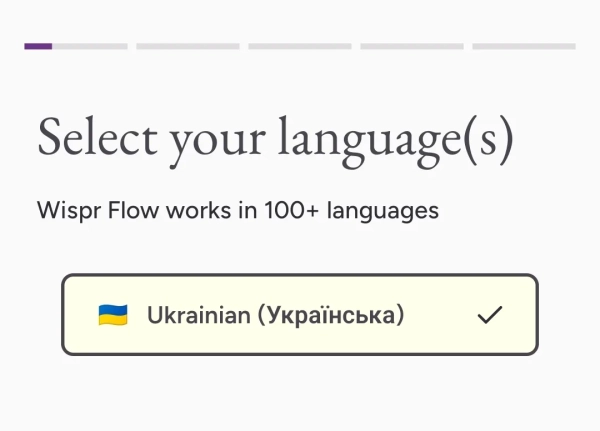
Ukrainian language is selected automatically during setup / Screenshot of Channel 24
Particular attention was paid to the Indian market, creating a special model for Hinglish – a mixture of Hindi and English that reflects the real communication style of millions of people.
The work is not yet complete.
Despite its high accuracy, which averages 90 to 95 percent, the technology is still not completely flawless. It can sometimes miss words or make mistakes in context, especially when it comes to specific terms.
There are cases where the program replaced highly specialized abbreviations, such as “NASes” (National Agency for Network and Electronic Services), with common words that sound similar, such as “nurses.”
24 Channel tested the technology personally. We also noticed similar cases. For example, in one of the tests, the system independently added a person's name at the beginning as a form of address, although there was nothing similar in the spoken phrase.
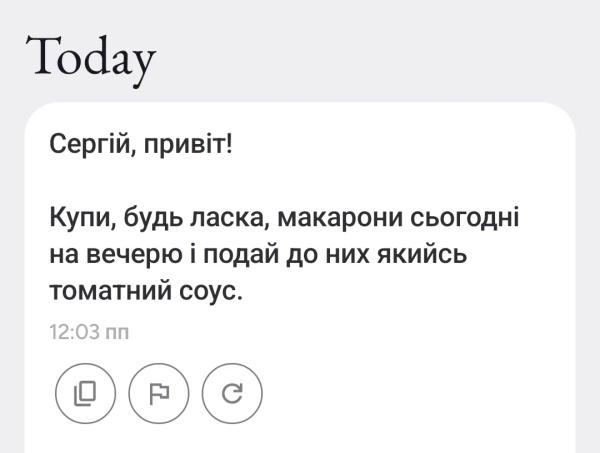
Wispr Flow testing: the name was not in the original voiced phrase / Screenshot by Channel 24
However, for most tasks – from writing messages in messengers and emails to creating drafts of large articles – its capabilities are quite enough to significantly increase productivity. The service understands words perfectly and produces much better results than the built-in capabilities of Gboard. As active users of voice dictation in Gboard, we can confirm this from our own experience.
Popularity is growing
The number of Wispr Flow users is currently unknown, but judging by the numerous posts on social media that 24 Kanal has investigated, at least the IT sector is testing it out en masse and leaving positive feedback. Some authors note that they no longer type, but only talk, saving a lot of time.
Wispr Flow has become one of my most used apps on iPhone and Mac,
– writes Threads user @hiro.report.
Another notes: “Wispr Flow is by far the best dictation software I've ever used. I could never say, 'Capitalize that' and it would do it.”
“Two weeks of using Wispr Flow. 51,504 words dictated by voice. About one chapter of a book. I use it for everything – coding, strategizing, ideas, messages. Now I just talk instead of typing. Voice is 3-4 times faster than typing. This tool finally makes it practical,” says Charles Ogarosius in Threads.
How is the company developing and what are its prospects?
The Wispr Flow project has already attracted $81 million in investment from leading funds, TechCrunch notes, and its market value is estimated at $700 million.
- In the early access phase for Android, the application is offered for free and without any word limit.
- If you register via a browser on your computer, you will be given a 14-day Pro trial.
- The free version has a limit of 1,000 words per week, according to 9to5Google.
These offers are a significant advantage, as on other platforms the full version costs $12 per month or $144 per year.
For many professionals – journalists, lawyers, developers, and students – this application could be the very tool that will finally make voice the primary means of content creation, pushing traditional printing into the background.