
Main points
- Wireless charging generates heat, which can accelerate the aging of lithium-ion batteries.
- Experts advise using certified chargers and avoiding prolonged wireless charging to reduce the negative impact on the battery.
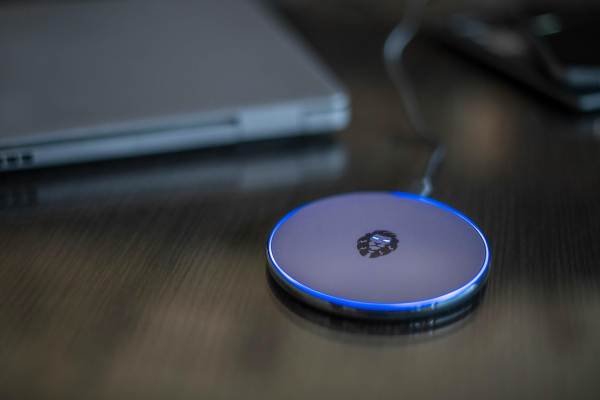
Why does a smartphone heat up when charging wirelessly and should you worry? / Unsplash / Georgi Dyulgerov
Wireless charging has long ceased to be exotic, but discussions about its impact on batteries do not subside. The main problem is not in the technology itself, but in a side effect that users often ignore.
Wireless charging is everywhere these days – in cafes, cars, offices, furniture and even public spaces. Smartphone manufacturers are actively promoting this technology as a more convenient alternative to cables. However, the question of whether such charging is beneficial for the battery remains open. This is reported by BGR .
Why don't batteries like wireless charging?
As experts explain, wireless charging itself is not dangerous for the battery. The problem lies elsewhere – in the heat generated during the energy transfer process.
The technology works through electromagnetic induction . Inside the charging station is a transmitting coil that creates an alternating magnetic field when plugged into a power outlet. When a smartphone is placed on the platform, a receiving coil in the device converts this energy into direct current to charge the battery.
However, some energy is lost during the transfer . According to the first law of thermodynamics, energy does not disappear without a trace – it turns into heat. It is this heat that becomes the main factor that accelerates the aging of lithium-ion batteries.
According to the source, wireless charging can lose about 20-30% of its power even in good conditions. In comparison, wired charging typically loses about 5%. This causes the smartphone to heat up noticeably more on a wireless charging station.
Why is overheating a major problem?
Lithium-ion batteries are particularly sensitive to high temperatures . Excessive heat accelerates the chemical aging of the battery cells, which over time leads to loss of capacity and faster discharge of the smartphone.
The situation becomes worse if the device is placed on the charger incorrectly . Even a slight displacement of the coils reduces the efficiency of energy transfer, and losses are automatically converted into additional heat.
Another problem is thick cases . They increase the distance between the charging station and the smartphone, forcing the system to use more energy to transfer current. In addition, the case itself often traps heat inside the case.
According to Anker , modern smartphones already have overheating protection systems . They constantly monitor the battery temperature and can automatically reduce the charging speed or even temporarily stop the process. But this does not mean that heating does not affect the battery's durability.
That's why experts don't recommend using wireless charging as the main way to recharge your battery every day, especially when it comes to long overnight charges.
How to use wireless charging more safely?
To reduce the negative impact on the battery, it is worth following a few simple rules.
It is recommended to use Qi2 or MagSafe certified chargers for Qi2 compatible devices. These models have magnetic alignment that helps to position the smartphone correctly and reduces power loss.
It's also worth remembering that fast wireless charging generates more heat due to the higher amperage. On the one hand, the device charges faster, but on the other hand, the battery operates in more stressful temperature conditions.
While charging, it's best to avoid heavy tasks , such as mobile games or watching 4K videos. This puts additional strain on the processor and increases the temperature of the case.
Experts also advise:
- remove thick cases while charging;
- place the smartphone on a hard surface that does not accumulate heat;
- do not leave the device in direct sunlight;
- Do not keep the battery constantly charged to 100%.
Many modern smartphones already have optimized charging features that limit the charge level to around 80% or delay full charging until the user usually wakes up. The range up to 80% is considered more gentle for long-term battery life.
In the end, wireless charging remains a safe and convenient technology, but the physics of the process cannot be circumvented. Its main trade-off is the balance between comfort of use and slower battery wear.