
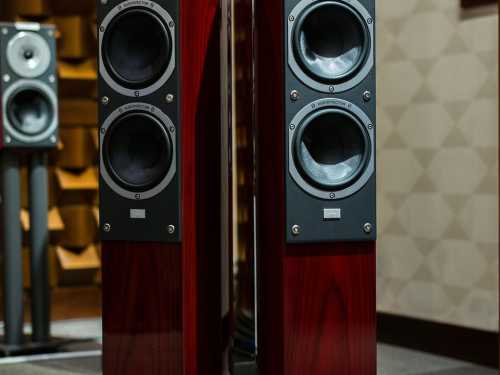
We fondly recall the times when a fully-fledged speaker system was often the centerpiece of home entertainment. Now, in the era of minimalism and integrated solutions, it is rare to see a full-fledged multi-component speaker system. A decade ago, home theaters with 3.1, 5.1, and even 7.1 surround sound were at their peak, with the number after the dot indicating the number of subwoofers that added depth to the low frequencies.
What caused such a drastic shift in priorities and consumer tastes? Let’s try to figure it out together.
Most users now choose the convenience of “smart” speakers or other portable devices. Even when their specifications claim to support stereo sound, this statement is often marketing, since for a true stereo panorama capable of reproducing the localization of sound sources, a sufficient stereo base is required – the physical space between two separate speakers. In a compact case, due to the lack of such spatial separation, it is impossible to obtain a full stereo effect, although modern algorithms and technologies can simulate surround sound, creating the impression of space and immersion. However, as practice shows, for everyday listening this turned out to be quite enough.
Our lives, although full of technical simplifications, have simultaneously become more complex in many aspects, including the requirements for personal space and budget. Traditional speaker systems, amplifiers and related equipment require not only significant financial investments, but also space for placement and time for setup. Therefore, people are increasingly choosing the principle of “let something play” – the simplest and most integrated solutions. In this context, wireless headphones have come to the fore: although their initial models were inferior to wired counterparts in sound quality, modern flagship devices, thanks to advanced audio codecs (such as LDAC, aptX HD/Lossless) and active noise cancellation, have achieved an impressive level of sound transmission. However, their high price tag is often due not only to acoustic characteristics, but also to the integration of smart functions, long battery life and premium design, and not solely to the “purity” of sound.
While the idea of large home theaters with spaced speakers has lost some of its appeal, the development of visual technologies (from 4K to HDR) only increases the need for adequate audio accompaniment for full immersion. The real factors are the convenience of streaming services, which offer an increasing selection of surround sound content, integrated and powerful soundbars with Dolby Atmos/DTS:X support, which save space, as well as the technical difficulties of properly placing and calibrating a multi-channel system in typical residential environments. In addition, not all content is created with multi-channel sound in mind, which limits the potential of such systems. Modern audio formats based on object-based sound (such as Dolby Atmos) seek to overcome these limitations by adapting the sound to a specific room and speaker configuration.
We live in a world where the pace of life is accelerating and the amount of available content is growing exponentially. New technologies and formats are emerging at a breakneck pace, changing our consumption habits. This has led to the fact that for many, sound quality has moved from a priority to an “adequate” category. In an age of scattered attention spans, there is not always the time and opportunity to sit in “your” chair to truly focus on the nuances of the soundtrack. Music often becomes the backdrop for other activities — work, sports, travel — where convenience plays a key role, not absolute acoustic perfection.
Listening to music loudly at home, especially in apartment buildings, has become a kind of bad manners. We still remember the 90s and the “zero”, when music from open windows was a common occurrence, creating a special atmosphere. However, with the increase in building density, changing social norms and increased attention to personal space, even turning on music during the day can cause discontent from neighbors. The desire not to create discomfort for others has become a determining factor, and finding a way to enjoy your favorite music at full volume in the evening without disturbing the peace is really difficult, if not impossible without using headphones.
Does this mean a complete abandonment of stereo sound? Of course, the title is somewhat provocative, but the trend towards a reduction in the number of bulky speaker systems in homes is indeed noticeable. Instead of one central audio system, people are creating their own “audio ecosystems” consisting of a variety of devices for different scenarios: high-quality sound in the car, which has become a private “audio room” for many, monitor headphones, compact wireless “plugs” for training or walking. This is not a rejection of stereo as a principle, but rather its adaptation to today’s mobile and personalized lifestyle.
However, true stereo, with its ability to create spatial staging and immersion, will not go away as long as there are music lovers and audiophiles. It is a community that values nuance, detail and emotion that only high-quality audio can convey. The rise of vinyl, which, despite its inconvenience, offers a tactile experience, a sense of “warm” analog sound and a kind of listening ritual. It is a movement in the opposite direction of digital. Vinyl demonstrates that for some listeners, listening is about much more than just reproducing sound.
We fondly recall the times when a fully-fledged speaker system was often the centerpiece of home entertainment. Now, in the era of minimalism and integrated solutions, it is rare to see a full-fledged multi-component speaker system. A decade ago, home theaters with 3.1, 5.1, and even 7.1 surround sound were at their peak, with the number after the dot indicating the number of subwoofers that added depth to the low frequencies.
What caused such a drastic shift in priorities and consumer tastes? Let’s try to figure it out together.
Most users now choose the convenience of “smart” speakers or other portable devices. Even when their specifications claim to support stereo sound, this statement is often marketing, since for a true stereo panorama capable of reproducing the localization of sound sources, a sufficient stereo base is required – the physical space between two separate speakers. In a compact case, due to the lack of such spatial separation, it is impossible to obtain a full stereo effect, although modern algorithms and technologies can simulate surround sound, creating the impression of space and immersion. However, as practice shows, for everyday listening this turned out to be quite enough.
Our lives, although full of technical simplifications, have simultaneously become more complex in many aspects, including the requirements for personal space and budget. Traditional speaker systems, amplifiers and related equipment require not only significant financial investments, but also space for placement and time for setup. Therefore, people are increasingly choosing the principle of “let something play” – the simplest and most integrated solutions. In this context, wireless headphones have come to the fore: although their initial models were inferior to wired counterparts in sound quality, modern flagship devices, thanks to advanced audio codecs (such as LDAC, aptX HD/Lossless) and active noise cancellation, have achieved an impressive level of sound transmission. However, their high price tag is often due not only to acoustic characteristics, but also to the integration of smart functions, long battery life and premium design, and not solely to the “purity” of sound.
While the idea of large home theaters with spaced speakers has lost some of its appeal, the development of visual technologies (from 4K to HDR) only increases the need for adequate audio accompaniment for full immersion. The real factors are the convenience of streaming services, which offer an increasing selection of surround sound content, integrated and powerful soundbars with Dolby Atmos/DTS:X support, which save space, as well as the technical difficulties of properly placing and calibrating a multi-channel system in typical residential environments. In addition, not all content is created with multi-channel sound in mind, which limits the potential of such systems. Modern audio formats based on object-based sound (such as Dolby Atmos) seek to overcome these limitations by adapting the sound to a specific room and speaker configuration.
We live in a world where the pace of life is accelerating and the amount of available content is growing exponentially. New technologies and formats are emerging at a breakneck pace, changing our consumption habits. This has led to the fact that for many, sound quality has moved from a priority to an “adequate” category. In an age of scattered attention spans, there is not always the time and opportunity to sit in “your” chair to truly focus on the nuances of the soundtrack. Music often becomes the backdrop for other activities — work, sports, travel — where convenience plays a key role, not absolute acoustic perfection.
Listening to music loudly at home, especially in apartment buildings, has become a kind of bad manners. We still remember the 90s and the “zero”, when music from open windows was a common occurrence, creating a special atmosphere. However, with the increase in building density, changing social norms and increased attention to personal space, even turning on music during the day can cause discontent from neighbors. The desire not to create discomfort for others has become a determining factor, and finding a way to enjoy your favorite music at full volume in the evening without disturbing the peace is really difficult, if not impossible without using headphones.
Does this mean a complete abandonment of stereo sound? Of course, the title is somewhat provocative, but the trend towards a reduction in the number of bulky speaker systems in homes is indeed noticeable. Instead of one central audio system, people are creating their own “audio ecosystems” consisting of a variety of devices for different scenarios: high-quality sound in the car, which has become a private “audio room” for many, monitor headphones, compact wireless “plugs” for training or walking. This is not a rejection of stereo as a principle, but rather its adaptation to today’s mobile and personalized lifestyle.
However, true stereo, with its ability to create spatial staging and immersion, will not go away as long as there are music lovers and audiophiles. It is a community that values nuance, detail and emotion that only high-quality audio can convey. The rise of vinyl, which, despite its inconvenience, offers a tactile experience, a sense of “warm” analog sound and a kind of listening ritual. It is a movement in the opposite direction of digital. Vinyl demonstrates that for some listeners, listening is about much more than just reproducing sound.
Your email address will not be published.