
Main points
- Satellite data shows that the vegetation line in the Himalayas is rising, indicating significant ecological changes due to climate shifts.
- The spread of vegetation at high altitudes could affect the hydrological cycle, altering water supplies for millions of people who depend on Asia's major rivers.
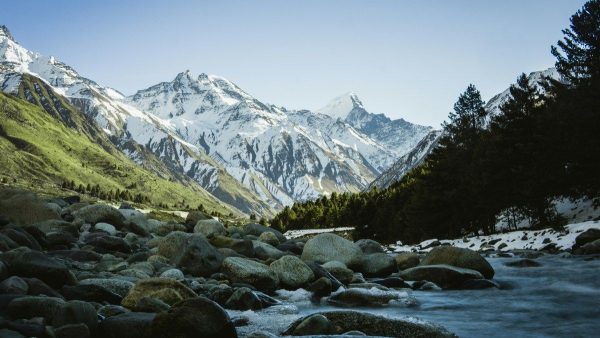
Plants instead of glaciers: why the Himalayas are losing their white color / Unsplash
The Himalayas, traditionally associated with eternal snow and ice, are undergoing a massive transformation. Satellite data over the past two decades shows that vegetation is actively conquering altitudes previously considered uninhabitable due to harsh climatic conditions.
What is displacing permafrost on the slopes of the highest mountain range on Earth?
Scientists from the University of Exeter, together with colleagues from Nepal and Switzerland, have conducted a large-scale study, the results of which indicate alarming changes in the ecosystem of the Himalayas. Analysis of Landsat satellite images for the period from 1999 to 2022 showed that the so-called “vegetation line” – the upper limit of continuous vegetation cover – is steadily rising. This process covers a huge area from Ladakh in India in the west to Bhutan in the east, writes Indian Defence Review.
The speed with which plants colonize new heights is impressive:
- According to data provided by scientists in the journal Ecography, in some regions the flora line is rising by 6.95 meters every year.
- The heaviest traffic was recorded in the Mantang area in the central Himalayas.
- Near Everest, in the Khumbu region, the rate of ascent is about 1.42 meters per year.
While these numbers may seem insignificant on a global scale, for fragile high-altitude ecosystems this is a real leap that indicates profound climatic shifts.
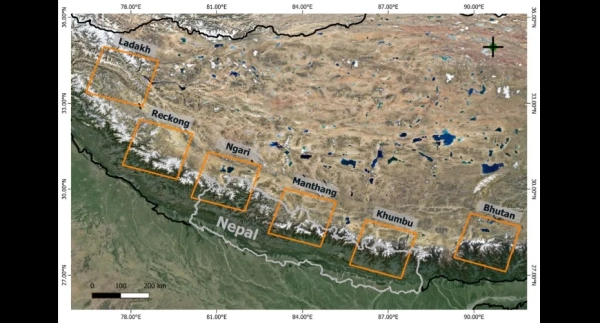
These regions are undergoing massive changes / Photo by S. Harrison, A. Tiwari, K. Anderson and R. Lang
The Himalayan Problem
Experts say the Himalayan alpine zone is an extremely harsh environment, usually dominated by low-growing plants and shrubs. However, as temperatures in the region rise faster than the global average, conditions are becoming milder. The Himalayas are warming more rapidly, leading to a reduction in snow cover, soil exposure and a longer growing season at previously barren altitudes.
Researchers identify two main trends: “greening” (increased canopy cover) and “browning” (loss of vegetation or transition to woody shrubs). Overall, the mountains are dominated by greening, but in the eastern zones, particularly in the Khumbu and Bhutan, significant areas of browning have been recorded. This indicates that the transformation is uneven and depends on local factors such as rainfall and humidity.
What will be the consequences of this?
The implications of these changes go far beyond the visual transformation of mountain peaks. The Himalayas are the source of water for ten of Asia's largest rivers, on which millions of people depend. The spread of vegetation at high altitudes could dramatically alter the hydrological cycle.
Plants can shade the soil, hold back snow, and influence how water is stored and released during melting. When these processes occur over thousands of square kilometers, they can lead to unpredictable changes in the supply of drinking water for people living downstream.
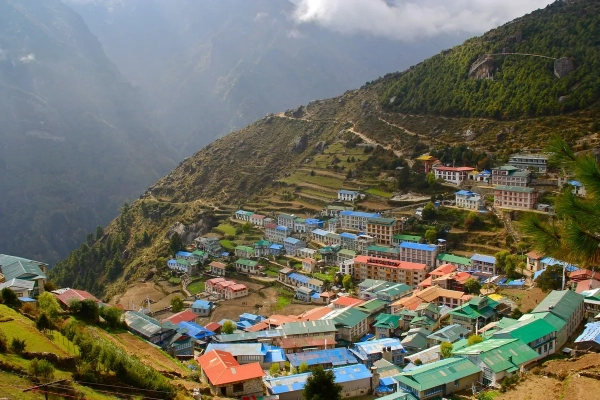
View of the town of Namche Bazaar, which depends on water flowing down from the mountains / Photo by Kalle Kortelainen
Furthermore, plants don’t just passively respond to heat—they actively transform their environment. Dark vegetation absorbs more solar energy than light snow, which can further accelerate warming. Root systems change the soil’s ability to hold moisture, and shrubs trap snow that would otherwise simply blow off bare rock.
Scientists say the greening of the Himalayas is a powerful signal that even the most remote and cold corners of our planet are changing rapidly. Further observations will reveal whether the soil and complex terrain can stop this advance, or whether we will witness a complete overhaul of the water resources of an entire continent.
How is climate change altering global water cycles?
Climate change acts as an “amplifier” of the global water cycle, making it more intense but less predictable. The underlying mechanism is that warmer air can hold more moisture (about 7% more for every degree Celsius), which fundamentally changes how water moves around the planet.
Here are the key ways the climate crisis is transforming water cycles:
- Increased extreme events . This is manifested in more frequent and severe floods, as the atmosphere's ability to store more water vapor makes precipitation more intense, leading to devastating floods. As precipitation decreases, the ground dries out more and cannot absorb moisture quickly, causing it to simply “roll” across the area, washing everything away.
- Redistribution of precipitation . Regions that are already water-scarce (e.g., the Middle East, East Africa) are becoming even drier. In high latitudes and some tropical zones, precipitation is increasing, often in the form of short but extremely powerful storms.
- Cryosphere Melting and Ocean Levels . Mountain glaciers are natural “towers” that store freshwater. Their melting initially causes excessive flooding and, later, the depletion of rivers that depend on them. Due to the melting of polar ice caps and the thermal expansion of water, ocean levels rise, leading to flooding of coastal areas and salinization of groundwater.
- Changing seasonality . Warmer winters are causing snow to melt faster and earlier, disrupting the spring rainfall schedule. This creates problems for agriculture, which needs water later in the summer. Predicting the onset and duration of monsoons, or seasonal rains, is becoming increasingly difficult.