
Main points
- 11-year-old Turen Pope discovered a 48-million-year-old turtle fossil in Wyoming, USA.
- After the discovery, the site was documented and excavated by a licensed paleontologist, revealing a nearly complete carapace of a trionychid turtle.
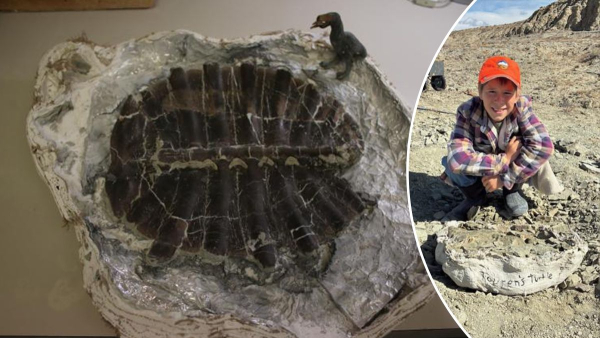
An ancient turtle from the Eocene epoch was brought back to life thanks to a child's attentiveness / Channel 24 Collage / Craig Thomas, BLM Rock Springs Field Office
In the American state of Wyoming, known for its rich geological history, an event occurred that caught the attention of scientists. During a routine trip in search of rocks, an 11-year-old boy stumbled upon a find that had been underground for tens of millions of years.
How did childhood curiosity help preserve part of the Eocene world?
The story unfolds on lands managed by the Bureau of Land Management in southwestern Wyoming. It was there that 11-year-old Turen Pope, while walking with his grandparents, noticed a strangely shaped stone among the rock fragments. What at first looked like an ordinary fragment of rock turned out to be the well-preserved shell of an ancient turtle, writes Arkeonews.
The discovery was made in the Greater Green River Basin region, an area long known to paleontologists for its rich fossil record. About 48 million years ago, during the Eocene epoch, this area had a warm, almost tropical climate. There were rivers, marshy plains, and a large lake, Gosiut. This environment was home to early mammals, crocodiles, fish, and various species of turtles.
After the discovery was reported, the Bureau of Land Management field office in Rock Springs documented the site and organized the preservation of the remains. A licensed paleontologist was called in to conduct a full excavation. The work was led by museum collections specialist J.P. Cavighelli of the Tate Geological Museum at Casper College.
In September 2025, the team returned to the site with the boy's family and carefully removed the fossil.
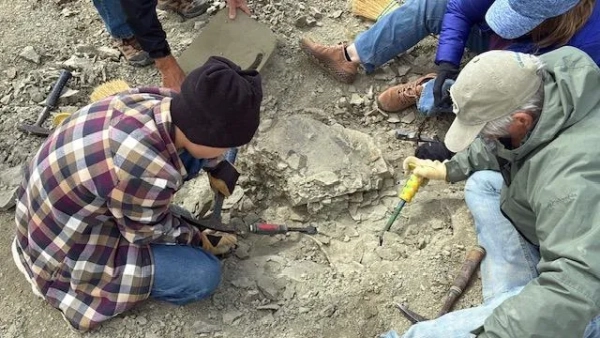
Archaeologists excavate the shell of an ancient turtle / Photo by Craig Thomas, BLM Rock Springs Field Office
It turned out that an almost complete carapace – the upper part of the shell – was preserved. No other bones were found, but the state of preservation of the shell amazed the researchers. Based on the structure and age of the rock layer – approximately 50 million years – experts attributed the animal to the family of trionychids, that is, soft-bodied turtles.
Members of this group have a flatter, more flexible shell that is not fully fused to the lower body. Such turtles still exist today, so the ancient specimen was likely similar to its modern relatives.
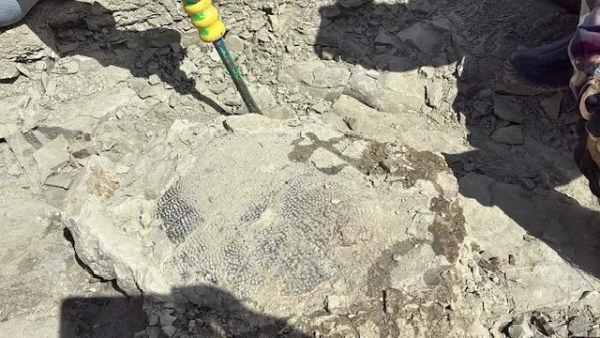
Archaeologists excavate the shell of an ancient turtle / Photo by Craig Thomas, BLM Rock Springs Field Office
After being transported to the museum, the painstaking preparation of the specimen began. Volunteers cleaned and stabilized the shell, gradually revealing details that were not visible during the excavation. The published photos show the interior of the shell, while field photos captured its exterior.
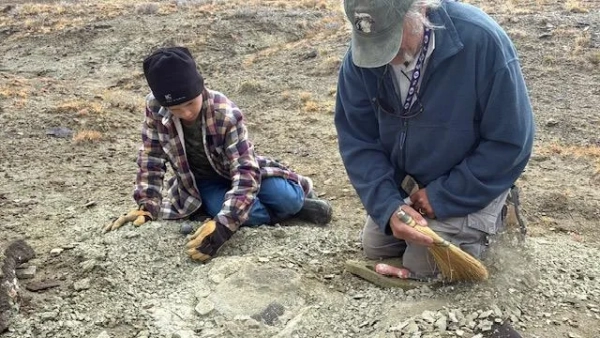
Archaeologists excavate the shell of an ancient turtle / Photo by Craig Thomas, BLM Rock Springs Field Office
For his responsible behavior, Touraine was given the opportunity to join the excavation and even give a name to the fossil turtle. Now it has the unofficial name “Little Timmy”. Despite his young age, the boy is already interested in paleontology and is collecting his own collection of fossils.
The Bureau said the incident underscores the importance of responsibly handling finds on public lands. Reporting the discovery instead of attempting to take it home preserved the scientific value of the object for research and future displays.
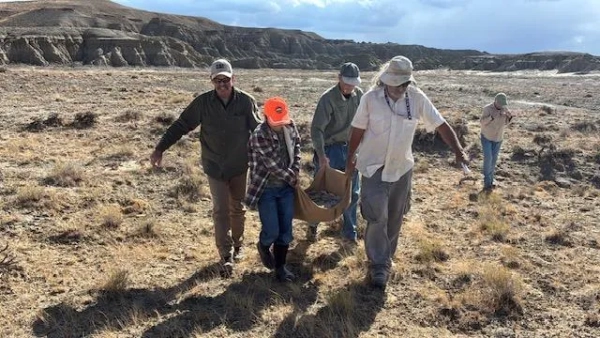
Archaeologists carry the shell of an ancient turtle / Photo by Craig Thomas, BLM Rock Springs Field Office