
Main points
- The Earth is slowing its rotation due to anthropogenic climate change, which is causing the melting of polar ice caps and redistribution of mass.
- These changes could affect high-precision systems such as GPS, satellite navigation, and spaceflight due to variations in the length of the day.
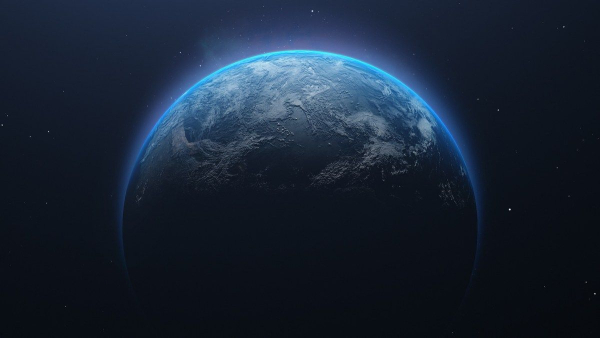
Why Earth's age is getting longer / Unsplash
The Earth is losing its usual speed. Although these changes are now measured in tiny fractions of a second, they indicate global processes that the planet has not seen for millions of years. Research indicates an invisible force that is causing the planet to slow down its rotation around its axis. This phenomenon carries a hidden threat to the fundamental systems of modern technological civilization.
Why is the Earth's rotation slowing down and who is responsible for this?
The length of an Earth day has never been a completely stable value, equal to exactly 24 hours. The speed of rotation of the planet is constantly adjusted under the influence of the Moon's gravity, complex geophysical processes in the Earth's interior, as well as changes in its atmosphere. A new large-scale study by scientists from the University of Vienna and ETH Zurich has shown that another powerful factor has come into play, which has begun to dominate natural cycles, writes IFLScience.
The length of a day on Earth is currently increasing at a rate of about 1.33 milliseconds per century, a rate of change that scientists say is unprecedented in at least the last 3.6 million years, or since the late Pliocene.
The main culprit for this process is recognized as anthropogenic climate change, which leads to the massive melting of polar ice sheets and mountain glaciers.
The mechanism of this deceleration is best described by the law of conservation of angular momentum, which is clearly demonstrated by the example of a figure skater. When the athlete presses his arms to his body during rotation, his moment of inertia is low, and he spins faster. If he spreads his arms to the sides, the mass moves away from the axis of rotation, and the speed drops sharply.
A similar situation occurs on our planet: water that has been frozen as ice at the poles (close to the axis of rotation) for millennia, after melting, flows towards the equator. This redistribution of mass moves it away from the axis, increases the Earth's moment of inertia and causes the planet to “slow down.”

Melting glaciers redistribute the planet's mass / Photo by Michael Hamments
To assess the uniqueness of the current situation, a team of researchers, including Mostafa Kiani Shahvandi and Benedict Soya, conducted real detective work in the past of the planet. They used the fossilized remains of single-celled marine organisms – benthic foraminifera. The chemical composition of their shells allows us to track sea level fluctuations over millions of years. Based on this data, they developed a deep learning model that takes into account the physics of the processes and allows us to mathematically derive the corresponding changes in the length of the day.
The analysis showed that only once in the past 3.6 million years – about 2 million years ago – has the rate of change in day length been anywhere near as fast as it is today. That was during a period of extremely high carbon dioxide levels, when Greenland was covered in forests instead of ice. But even then, the planet did not change its rate as rapidly as it is doing between 2000 and 2020.
What are the consequences for people and technology?
Although to a human, a loss of just over one millisecond per century seems imperceptible, for high-precision systems it is critical.
- Even such insignificant deviations can cause serious problems in the operation of GPS systems, satellite navigation, and space flights, where perfectly accurate information about the orientation of the planet in space is required.
- In addition, it affects the synchronization of atomic clocks and the operation of global financial networks.
Scientists predict that the impact of humanity on the Earth's rotation will only increase. By the end of the 21st century, the climate factor may become more powerful than the influence of the Moon. It is expected that from the 2080s onwards, the day may lengthen by 2.62 milliseconds every hundred years.
This indicates that human activity is transforming not only the ecology, but also the fundamental astronomical characteristics of our world.