
Main points
- In Puget Sound, scientists study six-gill sharks, Hexanchus griseus, which return to shallow waters to give birth.
- The Seattle Aquarium's research includes measuring, sampling, and installing sensory tags to study shark migrations, growth, and feeding.
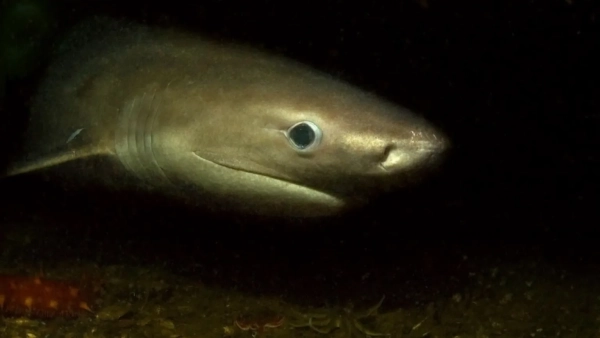
Ancient giants from the deep sea return every year – what researchers in Puget Sound found / Popsci
Off the coast of Washington state, scientists are observing rare marine predators that existed before the dinosaurs. New observations are revealing unexpected details about their lives and bizarre migratory habits.
The six-gill shark , Hexanchus griseus, remains one of the least studied large predators in the world's oceans. Unlike most modern sharks, which have five gill slits on each side, these marine creatures have six, hence their name. Their evolutionary history dates back to pre-dinosaur times, and adults can reach lengths of over 13 feet (4 meters). Popsci reports.
Why do ancient sharks return to shallow water?
This is according to a new study by experts from the Seattle Aquarium, who are studying the behavior of these mysterious predators in the waters of Puget Sound , a large bay in the northwestern United States.
Six-jaw sharks are typically found at depths of up to 3 kilometers in tropical and temperate waters around the world. They prefer dark, deep-sea zones, which makes them extremely difficult to study.

That's why the appearance of these animals in the relatively shallow waters of Puget Sound has been a real gift for scientists. Here, sharks are regularly recorded at depths of about 6 meters .
According to Esa journals , the researchers believe that females return to these waters to give birth to offspring. Moreover, the results of observations indicate the so-called ” birthplace fidelity ” – sharks probably return to the same region repeatedly to raise their young.
After the young sharks are born, they remain in the waters of the bay for a while, which actually becomes a natural nursery for them.
Juveniles spend the summer and fall in the southern Salish Sea, moving north in the winter and spring. Their daily activity also has a clear rhythm: they usually cover less than 3 kilometers per day, rising closer to the surface at dusk and returning to the depths at dawn – probably in search of prey.
In a statement from the Seattle Aquarium, the researchers said: “We believe these patterns of behavior are repeated until the sharks eventually leave coastal waters and head into the open ocean. This sequence of movements gives us a unique opportunity to study six-jaw sharks in Puget Sound.”
According to scientists, the study should help answer fundamental questions about the migration, growth rate, and food preferences of these animals.
How do scientists study sea giants?
The field study will run from May to September at three different locations in Puget Sound. The Seattle Aquarium team is working with veterinarians and partners from the Washington Department of Fish and Wildlife, Oregon State University's Big Fish Lab, and Point Defiance Zoo and Aquarium.
To work with sharks, experts have created a special lifting cradle . It allows you to safely lift the animal to the surface and quickly conduct an examination.
In some cases, the shark is turned belly up – this puts it into a natural trance state, which is observed in many species of sharks and allows it to work without undue stress for the animal.
Within 5-10 minutes, scientists manage to:
- measure the size of the shark;
- take tissue samples;
- take photos;
- install special sensor tags.
These devices will continue to transmit data on movement, habitat use, and feeding habits.
Seattle Aquarium researcher Dani Escontrela emphasized:
“Our goal is to get as many answers as possible. We are working with government agencies and scientific institutions to close knowledge gaps while putting animal health and welfare first.”
Why is this discovery important?
Six-jaw sharks have survived mass extinctions and radical climate change, but still remain almost unknown to science.
A new study could provide the first detailed explanation of how these ancient predators reproduce, grow and adapt to the modern ocean, and help assess the impact of human activities on one of the planet's oldest large marine predators.