
Main points
- In 2025, a record 313 internet outages were recorded in 52 countries, with seven new offenders.
- Governments are increasingly opting for point-based restrictions, blocking social networks and messengers, which leads to an increase in the use of VPN services, but at the same time, the authorities are struggling with these tools.
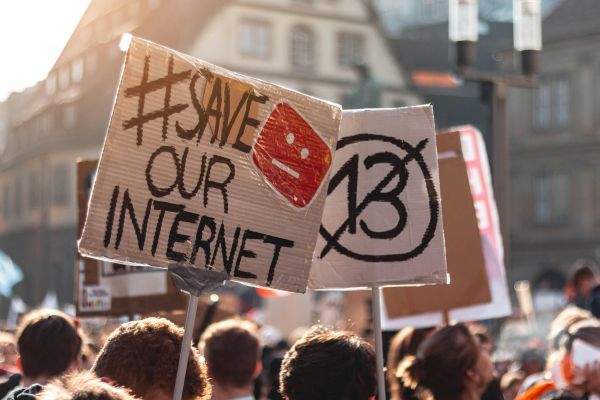
/ Unsplash / Christian Wiediger
There was not a single day without internet shutdowns in the world in 2025. A new report shows not only a record number of shutdowns, but also a change in approach – governments are increasingly using spot restrictions instead of complete network shutdowns.
According to a report by Access Now and the #KeepItOn coalition, 2025 was the worst year on record for internet restrictions. During the year, 313 outages were recorded in 52 countries, and for the first time, seven new countries were added to the list of violators. This is reported by Tech radar .
How is Internet censorship changing around the world?
Experts note that not a single day of the year has passed without at least one case of communication being blocked. Conflicts remain the main cause, accounting for 125 incidents in 14 countries.
At the same time, the very nature of censorship is changing. Instead of completely shutting down the Internet, governments are increasingly opting for point-based restrictions. This means blocking individual platforms , services, and communication channels.
This approach allows you to reduce economic losses, which are estimated at approximately $19.7 billion in 2025. A complete shutdown paralyzes businesses and daily operations , so the authorities are looking for more “pointed” tools of influence.
According to the Access Now report, one of the main trends has been the blocking of social networks and messengers. During the year, 94 cases of restrictions on access to platforms such as WhatsApp, Facebook, Instagram, TikTok and Telegram were recorded in 40 countries . This is more than 77 cases in 2024.
While such restrictions may seem less drastic, in practice they often have the same effect. People use these services for work, business, and communication, so blocking them effectively isolates users.
In response, users are flocking to VPN services. For example, Proton VPN saw a 35,000% increase in downloads in 62 countries . Such surges have become an indicator that governments are restricting access to the network.
However, the authorities have begun to actively combat these tools as well. In some regions, VPN bans, fines, and even criminal liability are being introduced. For example, in the Jammu and Kashmir region, phone checks were conducted and cases were opened against users.
In addition to VPNs , satellite internet, including Starlink, is also under pressure. In 2025, 14 cases of restrictions on alternative communication channels were recorded in seven countries – this is significantly more than the year before.
Iran has passed a law criminalizing the use of unauthorized internet tools, including satellite communications. In Myanmar, authorities are confiscating equipment and detaining service providers.
This trend is only set to intensify in 2026. Iran has already begun jamming satellite internet signals, and in Uganda, authorities have ordered Starlink terminals to be turned off ahead of a nationwide blackout during elections.
Another new control tool is the so-called “whitelist” . Unlike blocking individual sites, this approach provides access only to a limited list of allowed resources. Other services remain inaccessible by default.
Such systems are actively being developed by Russia and Iran , which indicates increased digital control.
Despite the rise in censorship, the international community is trying to respond. The International Criminal Court has recognized the link between internet blocking and human rights abuses. At the same time, coalitions are urging governments not to attack digital infrastructure during conflicts .
Users themselves also play an important role . People continue to find ways to circumvent restrictions, share information, and document events, even at the risk of security.
The report shows a clear trend – the Internet is not just being restricted , but is gradually being transformed into a controlled environment, where access to information increasingly depends on state decisions.