
Main points
- In South Korea, scientists have discovered a new species of dinosaur, named Doolysaurus huhmini, using micro-CT scanning.
- The dinosaur lived 113–94 million years ago, had an omnivorous diet, and was covered in fluffy fibers, which made it resemble a lamb.
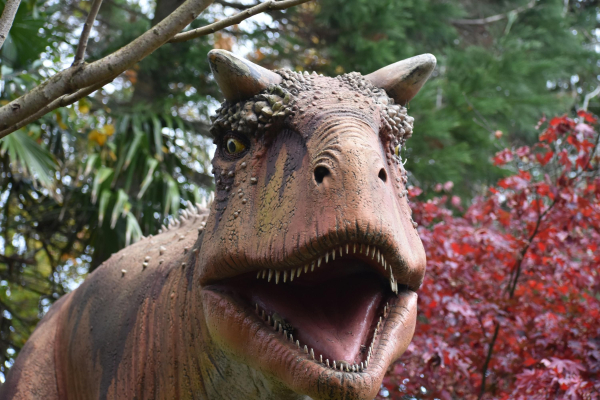
Scientists discovered a baby dinosaur in a rock – named after a cartoon character / Unsplash / Andrew Hall
Scientists in South Korea have discovered a new species of dinosaur that turned out to be a baby dinosaur that had been hidden in rock for a long time. Thanks to modern scanning, researchers were able to see a nearly complete skeleton without excavation.
The new species was named Doolysaurus huhmini , after the popular Korean cartoon character Dooly. According to researcher Jongyun Jung , the name was perfect because the specimen was a young dinosaur. This is reported by Science Daily .
How was the dinosaur found and how did it surprise scientists?
The fossil was discovered on Aphoe Island in South Korea. At first, scientists only saw a few bones – parts of the legs and spine . However, after using micro-CT scanning, they were able to identify much more, including fragments of a skull that were hidden inside the stone.
It is the first new dinosaur species described in the country in 15 years, and the first to contain skull elements. The research was published in the journal Fossil Record.
According to Scitechdaily , scientists estimate that the dinosaur was about two years old at the time of its death. It was about the size of a turkey, although adults could have been twice as large. Researchers suggest that the animal's body was covered in soft, fluffy fibers, which could have made it resemble a small lamb. Study co-author Julia Clarke noted that the dinosaur would have looked quite cute.
Scanning was key to the discovery . Instead of years of manual cleaning of the rock, scientists were able to get a complete picture of the internal structure of the fossil in a matter of months. This approach is increasingly being used to study small dinosaurs and ancient birds.
Doolysaurus huhmini lived approximately 113–94 million years ago during the mid-Cretaceous period. It was classified as a group of bipedal dinosaurs that lived in Asia and North America and may have had fur.
Interestingly, gastroliths, small stones that the animal swallowed to digest food, were found inside the fossil. This indicates an omnivorous diet: the dinosaur could have fed on plants, insects, and small animals.
The presence of these stones also suggested to the researchers that the skeleton might be almost completely preserved, which is why they decided to conduct a detailed scan.
Scientists believe that such finds may not be isolated . Although South Korea is known for its abundance of dinosaur tracks, nests and eggs, bones are rarely found. There is speculation that many remains are still hidden inside rocks and can be discovered thanks to new technologies.