
Main points
- Paleontologists in Argentina have discovered a new species of dinosaur, Bicharracosaurus dionidei, that combines features from several families of sauropods.
- This find expands knowledge about the evolution of sauropods, particularly brachiosaurids, in the Southern Hemisphere during the Jurassic period.
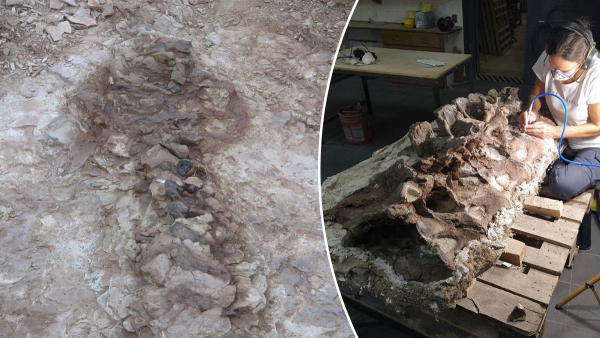
Bicharracosaurus dionidei / Collage of Channel 24/Pablo Puerta/Amalia Villafañe
In the desert expanses of Argentine Patagonia, researchers have stumbled upon an amazing find that is forcing scientists to reconsider the evolutionary path of the world's largest creatures. Paleontologists have discovered the remains of a giant that combines features of several known dinosaur families at once.
Why did this discovery become a real sensation for science?
The scientific community has gained new insights into the evolution of sauropods thanks to the discovery of a new species, named Bicharracosaurus dionidei. This dinosaur lived about 155 million years ago, at the end of the Jurassic period, on the territory of the ancient southern continent of Gondwana. While sauropods are usually associated with colossal sizes of up to 40 meters, such as diplodocus or brachiosaurus, the new representative was somewhat more modest, reaching about 20 meters in length, writes SNSB.
The story of the discovery began on an ordinary farm in the province of Chubut, where a local shepherd named Dionide Mesa accidentally noticed the fossilized bones. It was in his honor that scientists gave the species the name “dionidei”, and the genus name comes from the Spanish colloquial word “bicharraco”, which means “large animal”.
A joint team of German and Argentine paleontologists led by expert Oliver Rauchut conducted a large-scale excavation in the Cañadón Calcareo Formation. The researchers managed to recover a significant part of the skeleton of an adult individual, including more than 30 cervical, dorsal and caudal vertebrae, several ribs and a fragment of a pelvic bone.
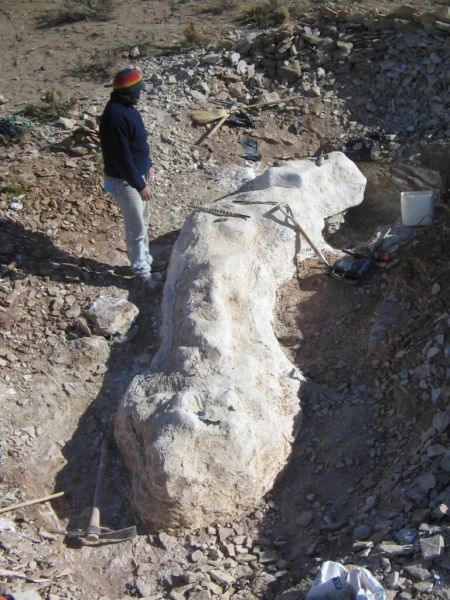
New species of dinosaur Bicharracosaurus dionidei / Photo Pablo Puerta
The scientific value of the find lies in its unique anatomical features. Alexandra Reuter, a doctoral student at Ludwig-Maximilians University of Munich and first author of the study, noted that phylogenetic analysis places this dinosaur in the brachiosaurid family, EurekAlert writes. This makes it the first known representative of this group from the Jurassic period of South America.
However, the structure of the vertebrae of Bicharracosaurus shows a strange mix of characteristics: some parts of the skeleton resemble the African Giraffatitan, while other elements of the back are more similar to the diplodocus common in North America.
Professor Oliver Rauhut stressed that until now, knowledge about the evolution of sauropods from the Late Jurassic period was based almost exclusively on finds from the Northern Hemisphere and only one significant site in Africa. The discovery in Argentina provides critically important material for comparison, allowing scientists to complete and reassess the evolutionary history of these giant herbivores, especially within the Southern Hemisphere.
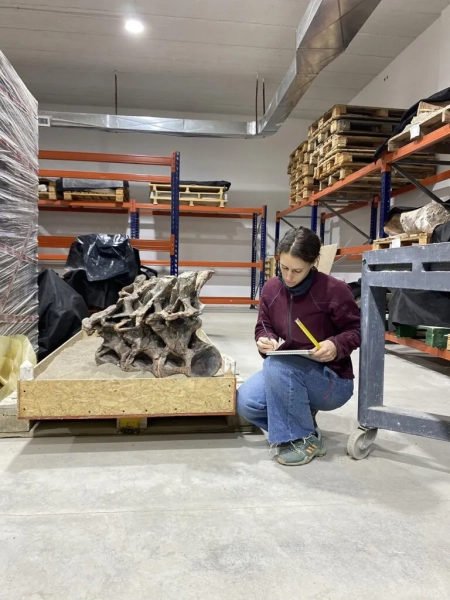
A new species of dinosaur Bicharracosaurus dionidei / Photo by Amalia Villafañe
The fossils of Bicharracosaurus dionidei are currently being preserved and prepared at the Egidio Feruglio Paleontological Museum in Trelew, Argentina. The detailed analysis and description of the new species have already been published in the scientific journal PeerJ.
This discovery not only expands the geography of brachiosaurid habitat, but also helps to better understand the complex family relationships between different groups of sauropods, which have until now remained a subject of debate among paleontologists.
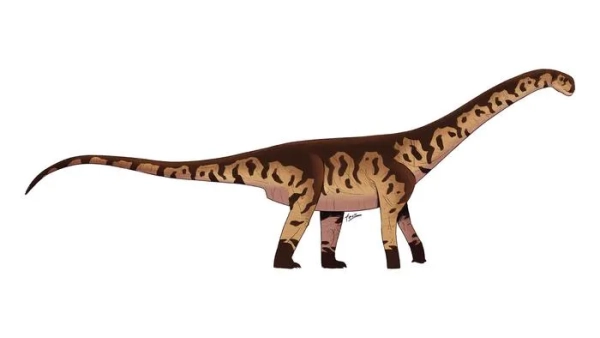
Drawing of Bicharracosaurus dionidei / Image by Felipe Cutro-Leo