
Main points
- Archaeologists have discovered Neanderthal teeth in the Stażnia Cave in Poland, indicating complex social ties and high levels of mobility among ancient populations.
- The study demonstrates that Central and Eastern Europe was a key node in the network of Neanderthal populations, confirming the existence of transcontinental routes long before the emergence of modern humans.

Genetic map of antiquity: how Neanderthal teeth from Poland connected the continent / Collage 24 Channel/Depositphotos/Unsplash
Deep in the Stażnia Cave in what is now Poland, researchers have stumbled upon an archaeological treasure trove that has forced us to reconsider the role of Central and Eastern Europe in human evolution. The remains not only tell the story of a single group, but also indicate the existence of a complex social network.
How did eight teeth change scientific ideas about the settlement of ancient people?
It was long believed that Central and Eastern Europe was merely a peripheral zone in the history of Neanderthals. However, a new study refutes this thesis, demonstrating that the region was actually a key node in an extensive network of populations, writes SciTechDaily.
An international team of scientists has analyzed eight teeth found in the Stażnia Cave, located 359 meters above sea level in the Kraków-Częstochowa Upland. Using advanced mitochondrial DNA sequencing techniques, they have identified at least seven individuals who lived in the area around 100,000 years ago. The findings are published in the journal Current Biology.
This finding is extremely rare in paleoanthropology, as genetic data is usually obtained from isolated finds scattered across time and space. In the Stable Cave, the researchers saw a close-knit group where three individuals – two children and one adult – had identical mitochondrial DNA.
This indicates that they belong to the same maternal lineage and indicates close family ties within the community. This level of detail allows scientists to move from studying isolated fragments to reconstructing real social structures of the ancient past.
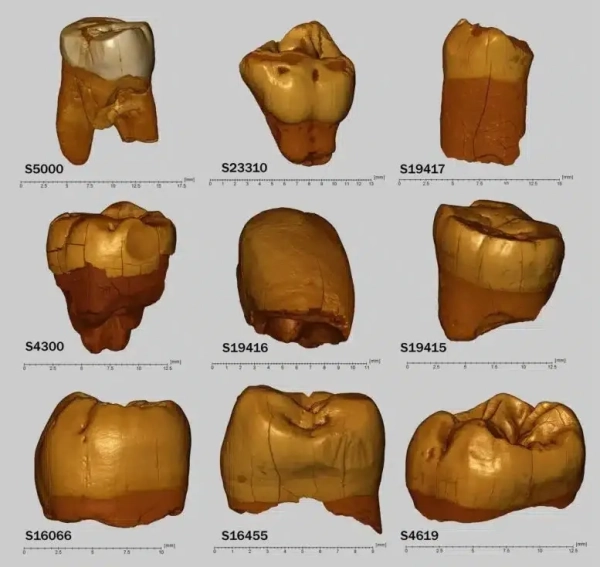
3D renderings of Neanderthal teeth from the Staia Cave in Poland / Photo by the Max Planck Institute for Evolutionary Anthropology
When and how did they live?
Molecular dating has determined that these people lived during Marine Isotope Stage 5, approximately 119,700 to 92,498 years ago. This makes the find the oldest Neanderthal genetic group discovered in Central Europe.
DNA analysis showed that their lineage was extremely widespread: similar genetic signatures were found in Neanderthals on the Iberian Peninsula, in southeastern France, and even in the North Caucasus.
Such a broad geography indicates the high mobility of ancient populations and the existence of transcontinental routes long before the appearance of modern humans in Europe.
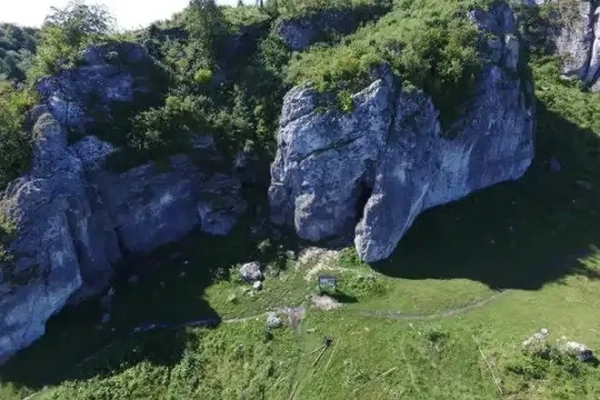
Stażnia Cave in Poland, where researchers analyzed ancient DNA from Neanderthal teeth / Photo Polish Geological Institute
The archaeological context of the finds is also striking. Along with the teeth, scientists discovered stone tools characteristic of the Micok technocomplex, including asymmetrical double-edged knives. These tools were used by Neanderthals to adapt to the harsh conditions of the steppe and tundra.
Interestingly, similar technological traditions can be traced from the Balkans to Northern Europe, which supports the theory of active knowledge exchange and group movements between different regions, writes Indian Defense Review.
The tracks lead to France
The researchers paid particular attention to comparing the Polish finds with a famous French Neanderthal named Thorin. He was previously thought to have lived about 50,000 years ago, but his genetic closeness to the Stejn group has led scientists to doubt the accuracy of radiocarbon dating for such ancient specimens.
Andrea Piccin's team emphasizes that when the results of the analyses approach the limits of the method's capabilities, it is worth placing more trust in molecular dating, which often indicates a much more solid age for the finds.
This is an extraordinary result, as it is the first time we have been able to study a small group of at least seven Neanderthals from Central and Eastern Europe, who lived around 100,000 years ago. In most cases, genetic data on Neanderthals comes from individual fossils or from remains scattered across different places and periods. In contrast, in Stejn, we have been able to reconstruct a small group of individuals, which for the first time has provided a complete genetic picture of Neanderthals in this part of Europe,
– says Picin, professor at the University of Bologna and coordinator of the study.
The scientists used tiny portions of tooth powder weighing between 8 and 29.8 milligrams to conduct the analysis. The laboratory studies were carried out in sterile conditions at the Max Planck Institute for Evolutionary Anthropology in Leipzig. Despite the complex stratigraphy of the cave, where soil layers have been mixed by frost activity over millennia, the genetic analysis has become a reliable anchor for determining the chronology of the site.
The results of the study not only shed light on the family ties of Neanderthals, but also establish Poland as a strategically important region for understanding the demographic history of humanity.
What do we actually know about Neanderthals in Europe?
Neanderthals (Homo neanderthalensis) were the true masters of Europe for hundreds of thousands of years, adapting to its harsh climate long before modern humans appeared there, writes The Trustees of The Natural History Museum.
Neanderthals inhabited vast territories:
- Western and Central Europe is the main area. The most famous finds come from Germany (Neanderthal Valley), France, Belgium and Spain.
- They reached Wales in the west, Gibraltar in the south, and the Altai Mountains in Siberia in the east.
- Neanderthals also left their mark in Ukraine. Their sites are known in the Kyik-Koba cave (Crimea), in the Pryima-1 grotto (Lviv region), and the settlement of Molodove I (Chernivtsi region).
The ancestors of Neanderthals appeared in Europe about 400,000 to 500,000 years ago. They dominated the continent before the emergence of Homo sapiens. Most scientists agree that Neanderthals finally disappeared as a separate species about 40,000 years ago, according to the Smithsonian Institution website. It is believed that one of the last areas where they lived was Gibraltar (Goram's Cave), where they may have lingered until 28,000 to 33,000 years ago, although these dates are the subject of debate.