
Main points
- NASA has completed repairs to the Space Launch System rocket for the Artemis 2 mission, which is scheduled for launch on April 1, 2026.
- The Artemis 2 mission will be the first manned mission to the Moon in over 50 years, with a crew of four astronauts who will fly around the Moon.
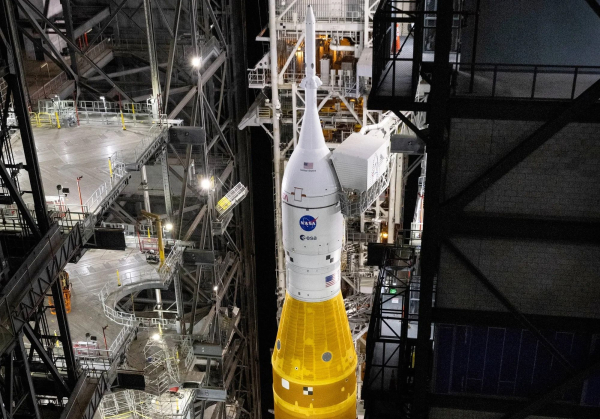
A flight to the Moon is on the horizon again / Photo by NASA
The US space agency has completed repairs to the Space Launch System rocket for the Artemis 2 mission and is returning launch preparations to the final phase. If all goes according to plan, four astronauts will embark on the first manned flight around the moon in more than half a century as early as early next April.
NASA has completed a final flight readiness check for the Artemis 2 mission, Space.com reports. After a two-day meeting, program leaders confirmed that the Space Launch System (SLS) rocket and Orion spacecraft are ready to return to Launch Complex-39B at the Kennedy Space Center in Florida.
When will the launch take place and what is known about the mission?
The rocket is scheduled to be taken out on March 19, and the launch could take place as early as April 1 .
According to Lori Glaze, interim administrator of NASA's Research Systems Development Division, the team discussed in detail the risks, problems that had arisen previously, and how to address them during the review. The agency emphasizes that the pace of preparation is quite rapid, but safety remains a key priority.
Artemis 2 will be NASA's first manned lunar mission in more than 50 years. Astronauts Reid Wiseman, Victor Glover, Christina Koch and Canadian Jeremy Hansen will embark on a nearly 10-day mission to fly in a figure-eight orbit around the moon and return to Earth aboard the Orion spacecraft, SpaceNews reports.
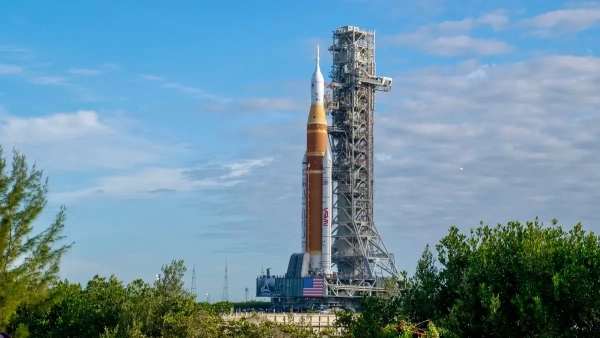
SLS rocket on the site / Photo Space.com / Josh Dinner
The launch was originally scheduled for early March, but technical difficulties arose during preparatory tests. The first “wet dress rehearsal” – a test with a fully fueled rocket – was fraught with problems, but the second attempt in February was completed successfully.
However, after the test, engineers discovered a helium supply failure in the SLS upper stage. As a result, the rocket was returned to the assembly facility on February 25 for repairs.
What happened to the rocket?
Experts determined that the cause was a faulty seal in the quick-release coupling through which ground systems transfer fuel to the rocket. A similar situation had already occurred during a previous test, when a hydrogen leak was detected in the lower stage.
NASA engineering teams have created an updated assembly design, tested it on a test sample, and certified it for use. The modified element is already installed on the upper stage.
Helium is used to support the operation of individual rocket systems and create pressure in fuel tanks.
Despite the problem, it did not affect the successful completion of the second refueling test. Because of this, NASA decided not to conduct a third such test before launch, since each refueling partially reduces the life of the tanks. The next full fueling is planned to be performed immediately before launch.
Why is this a historic mission?
The Artemis 2 mission will be the second in NASA's Artemis program, but the first with a crew aboard Orion. The previous flight in November 2022 was unmanned and was intended to confirm the operability of the ship's systems in lunar orbit. Now the agency will test how the capsule provides life support for astronauts in deep space.
The strategic goal of the Artemis program is to establish a long-term human presence on and around the Moon. The experience gained should help prepare for the construction of a manned base on Mars in the 2040s.
What does the Artemis program look like now?
The plans for the next missions have changed somewhat. Artemis 3 no longer involves a lunar landing, but will focus on docking Orion with lunar landers from private companies. These include SpaceX's Starship and Blue Origin's Blue Moon, which have won NASA contracts to provide landing services.
The first return of astronauts to the lunar surface is now planned for Artemis 4, and the next similar mission is planned for less than a year after that.
We previously detailed what the Artemis II mission looks like now after the transfer.
If the Artemis 2 launch doesn't happen on April 1, the agency has backup windows from April 2 to 6, as well as another period at the end of the month that could last into May.