
Main points
- The first polar biology laboratory has been opened in Ukraine, allowing for a full cycle of modern biological and genetic research without involving foreign institutions.
- The laboratory is equipped with instruments for molecular genetic research and actively involves students for coursework and diploma theses.
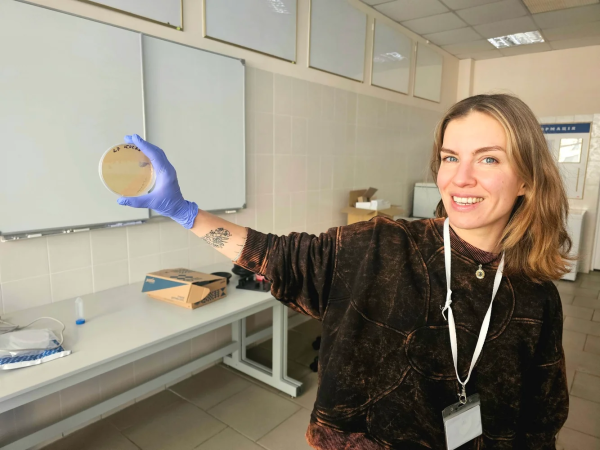
Ukraine opens laboratory for Antarctic biology research / National Antarctic Science Center
The first polar biology laboratory has begun operating in Ukraine, where samples delivered from the Antarctic station “Akademik Vernadsky” will be analyzed. The laboratory allows for a full cycle of modern biological and genetic research without involving foreign institutions.
The Center notes that life sciences have long been one of the key areas of Ukrainian Antarctic research. Some of the biological work is carried out by scientists directly at the Akademik Vernadsky station and on board the research icebreaker Noosphere, and the rest is carried out in laboratories on the mainland. This was reported by the National Antarctic Science Center (NASC).
Why does Ukraine need its own polar biology laboratory?
Previously, samples from Antarctica were delivered to Kyiv and distributed among various NASU institutions, universities, or sent for analysis abroad. With the increase in the number of studies, the volume of work of NASU biologists became so large that there was a need for their own specialized laboratory.
During the war, the construction of a separate building was not considered. The laboratory space was provided by the Kyiv Aviation Institute, and the National Antarctic Research Center provided the equipment and quickly launched work. According to the director of the National Antarctic Research Center, Yevhen Dyky , the laboratory was able to start using it almost immediately after the equipment was delivered.
The laboratory is headed by Maria Pavlovska , a specialist in marine microbiology and environmental DNA analysis (eDNA). This approach allows for the identification of a wide range of living organisms within a single sample – from bacteria and viruses to fish and marine mammals.
According to Hromadske, the laboratory is currently equipped with instruments for a full cycle of molecular genetic research. Among the main areas of work is bioprospecting, that is, searching for substances in Antarctic plants and microorganisms that may be useful for medicine or the food industry, in particular new antibiotics or antioxidants.
The key partner of the National Academy of Sciences within the project was the Department of Biotechnology of the Kyiv Aviation Institute . Together, scientists are investigating complex interactions between organisms in polar ecosystems – from the exchange of biosynthetic products between bacteria and microalgae of the Southern Ocean to the symbiotic relationships of Antarctic insects and plants with internal bacteria.
Students are actively involved in the work. They can complete course and diploma theses directly in the laboratory . These include both KAI biotechnologists and representatives of Shevchenko National University of Kyiv, and in the future, other Ukrainian universities.