
Main points
- The state of Karnataka, India, is planning to ban the use of social media for children under 16, but there are doubts about its implementation.
- Experts and technology companies are concerned that the ban could have unintended consequences, such as teenagers moving to less safe sites and limiting access to information.
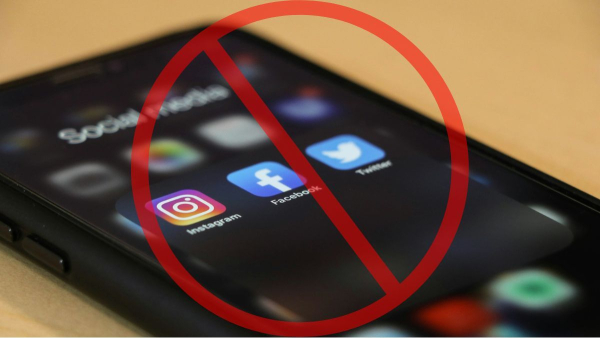
The Indian state of Karnataka plans to restrict teenagers' access to social media / Collage by Channel 24 / Photo by Unsplash
In the Indian state of Karnataka, home to the tech hub of Bengaluru, authorities are planning to ban the use of social media for children under 16. However, experts are already questioning whether such a ban can be implemented in practice.
The state of Karnataka has announced its intention to restrict access to social media for children under the age of 16. This was announced by the state's Chief Minister Siddaramaiah during his budget speech, TechCrunch reports.
Will the state government really be able to ban social media for children?
Siddaramaiah said the move is aimed at reducing the negative impact of mobile phones and online platforms on children. He said that social media use by users under 16 years of age is planned to be banned, but the government has not yet announced any details on the mechanism for monitoring or implementing this decision.
What is happening in the world?
Karnataka's initiative is not a sudden decision – such decisions have already been taken in several countries around the world and today it is a global trend. Restricting children's access to social platforms is increasingly being discussed in various countries due to concerns about their impact on the mental health and behavior of adolescents.
For example, Australia last December became the first country to implement a nationwide ban on social media for teenagers, and other states are also considering similar steps.
Indonesia has announced that it plans to restrict users under 16 from accessing so-called “high-risk platforms” starting March 28. This list could include YouTube, TikTok, Facebook, Instagram, Threads, X, and Roblox. Similar measures are also being discussed in Malaysia.
In India itself, the debate over age restrictions on social media is only gaining momentum. Officials in several states across the country are currently discussing social media restrictions for teenagers.
Why are technology companies against such a decision?
The country's tech companies have generally been cautious about such initiatives. A Meta spokesperson said the company supports tools that give parents more control over their teens' app usage. However, the company believes that a complete ban on social media could have unintended consequences.
Meta warned that such restrictions could force teens to move to less safe or unregulated sites that lack built-in protection mechanisms, such as those used in dedicated teen Instagram accounts.
The company also noted that teens typically use around 40 different apps each week, so banning just a few popular platforms is unlikely to significantly improve safety.
How will this impact the Meta?
India is one of Meta Platforms’ most important markets in the world, so even regional restrictions could have a significant impact, especially if they are adopted by other states or the entire country. While the Karnataka initiative is more of a political signal than a ready-made law, its implementation or expansion to other regions could impact the company’s business.
Instagram, Facebook, and Threads are all heavily used by a young audience that shapes trends, creates content, and maintains activity on the services. If restrictions take effect or spread to other regions of the country, Meta could lose some of its new users and advertising impressions, potentially impacting the company's business growth in one of the world's key internet markets.
Experts are also skeptical about such an initiative.
Lawyers and technology policy experts also doubt that the state has enough authority to implement such restrictions.
The founder of the consulting company The Quantum Hub, Aparajita Bharti, believes that the current statement looks more like a political signal than a ready-made legislative plan, as she said on her page in X. According to her, it is not yet clear whether the state government has legal grounds for introducing such a ban.
She also stressed that policy development needs to take into account India's specificities, such as the widespread use of a single device by multiple family members and significant digital inequality. Blindly copying Western models may not yield the expected results.
Kazim Rizvi, director of The Dialogue, a New Delhi-based think tank, agrees. He notes that most issues related to internet regulation fall under the purview of the federal government, which can make it difficult for individual states to impose mandatory restrictions on platforms on their own.
Human rights activists have also expressed criticism . The Internet Freedom Foundation said that a complete ban on social media for children raises a number of issues, from age verification mechanisms to possible risks to users' privacy.
Activists have also warned that overly strict restrictions can limit children's access to information and expression, and in some cases, could even exacerbate digital gender inequality if families use such rules to keep girls off the internet.