
Main points
- In the US, cemetery workers were found guilty of grave robbing thanks to moss analysis.
- The moss Fissidens taxifolius helped establish a connection between burial sites and refute the suspects' alibis.
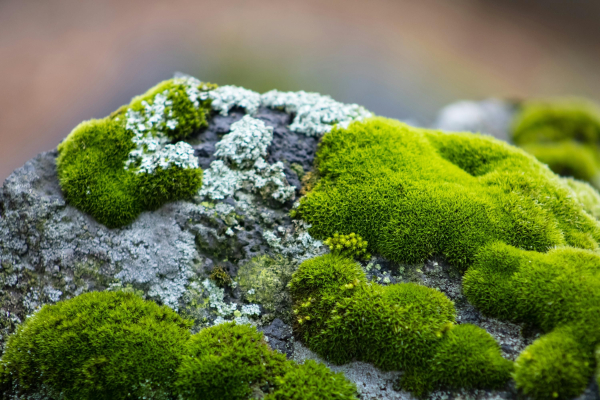
/ Unsplash / Aldo Hernandez
In the US, an unusual piece of evidence helped investigators prove the guilt of cemetery workers. A small sample of moss became the key to establishing the time of the crime and the connection between the burial sites.
The story, which began in 2009 at Burr Oak Cemetery near Chicago, has received a new scientific explanation. At that time, investigators accused cemetery workers of digging up old graves, moving remains and reselling burial plots, writes Science alert .
How did moss help solve the crime?
According to the investigation, approximately 1,500 bones of at least 29 people were illegally exhumed. The remains were moved to another part of the cemetery, which covers about 150 acres.
A key piece of evidence was an unexpected piece of moss found with the human remains at a depth of about 20 centimeters . It was handed over to botanists, including Matt von Konrat from the Natural History Museum, for analysis.
Scientists have identified it as a species of Fissidens taxifolius . Importantly, this moss was not growing at the reburial site. Instead, it was found in another part of the cemetery – where the graves were likely originally located. This helped establish a connection between the two locations.
However, this was not enough for the court – it was necessary to prove when exactly the displacement took place. The defendants claimed that the crimes could have occurred even before their employment.
As the Oxford academic page says, studying the condition of the moss was crucial. As the scientists explain, even after drying, such plants can partially retain metabolic activity. Over time, it decreases , which allows you to roughly determine when the moss was damaged or moved.
The researchers analyzed chlorophyll , a pigment responsible for photosynthesis. Its amount decreases as the sample decomposes. By comparing the sample with others of known age, they were able to assess its “freshness”.
The results showed that the moss was only one to two years old , meaning it had been moved around the time the suspects were working at the cemetery, a finding that disproved their alibis.
As a result, in 2015, four workers were found guilty of desecrating human remains.
While it's common practice for the FBI to use experts in criminal cases , using moss as key evidence is rare. Researchers found that over the past century, such plants have only been used in about a dozen criminal cases.
Scientists believe that this case could change the approach to investigations . Microscopic plants, which are often overlooked, can provide important information and help solve crimes.