
Main points
- Researchers have confirmed the possibility of self-organization of organic molecules in conditions similar to the early Earth.
- Nanopore sequencing has become a technological breakthrough, allowing rapid analysis of nucleic acid structure with high accuracy.
- This could also be used to search for signs of life on other planets, such as Mars.
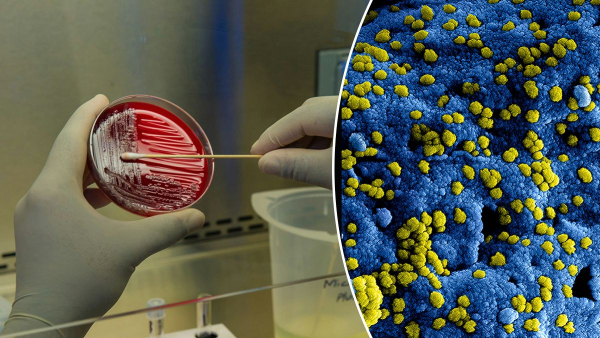
How modern sequencing is changing the theory of the origin of life / Collage 24 Channel/Unsplash
The question of how a mixture of simple organic molecules managed to self-organize into complex systems with the fundamental properties of life is a major challenge for science. Researchers are designing sophisticated experiments, trying to recreate the conditions that prevailed on the planet more than 4 billion years ago. New tools allow us to look deeper into this process than ever before.
What is the new idea?
All modern life is based on a cyclic process involving two types of polymers: nucleic acids and proteins. Understanding how these structures could have arisen through non-enzymatic synthesis and combined into protocells is key to unraveling the mystery of the origin of life. The “RNA world” hypothesis suggests that the first living systems used this polymer both to store genetic information and as a catalyst to accelerate chemical reactions, writes 24 Kanal .
The idea to explore volcanic hydrothermal vents as the cradle of life arose during an expedition to the volcano in 2004. Interesting chemical transformations were observed in the hot acidic water with a temperature of about 80 degrees Celsius. For example, myristic acid added to the water formed white foam around the edges of the pool in a matter of minutes – this was direct evidence of the self-assembly of membrane vesicles in natural conditions that mimic ancient Earth.
The main mechanism for polymer synthesis is the so-called wetting and drying cycles. When water in small pools evaporates, the monomers dissolved in it concentrate and form a thin organic film on the surface of the minerals. In the process of dehydration (condensation), water molecules are displaced, which leads to the formation of ester bonds that connect the monomers into long chains of nucleic acids. This is actually the reverse process of hydrolysis, which usually breaks down polymers in an aqueous environment.
DNA sequencing in a new way
To test this theory, a revolutionary method was used – nanopore sequencing, which the team of authors described in the journal Astrobiology. Initially, the scientists used the biological pore alpha-hemolysin, which creates a channel with a diameter of only 2 nanometers in the lipid membrane. An applied voltage of 120 millivolts causes the movement of potassium and chloride ions through the pore, creating an ionic current of about 120 picoamperes. When a single nucleic acid molecule passes through such a channel, it blocks up to 90 percent of the current.
The duration and amplitude of these blockades provide invaluable information about the molecule: its length, nucleotide base composition, and even internal dynamics, such as the unwinding of helices. While early pores only allowed analysis of homopolymers, modern sequencers like PromethION can distinguish between all four types of bases with 99.75 percent accuracy.
This is a real technological breakthrough, considering that the first human genome was sequenced over 13 years by 20 laboratories, spending $2.7 billion on it. Today, the same amount of work is done in just over 5 hours.
Breakthrough result
Experiments have confirmed that repeated cycles of wetting and drying allow the synthesis of oligomers ranging in length from 10 to over 100 nucleotides without the involvement of any enzymes. The use of mass spectrometry and modern sequencing has finally dispelled the doubts of skeptics, proving that the resulting chains are real DNA and RNA molecules.
Interestingly, mixtures of different nucleotides sometimes do not simply mix, but sort into specific homopolymer sequences, which provides clues to the chemical mechanisms of early evolution.
Challenges
One challenge for such synthesis is the damage to nucleotides in hot, acidic environments. For example, deoxyadenosine monophosphate loses up to 80 percent of its structure in just two cycles through the process of depurinization.
However, the presence of lipids acts as a protection, almost completely stopping the breakdown of molecules. This creates the conditions for a “race against time”, where the rate of polymer synthesis must exceed the rate of their breakdown before dynamic equilibrium is established.
What does this give us?
In the future, nanopore analysis could be a key tool in the search for life on other planets. If early Mars had conditions similar to Earth, Martian life could have left behind polymers similar to nucleic acids.
Using solid-state nanopores drilled into synthetic membranes could create robust devices that can withstand spaceflight and hard landings. Such devices could search for linear polyanions in ice samples hidden beneath the surface of Mars, providing definitive evidence of the parallel development of life on the two planets.