
Main points
- Pixel smartphone users will be able to remove the Google search bar from the home screen thanks to changes in Android 17 QPR1 beta 2.
- Researchers discovered an option in the Pixel Launcher code that would allow this element to be shown or hidden, satisfying user requests for personalization.
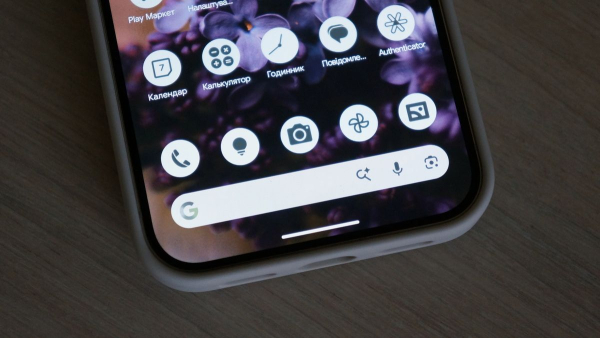
Freedom of choice on Pixel: Google will finally allow you to customize the home screen without a search bar / 24 Channel
For a long time, Pixel smartphone owners had to put up with the presence of a search bar on the home screen. This element has become a hallmark of Google devices, but the inability to remove it has caused a lot of debate among supporters of clean design and personalization.
Is the era of compulsive searching really coming to an end?
One of the most persistent requests from Pixel smartphone owners for years has been the ability to remove the Google search bar from the home screen. While this feature may be convenient for some people, it turns out to be completely useless for those who prefer alternative search engines or browsers. Fortunately for the community, there is strong evidence that Google is finally planning to give users this option, writes Android Authority.
During a detailed analysis of the Android 17 QPR1 beta 2 release, researchers discovered new lines of code in the Pixel Launcher that directly relate to the search bar settings. Specifically, these lines indicate the upcoming ability to show or hide this element on the device's home screen.
Based on the data found, they even created a mock-up of the interface using Gemini artificial intelligence to demonstrate exactly what the corresponding switch in the settings menu might look like.
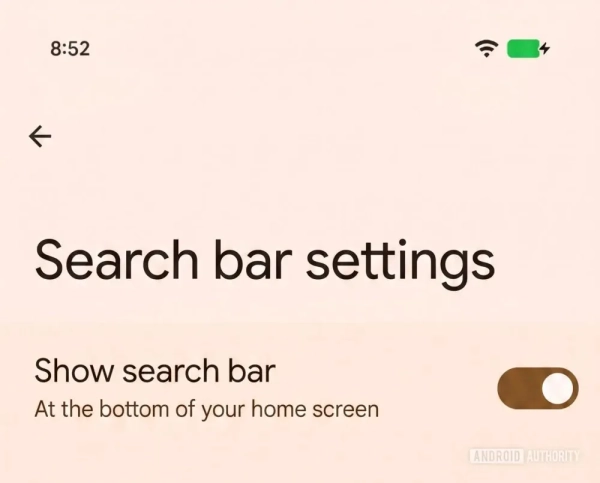
This is what a switch in the settings menu might look like / Image Android Authority
This innovation is a long-awaited addition to the Pixel line, as some users have been requesting this feature for literally years.
This query makes a lot of sense if you use an alternative search engine or just want a cleaner home screen,
– commented experts from Android Authority, which was the first to exclusively report on the find.
In addition, a significant part of the audience notes that using a regular browser is more convenient and functional for searching the Internet, and the search bar in the application menu has more powerful capabilities.
Previously, users had to find complicated workarounds to solve this problem. One of the most popular solutions was to install an alternative launcher, but this meant giving up the Pixel Launcher and its unique features. Since this option was far from ideal, direct support for disabling the search bar in the stock launcher would be a real breakthrough in terms of usability.
You may also be interested in: What do we know about Android 17
Google is already actively testing Android 17, and the final release is expected in the second quarter of 2026 – most likely in June. Pixel smartphones will traditionally be the first to receive the stable version, TechCrunch writes.
The company has changed the Android development cycle. Instead of separate Developer Previews, it now uses a continuous Canary channel, through which new features and APIs are released to developers immediately after internal testing. Google officially launched the first beta of Android 17 on February 13, 2026, according to Android Developers.
The system is currently in the final stages of beta testing. At the end of April, Google released Android 17 Beta 4, which was called the “final planned beta.” This means that the main features have already been fixed, and the company is working on optimization, stability, and bug fixes before the release, Android Central reports.
What's new in Android 17?
One of the main directions of Android 17 was the adaptation of applications for large screens. Google is essentially forcing developers to properly support tablets, foldable smartphones, and windowed mode. In Android 17, applications will no longer be able to rigidly lock a certain orientation or aspect ratio on large displays. This should improve the performance of Android on foldable devices and tablets.
Google is also seriously overhauling system performance. Android 17 gets a new memory management engine, reduced dropped frames in animations, and faster garbage collection in the ART Runtime. Beta 4 introduced the “App memory limits” feature, which limits excessive RAM usage by applications to improve battery life and stability.
Much attention was paid to cameras and multimedia. Android 17 adds new APIs for smooth switching between camera modules without friezes and jerks. Support for the VVC (H.266) codec is also announced, which should provide better video quality with smaller file sizes. Google is improving volume control between applications and background audio.
The system also introduces new interface features. These include:
- system App Lock for blocking individual applications with a PIN code or biometrics;
- new blur effects and updated Material 3 design;
- separate Wi-Fi and mobile Internet switches;
- updated screen recording;
- minimalist home screen mode;
- new gestures for Pixel;
- improved multitasking through “App Bubbles”, writes TechRadar.
Another important area is AI integration. Android 17 is expected to receive deeper interaction with Gemini and new system-level AI features. Google will probably show some of the capabilities during the presentation of “The Android Show: I/O Edition” in May 2026.
Among the smartphones that are already testing Android 17 Beta are the Pixel 6, Pixel 7, Pixel 8, Pixel 9, Pixel 10, Pixel Fold, and Pixel Tablet. Some manufacturers have also started their own developer programs. For example, Xiaomi has already opened testing of Android 17 for select flagships with HyperOS 3.3.
Pixel 11 is almost here: what is known about future smartphones
The Google Pixel 11 series, according to all leaks and insider tips, is set to be released in August 2026. Google appears to be keeping the same schedule the company used for the Pixel 9 and Pixel 10. Four models are expected: the Pixel 11, Pixel 11 Pro, Pixel 11 Pro XL, and the foldable Pixel 11 Pro Fold.
There's no official announcement yet, but we already know a lot more about the Pixel 11 than we usually do at this early stage, thanks to a massive leak of specs, renders, and Tensor G6 specs.
The main update is the new Tensor G6
The most important change in the Pixel 11 series is the Tensor G6 processor. This is the first Tensor that Google has almost completely separated from Samsung's Exynos legacy. The chip will allegedly be manufactured on TSMC's 2-nanometer process, which should provide significantly better power efficiency, lower heat, and better battery life, writes Tom's Guide.
Previous Pixels have been plagued with overheating, unstable connectivity, and battery drain issues, and it's these issues that Google seems to be trying to address with the Pixel 11.
The Tensor G6 will also feature a new ARM architecture with a 1+4+2 core configuration. According to leaks, CPU performance should increase significantly, especially in AI tasks and multitasking.
However, there is also a controversial point – the GPU. Several sources claim that Google is using relatively old PowerVR C-Series graphics. Because of this, part of the community is already criticizing the Pixel 11, believing that the smartphone will be inferior to competitors in mobile gaming.
Finally a new modem
Another big change is the abandonment of Samsung modems. The Pixel 11 will supposedly receive the MediaTek M90. For Pixel, this may be even more important than the new processor. Samsung modems have been one of the biggest problems with Pixel in recent years – users often complained about poor signal, unstable 5G and high power consumption. The new modem should improve communication quality and autonomy, DigitBin believes.
On Reddit, users are already calling it “the most important Pixel update in years.” (Reddit)
New cameras and “Pixel Glow”
Google is not planning to radically change the design. The smartphones will remain similar to the Pixel 9 and Pixel 10, but will receive thinner frames, an updated camera unit and an all-black glass camera panel. The main camera of the Pixel 11 may receive a new 50-megapixel sensor. Improvements in night video recording, AI photo processing and stabilization are also expected, according to Android Central.
One of the strangest leaks was the “Pixel Glow” feature. Rumor has it that Google may remove the temperature sensor from the back and replace it with an RGB backlight or an LED matrix in the style of the Nothing Phone. It's unclear whether this is a real feature or an early prototype.
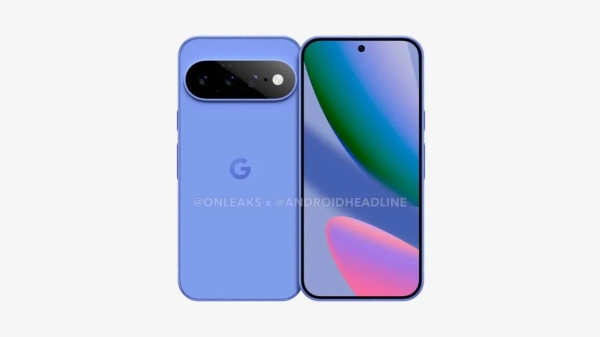
Google Pixel 11 / Image Onleaks/Android Headlines
Android 17 and deeper AI integration
The Pixel 11 will be the first smartphone to ship with Android 17 out of the box. Google is putting a lot of emphasis on Gemini AI and local AI features.
Expected:
- advanced AI assistant Gemini;
- local processing of part of AI tasks without the cloud;
- new photo and video editing features;
- AI-sorting of messages and calls;
- improved voice functions;
- new generative capabilities for the system, PhoneArena previously reported.
Security will become even more important
The Pixel 11 will reportedly feature a new Titan M3 security chip. Google continues to focus on data protection, encryption key isolation, and payment security.
There are also rumors of a return of full 3D Face Unlock based on infrared sensors, but recent leaks are conflicting, with some sources claiming that Google may have scrapped the feature.
What is questionable?
Despite the promising changes, some of the leaks caused a negative reaction.
Some Pixel 11 models may get smaller batteries than the Pixel 10. There is also information about a reduction in RAM in the base model due to a global memory shortage.
Right now, the Pixel 11 doesn't look like a revolution, but rather Google's attempt to finally fix the Pixel's weaknesses – modem, overheating, battery life, and stability. If the leaks are true, this could be the most balanced Pixel in years.