
Main points
- In Mongolia, archaeologists have explored the Gobi Wall, which was part of a medieval fortification system and served not only as a defense but also as a tool for controlling territories and resources.
- The study found that the wall was a major mechanism for governing the region during the Xi Xia state, with control over the movement of people, trade routes, and access to water and timber.
An ancient empire left a mystery / Land
In Mongolia, researchers have reinterpreted the role of a massive wall that stretches across the Gobi Desert. New evidence suggests it served not only as a defensive structure but also as a tool for controlling territory, resources, and the movement of people.
This is reported by the Daily Galaxy publication.
Was it just a defensive structure?
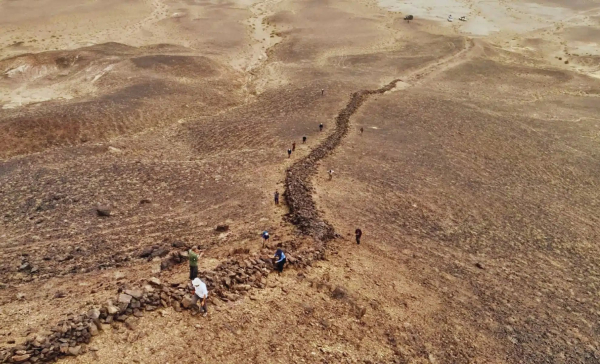
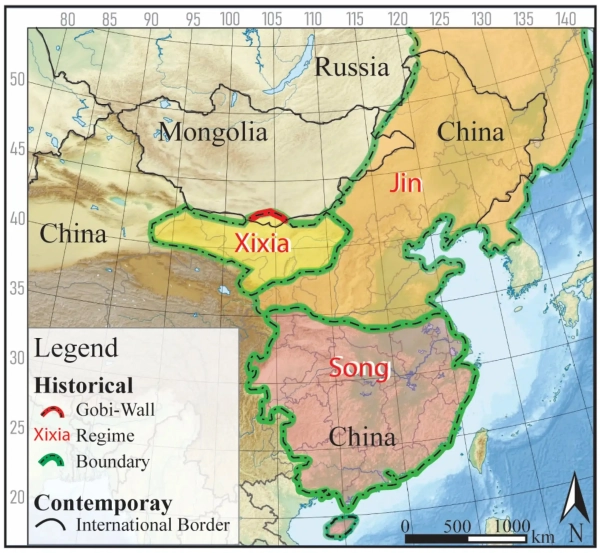
Archaeologists have obtained new data on one of the least studied parts of a large-scale medieval fortification system in East Asia. It is the so-called Gobi Wall – a section of a large defense complex that stretched for about 4,000 kilometers across the territories of northern China, Mongolia and parts of Siberia.
Gobi Wall / Photo Land
This segment has long been overlooked by researchers. However, a new study focuses on the 321-kilometer-long section to understand its origins and functions. It has been found that the main stage of construction and use falls on the period of the Xi Xia state, which was controlled by the Tangut people. This was an era of significant political change and the active formation of border systems.
The results, published in the journal Land, confirm that this section of the wall fits well into the overall historical context of the 10th to 13th centuries. The remains of garrisons were discovered along the structure, indicating that it belonged to a complex and organized control infrastructure.
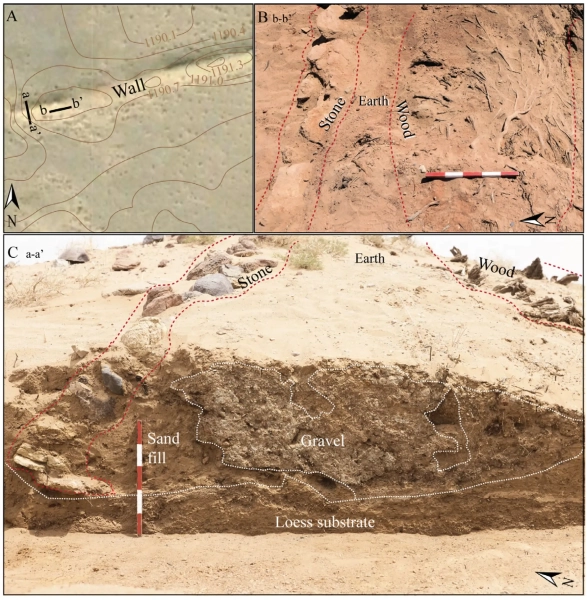
The Gobi Wall and its section / Photo Land
Researcher Professor Gideon Shelah-Lavi stressed that the wall served a much broader role than simply protecting against enemies. It actually served as a mechanism for governing the region. It controlled the movement of people, trade routes and access to key resources – including water and timber.
The construction features also speak volumes. The wall was built mostly of rammed earth using local stone and wood. Its route was not random: fortifications and forts were located near water sources and natural passages, such as mountain passes. This allowed for effective monitoring of movement and control of the territory.
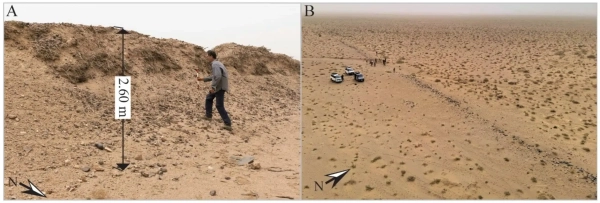
Part of the Gobi Wall / Photo Land
Interestingly, life around this infrastructure did not cease after the decline of the Xi Xia state. Archaeologists have recorded traces of human activity dating from the 2nd century BC to the 19th century AD. The artifacts found indicate that this route remained important for many centuries.
According to researchers, this discovery changes the perception of medieval borders. They were not static lines of defense, but flexible systems of governance that allowed for control of territories, resources and populations in difficult conditions.