
Main points
- The month of May 2026 is called “Flower” because of Native American traditions that associated it with the awakening of nature and flowers.
- A double full moon is expected in May 2026, with a “Flower” and a “Blue” moon. Both will be micromoons when the Moon is at its apogee.
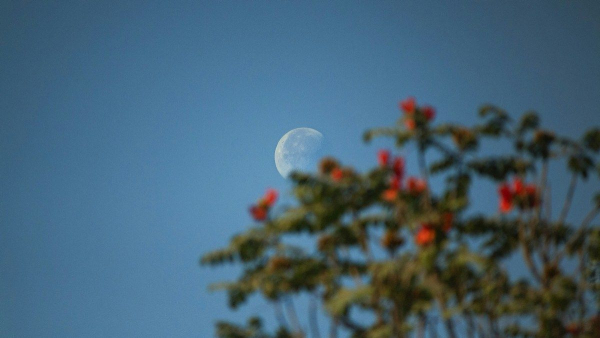
The mystery of the name of the May full moon / Unsplash
May 2026 is preparing another full moon for astronomy fans right on the first day of the month. According to tradition, it has its own unique name. If the last full moon was called the “Worm Moon”, then this one was called the “Flower Moon”. We explain why this is so and what are the alternatives.
Why did the May full moon receive such a poetic name?
The first full moon of the last month of spring in 2026 falls on May 1. It will reach its peak at 17:23 GMT, which for residents of Ukraine corresponds to 20:23 Kyiv time. This event is traditionally known as the “Flower Moon”, which is firmly rooted in the folk calendars of the Northern Hemisphere, writes 24 Channel .
The origin of this name is connected with the observations of Native American peoples, in particular the Algonquins, who associated the phases of the moon with changes in the environment. May is a time when nature finally awakens, and the landscapes are covered with a carpet of wildflowers, which gave rise to the creation of this name, notes Time and Date.
Other names
However, Flower Moon is not the only name for the May full moon. Different cultures, based on their own daily lives and observations of animals and agriculture, came up with their own variations.
- For example, the Cree people called this phenomenon the Egg-Laying Moon or Frog Moon, emphasizing the faunal activity during this period, reports Star Walk.
- In Dakota and Lakota traditions, the names Sowing Moon or Green Leaf Moon are found.
- The Oglala called this time the period when ponies shed their winter coats.
- European traditions are no less rich in interesting names. The Anglo-Saxons called the May full moon the Milk Moon. This name comes from the Old English word “Rimilcemona”, which literally meant the month of three milkings. It was in May that cows had such juicy and rich grass that the peasants had to milk them three times a day.
- Celtic and medieval English sources also mention variants such as the Hare Moon, the Mother Moon, or the Grass Moon.
What will the full moon be like in May 2026?
This year's Flower Moon will have an important astronomical feature – it will be a micromoon, writes the BBC. This phenomenon occurs when the full moon coincides with the satellite being at apogee – the point in its orbit farthest from Earth. Because of this, the moon will appear about 5 percent smaller and 10 percent dimmer than usual. Although this difference is difficult to notice with the naked eye, it becomes obvious in photographs.
The distance from Earth to the Moon at apogee is about 406,000 kilometers, while during a supermoon, when the satellite is as close as possible, it is reduced to 363,000 kilometers.
A double full moon awaits us in May
In addition to the visual parameters, May 2026 will be marked by a rare phenomenon – a double full moon, according to EarthSky. Since the lunar cycle lasts about 29.5 days, and the first full moon occurs at the very beginning of the month, there will be another full moon on May 31, called a Blue Moon. Both of these events will be micromoons.
From an astronomical point of view, on May 1, the Moon will be in the constellation Libra. Observers will be able to see bright stars next to the satellite. So, on the eve of the full moon, on April 30, the Moon will pass near Spica, the brightest star in the constellation Virgo, and on May 4, it will approach Antares, which is called the heart of Scorpio.