
Main points
- A scientific expedition off the coast of Argentina has discovered a rich ecosystem with dozens of potentially new species, defying expectations of finding a “dead” ocean floor.
- Researchers have recorded the largest known coral reef of this type, as well as the rare Stygiomedusa gigantea jellyfish, and for the first time in Argentina, documented a “whale fall” at a depth of 3.9 kilometers.
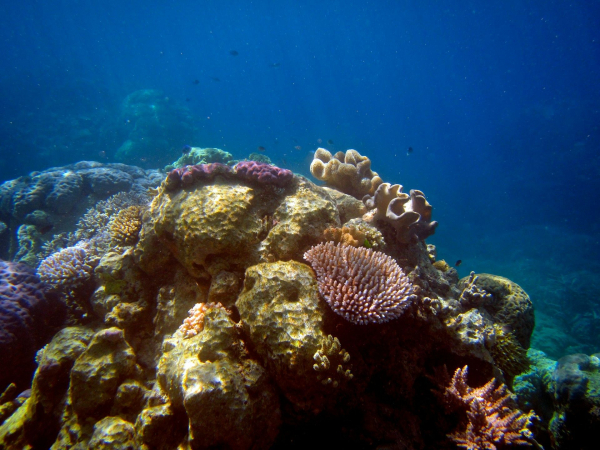
Dozens of new creatures found at a depth of almost 4 kilometers near Argentina / Unsplash
A deep-sea expedition off the coast of Argentina has yielded unexpected results. Instead of an almost lifeless seabed, researchers have recorded a rich diversity of organisms, including dozens of potentially new species and rare inhabitants of the ocean depths.
A scientific expedition working in waters near Argentina has discovered a much more complex and rich ecosystem than researchers expected. The mission was conducted aboard the Schmidt Ocean Institute's Falkor (too) research vessel, known for previous discoveries ranging from Antarctic squid to new octopus species, reports Daily Galaxy.
The main goal was to explore so-called cold springs – areas of the seabed where chemical emissions support the life of microorganisms and form unique ecosystems.
Although the team was only able to find one active site, further observations revealed a much wider distribution of life. The organisms were scattered across a large area of the seafloor, suggesting complex connections between ecosystems and challenging previous assumptions that such areas were isolated.
What does the Argentine deep sea hide?
Study leader Maria Emilia Bravo said scientists did not expect to see such a high level of biodiversity in Argentina's deep sea. She said it was a unique experience to observe the diversity of species, the functioning of ecosystems and their interconnectedness at the same time. She stressed that the discovery only opens up new opportunities for studying the country's marine biodiversity.
One of the key findings was the discovery of 28 potentially new species , including sea snails, sea urchins, sea anemones and various types of worms. Many of these organisms were found in a large coral reef formed by the species Bathelia candida .
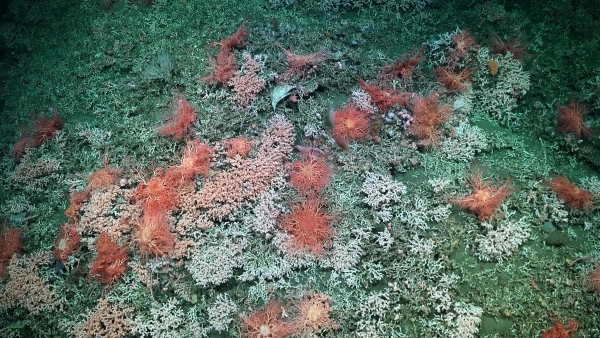
Dense clusters of deep-sea corals and organisms / Schmidt Ocean Institute
The Schmidt Ocean Institute estimates that it is the largest known reef of its type, covering an area almost the size of the Vatican City. It serves as a natural “framework” for an entire community of marine creatures, demonstrating how complex ecosystems can form even in the dark depths of the ocean.
The researchers were also able to capture rare footage of the so-called phantom jellyfish , Stygiomedusa gigantea , a species that is extremely rare to see. This jellyfish can grow to the size of a school bus, making it one of the largest known jellyfish in the world.
Rare jellyfish – watch the video:
Another important discovery was the first recorded “whale fall” in Argentina at a depth of about 3.9 kilometers. The remains of the animal have become a temporary ecosystem, providing food and habitat for sharks, crabs and other marine organisms.
Executive Director of the Schmidt Ocean Institute, Jyotika Virmani, emphasized that each new expedition to the depths demonstrates that the ocean is no less full of life than land. She recalled that approximately 98% of the living space on the planet falls on the oceans, so such studies open new horizons for science and help to better understand the structure of marine ecosystems.