
Main points
- Analysis of the Shroud of Turin revealed DNA from various people, animals, plants, and fungi, indicating a long-term interaction with the environment.
- The genetic traces contain diverse human, animal, and plant lineages, indicating numerous historical contacts and the origin of materials from different regions.
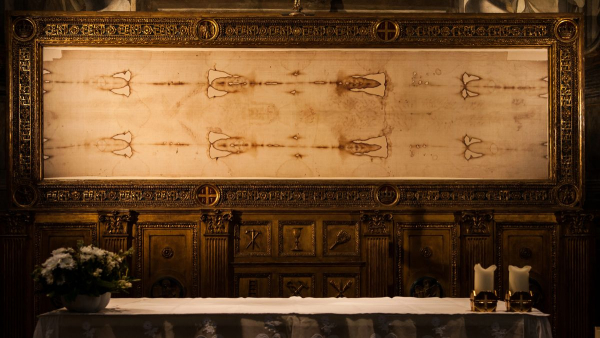
The mystery of the Shroud of Turin: large-scale analysis of biological traces on the ancient cloth / Photo Depositphotos
The Shroud of Turin has been one of the most debated relics of the Christian world for centuries. The latest study of genetic material found on the fabric's fibers reveals unexpected facts about its long journey through time and numerous contacts with people, animals and plants.
What traces were found on the canvas?
The results of metagenomic analysis of samples collected during the official 1978 expedition have demonstrated the extraordinary biological complexity of the object. Scientists were able to identify DNA from many people, as well as animals, plants and fungi, indicating the long-term interaction of the canvas with the environment throughout different historical eras, writes the Daily Mail.
Genetic analysis of human traces revealed a whole mosaic of mitochondrial lineages:
- In particular, haplogroup H33 was found, which is most commonly found in the Middle East today, especially among the ethnoreligious group living in Syria, Lebanon, and Jordan.
- Also identified were the H1b lineage, characteristic of Western Eurasians, and the H2a2 lineage, which is typical of many European populations.
- Interestingly, a significant portion of the DNA (about 38.7 percent) belongs to Indian lineages, which may indicate the origin of the threads or the fabric itself from regions near the Indus Valley.
A microbiological study revealed a large number of bacteria typical of human skin, such as staphylococci and cutibacteria, confirming the cloth's numerous contacts with the hands of worshippers and researchers, according to a report published in bioRxiv.
The archaea found, resistant to high salt content, may indicate an ancient technology of soaking flax in salt or seawater.
At the same time, radiocarbon dating of threads used to repair the relic after fires confirmed interventions that took place in 1534 and 1694 AD.
The vast amount of DNA from different people makes it virtually impossible to isolate the “original” genetic profile of a person who might have been wrapped in this cloth two millennia ago.
In addition to human traces, the shroud turned out to be a true archive of biodiversity:
- Among the animal DNA, the largest proportion (33.3 percent) is from red coral (Corallium rubrum), which is endemic to the Mediterranean Sea. This suggests that the relic was found in the Mediterranean region, where coral has long been used to make jewelry and amulets.
- Genetic traces of domestic cats, dogs, horses, as well as farm animals: chickens, pigs, sheep, goats, and cattle have also been recorded.
- The presence of DNA from fish such as Atlantic cod and mullet, as well as marine crustaceans, indicates a close connection between the artifact's history and maritime trade routes.
The flora captured on the canvas is no less diverse:
- The most DNA found was from carrots (30.9 percent) and wheat, notes New Scientist.
- Genetic analysis of carrots has shown its similarity to European cultivars from the 15th and 16th centuries, indicating later contamination.
- Traces of plants that only reached Europe after the voyages of Columbus and Marco Polo were also found, including corn, tomatoes, potatoes, and peanuts.
- The presence of DNA from spruce, linden, nettle, and walnut reflects the ecological diversity of the places where the shroud was stored.