
Main points
- Changes in the visibility of constellations are caused by the Earth's rotation and its orbit around the Sun, which affects which parts of the Universe we see at night.
- Circumpolar constellations, such as Ursa Major in the Northern Hemisphere, are visible year-round, while others appear seasonally due to the precession of the Earth's axis and the motion of the galaxy.
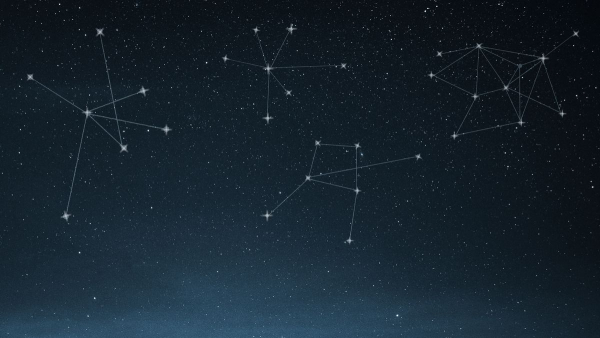
Why the night sky is constantly changing and where familiar constellations disappear / Freepik
The appearance of the night sky above our heads is constantly transforming. Some stars accompany humanity for centuries, while others appear only for a short period, only to disappear again over the horizon. The reasons for such changes lie in the physical properties of our planet and its journey around the Sun.
What factors influence what we see in the night sky throughout the year?
The change in the starry sky that we observe night after night is due primarily to the fact that humanity lives on a constantly rotating globe. When our continent turns away from the Sun, night falls, and it is at this moment that we get the opportunity to look into a certain part of the Universe. Those stars that are in our field of vision in this direction form the night landscape. Since our planet not only rotates around its axis, but also moves in orbit around the Sun, the sector of open space that we see at night is constantly shifting, writes 24 Channel .
This annual movement causes different constellations to become visible or hidden depending on the season. For example, Orion's Belt, which consists of three bright stars, is best seen in the Northern Hemisphere during the winter months. However, in the summer, when the Earth turns to the other side of the Sun, Orion finds itself in a part of space that is hidden by the bright light of daylight, and therefore disappears from our field of vision.
Our geographic location plays a big role in what celestial objects we see. People in the Northern Hemisphere see stars above the equator, while observers in the Southern Hemisphere see a completely different picture of the southern sky.
Which constellations never disappear from the sky?
Despite seasonal changes, there are certain groups of stars that never leave the sky. They are called circumpolar constellations. They are located near the celestial poles and remain visible all year round, although their position and orientation change throughout the night and with the seasons.
- In the Northern Hemisphere, such a constant landmark is the North Star, located almost exactly above the North Pole, as well as the constellation Ursa Major.
- In the Southern Hemisphere, the number of such constellations is somewhat smaller, and the point of the south celestial pole itself looks like an empty patch of sky. However, southerners can observe the Southern Cross, which consists of four very bright stars, all year round.
In total, the International Astronomical Union distinguishes 88 constellations, and modern digital maps make it easy to navigate their movements.
The picture is changing.
However, the sky we are used to is not eternal. The Earth's axis has the property of slightly oscillating, which is called precession. Because of this oscillation over thousands of years, the positions of the constellations and their movements change from the point of view of an earthly observer.
For example, the constellations of the Zodiac, which lie along the equator, are now shifted from where they were thousands of years ago. The same is true of the North Star. Around 2500 BC, the star Thuban in the constellation Draco served as a guide to the north.
Also, don't forget that our star system moves through space as the galaxy rotates. So do other stars. Although we don't notice this within a single human lifetime due to the vast distance, it becomes noticeable over millennia.
Scientists predict that in 5,000 years we will have a completely different “polar” star, or there will be no bright object at this point at all.
Why is this important?
Understanding these cyclical changes is critical to modern astronomy. For example, the constellation Sagittarius marks the center of our galaxy. It is best seen in the Southern Hemisphere during winter, which corresponds to the Northern Hemisphere's summer. Because that is where the Milky Way's supermassive black hole is located, researchers plan their observations for times of year when the Sun does not block the view of this region.
Studying how the night sky changes with the seasons helps us better understand our place in the universe and unravel the mysteries of the most distant space objects. Changing perspectives allows us to clarify complex phenomena and realize the scale of our planet's movements relative to the stars.