
Main points
- Scientists examined bones from the Masycka Cave in Poland and found traces of cannibalism 18,000 years ago.
- The study suggests that cannibalism during the Magdalenian period was not an isolated incident, and genetic analysis points to possible violence between related groups.
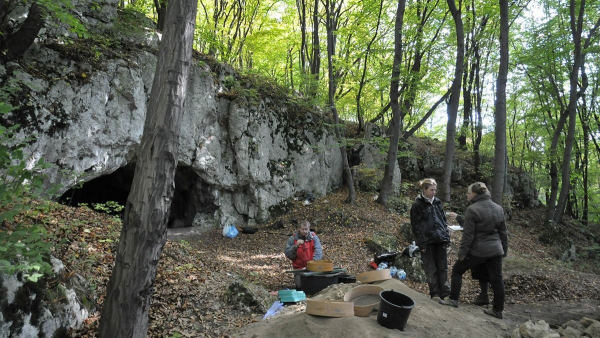
Traces of strange Ice Age rituals found in Polish cave / Dariusz Bobak, Scientific Reports
Scientists have examined a collection of bones from the Masycka Cave in southern Poland and have come to conclusions that fundamentally change the way we think about people from the Ice Age. The finds are over a hundred years old, but modern technology has allowed us to see something that was previously overlooked.
What happened in an ancient cave thousands of years ago?
A new study is devoted to the analysis of bone remains discovered in the Masicka Cave near Krakow. The bones were stored in the Archaeological Museum in Krakow for decades – they were found at the end of the 19th century and re-examined in the 1960s. However, only now, thanks to high-resolution three-dimensional microscopy, scientists have managed to establish their true origin and the nature of the damage. Some of the fragments, previously mistakenly classified as animal bones, have been re-identified as human. This is reported by Arkeonews.
Radiocarbon dating showed that the remains are about 18,000 years old and belong to the Magdalenian culture – an era that is generally associated with the flourishing of cave art, the manufacture of advanced stone tools, and the active settlement of people across Europe after the retreat of the glaciers.
The results of the analysis were unexpected. 68% of the human bones showed cuts and fractures characteristic of dismemberment. The skulls had deep cuts, indicating the removal of skin and facial soft tissue.
In addition, the bones were deliberately broken in a way that clearly indicates an attempt to access the brain, one of the most nutritious organs in the human body. The femurs and humerus were systematically broken to extract the bone marrow, a high-calorie source of fat critical for survival in cold climates. The pattern of these injuries was completely consistent with that observed on animal bones from the same layer of the cave.
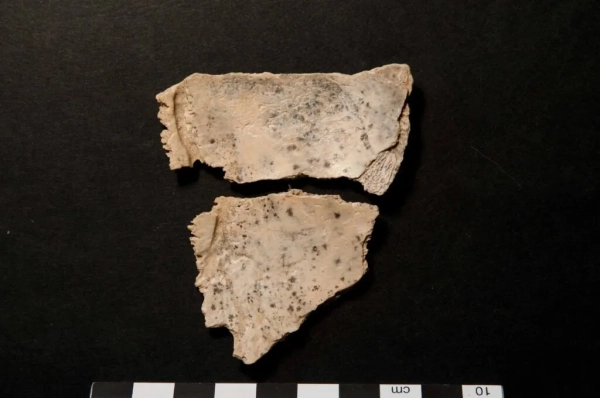
A skull fragment from the Maszycka Cave led to suspicions of cannibalism / Photo Dariusz Bobak, Thomas Terberger
Lead author of the study, Francesc Marginedas from the IPHES-CERCA institute, said the distribution and nature of the traces leave no doubt that the bodies were processed for consumption. The researchers rejected theories of natural bone decay, damage by predators, or burial rituals.
What was that?
- The findings do not fit into the usual pattern of so-called “funeral cannibalism” – a practice known in some ancient societies, when relatives consumed body parts of the deceased for spiritual reasons. Unlike the British Gough Cave, where skulls were turned into ritual cups, in the Polish cave the human remains were simply thrown away along with animal bones. No signs of ceremonial treatment of them were found. Co-author of the study Palmira Saladier noted that the human bodies here were treated in exactly the same way as animal carcasses.
- This also prompted researchers to hypothesize about so-called “war cannibalism” – eating enemies after armed conflict, which could serve both as a source of food and an act of symbolic dominance over the enemy.
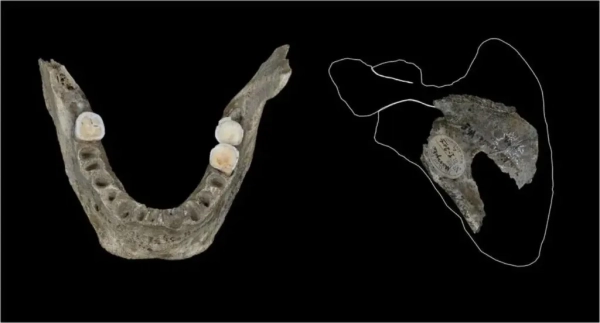
Human remains from Mashytska Cave / Photo Antonio Rodríguez-Hidalgo / IAM
All of the human remains in the cave appear to have been left at around the same time, indicating a single act of violence rather than a gradual accumulation of remains over generations.
Interestingly, genetic analysis has shown a common ancestry between the Masytska Cave people and the Magdalenian populations from Western Europe. This complicates the simple “invaders versus natives” picture and suggests that violence may have occurred between related groups competing for resources in the new lands.
Masicka Cave is now one of at least five European sites where conclusive evidence of cannibalism has been found during the Magdalenian period, suggesting that the practice was not an isolated occurrence. The same people who created the stunning paintings at Lascaux and Altamira were apparently not above extreme violence.
The study, published in Scientific Reports, reminds us that the picture of life in glacial Europe is much more complex and contradictory than previously thought.