
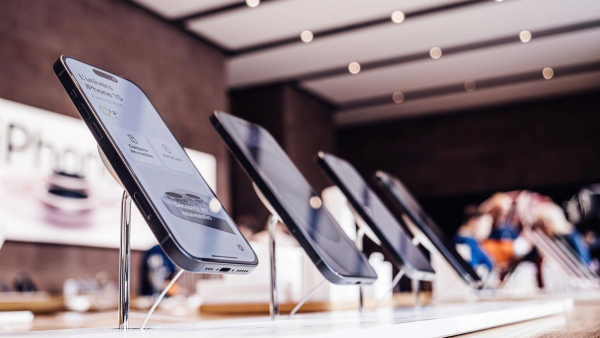
New phone in 2026 – what to look for before buying / Depositphotos
The year 2026 is just around the corner, and the smartphone market is already full of big announcements. Manufacturers are preparing new models with powerful chips and an emphasis on artificial intelligence. Despite this, for most people, what matters is not record-breaking specifications, but a balanced device that will not become a financial burden.
Do you really need a flagship?
The main trend of the year is not complex screens or new artificial intelligence algorithms, but the rise in the price of components. Due to the high demand for DRAM and NAND memory from the AI industry, the production of smartphones is becoming more expensive. Data centers are absorbing huge volumes of high-speed memory, which puts pressure on the entire supply chain, writes 24 Kanal .
Rising prices are the new reality
Companies don't work at a loss – increased costs are built into the final price. This means that top-of-the-line models can become more expensive. At the same time, last year's models often remain a more rational choice – they are cheaper and still powerful enough, since, like this year's devices, they came out with 8-16 gigabytes of RAM, the same amount of flash memory and mostly the same cameras. Only the chips, screen brightness and a few small details in the design change.
Android models released a year or two ago often offer 7 years of updates. This means they will be relevant for a long time at a lower price. Unless you plan to render long videos, play demanding games, or load your smartphone with other resource-intensive tasks, you probably don't need the latest flagship.
For instant messaging, social media, and streaming, the mid-range is sufficient. Excess power often means more heat and faster battery drain under load.
Rational minimum for 2026:
- 8 gigabytes of RAM for stable operation;
- 12 gigabytes if the smartphone is planned for 3-4 years;
- Chip 2025 or 2024.
Update support and real AI capabilities
Today, software is as much a part of the user experience as hardware. Brands like Samsung, Google, and Apple promise up to seven years of security and system updates for their flagships. This effectively doubles the lifespan of a device.
At the same time, AI functions have become a marketing standard – real-time call translation, automatic photo processing, text summaries, etc. But it is worth checking whether these functions work in Ukraine and whether they can work offline. Cloud processing means dependence on the Internet and potential privacy risks.
Before buying, you need to find out:
- How many years of updates does the manufacturer guarantee?
- Does he consistently stick to schedules?
- What AI functions work in Ukraine and locally on the device?
Autonomy and charging speed
A 5,000 mAh capacity alone doesn't guarantee anything. The processor's energy efficiency and system optimization have a bigger impact, so an iPhone with a 4,000 mAh battery can hold a charge longer than a Chinese device with a 5,000-6,000 mAh battery.
Ultra-fast charging of over 100 watts looks impressive, but if you charge your smartphone every night, the difference is almost imperceptible. However, frequent use of maximum power can affect battery degradation.
It is better to focus on real autonomy tests, not just technical figures.
No less important is the cooling system. Some models show good numbers in tests, but in real use they reduce frequencies due to overheating.
How to choose a smartphone in 2026 / Photo Depositphotos
Camera – stability is more important than megapixels
Even the mid-range segment in 2026 shoots well in daylight. The difference is evident in difficult conditions: low light, video recording, stabilization.
It should be evaluated:
- Night photo quality;
- The operation of the ultra-wide and telephoto cameras;
- Video stabilization;
- Accuracy of color and skin tones.
Sometimes a smartphone with fewer megapixels gives a more predictable result due to better image processing. Here, for example, you can pay attention to the Pixel A series.
Display, materials and comfort
Most models have high-resolution screens, but brightness and sunlight readability vary significantly. It's also important to check the glass protection, water and dust resistance, weight, and thickness of the case.
A separate topic is storage. microSD slots have almost disappeared, so 256 gigabytes of internal memory is becoming a safe minimum.
Long-term perspective
The modern market has reached a point where even affordable smartphones go beyond basic needs. Support, software capabilities, and compatibility with your usage style are becoming crucial.
It is more correct to ask not the question “which smartphone is the most powerful”, but others:
- Will it be relevant in a few years?
- Will it last a day of active use?
- Does it fit comfortably in the hand?
- Does the camera meet your expectations?
A smartphone is a tool for everyday use. In 2026, the balance between price, support, and practicality is more important than record-breaking specs.