
Main points
- The Polish government plans to ban access to social media for children under 15, placing responsibility for age verification on technology companies.
- The ban is justified by the deterioration of the mental health of adolescents and will be accompanied by severe financial sanctions for violating companies.
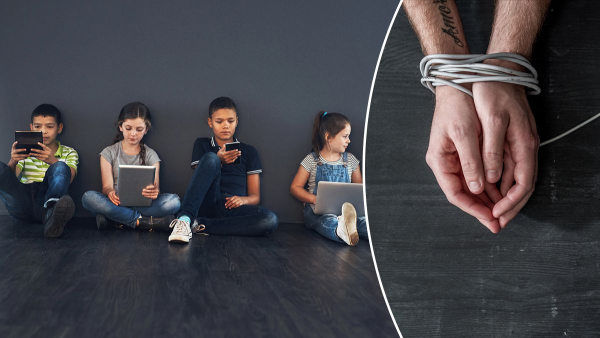
The end of the era of uncontrolled scrolling: the Polish government is preparing strict restrictions for children / Collage 24 Channel/Depositphotos
The Polish government is preparing sweeping legislative changes that could radically change the digital habits of teenagers. The new initiative aims to tighten control over access to popular platforms that have become an integral part of the lives of today's youth.
Thus, Warsaw joins a global trend that calls into question the safety of minors in unregulated online space, writes Bloomberg.
Australia has previously taken similar action, and countries such as France, Norway, Indonesia, Denmark, Spain, Slovenia, and the United Kingdom are currently discussing it in their parliaments or have already planned a ban in the near future.
What is behind the new initiative of the Polish authorities?
Poland's ruling Civic Coalition party has unveiled plans to ban the use of social media by children under the age of 15. Education Minister Barbara Nowacka said the bill would make technology companies fully responsible for verifying the age of their users.
In case of ignoring these norms or providing access to younger individuals, platform owners will face severe financial sanctions, the amount of which is currently under discussion.
The main reason for such radical steps, government officials call the rapid deterioration of the mental state of adolescents. Minister Nowacka emphasized that there is not only psychological vulnerability of young people, but also a decrease in their intellectual abilities due to excessive online spending, notes Tribune. According to her, the current measures are preventive, because the companies themselves do not adhere to their own security rules and do not carry out proper age verification. It is expected that the new rules may come into effect as early as early 2027.
How is it in other countries?
As we mentioned, similar restrictions are already in place in Australia, and countries such as Denmark, France, the United Kingdom, and Spain are actively exploring the possibility of implementing similar bans.
For example, the Spanish government is considering banning social media for those under 16, citing the need to combat the spread of hate speech, pornography and disinformation. Spanish Prime Minister Pedro Sanchez has compared the modern internet to a “digital Wild West” from which children must be protected.
Americans will be dissatisfied
The introduction of such laws could cause serious strain in Warsaw's relations with large American corporations, such as Meta and Elon Musk's X. In addition, the very fact of strict regulation of the technology sector in Europe has been perceived negatively in US government circles.
The reaction of Donald Trump and his administration was extremely aggressive when the EU previously fined American companies for violating local law. The US president called the EU's multi-billion dollar fines against American giants Google, Apple, Meta and X an appropriation of revenues, a violation of American sovereignty, and an undermining of American economic interests, writes the EU Institute for Security Studies (EUISS).
The chairman of the US House of Representatives Judiciary Committee, Jim Jordan, also criticized the EU regulation, initially calling the Digital Services Act (DSA) a “global censorship law.”
Meanwhile, companies themselves, such as Meta CEO Mark Zuckerberg, have called on Trump to take action against the EU for regulating and fining American companies. POLITICO reported in January 2025 that the billionaire Facebook founder said the president should step in to prevent EU fines on American tech companies for antitrust violations and other wrongdoings.
Polish context
The situation is complicated by the fact that Poland is a strategically important member of NATO on the eastern flank, where United States troops are stationed, and American businesses have already expressed dissatisfaction with the Polish Ministry of Digitalization's plans to introduce a tax on digital services.
However, the Polish side emphasizes that the issue of child protection is a priority and should not be considered through the prism of geopolitics or the origin of the owners of certain platforms.
An important argument for regulators has been the results of lawsuits in the United States. In particular, a case is being heard in a Los Angeles court against Meta and YouTube, where plaintiffs claim that these companies deliberately developed algorithms that cause addiction in children. Lawyers in this case emphasize that the richest corporations in the world are actually manipulating the brains of teenagers for their own enrichment.
That is why Warsaw insists on the need for state intervention, as industry self-regulation has proven ineffective.