
Main points
- German scientists have developed genESOM, a generative AI that can reduce the need for laboratory animals in preclinical trials by 30-50% without losing scientific accuracy.
- GenESOM creates synthetic data, reducing the number of animals required, and has already been field-tested in a multiple sclerosis model, maintaining statistical significance without significant false positives.
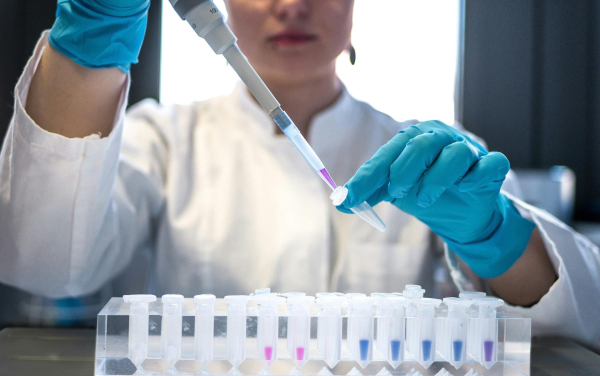
AI has learned to replace some animal experiments – how it works / Unsplash / Julia Koblitz
A development by German scientists could change the approach to preclinical drug testing. A new generative artificial intelligence has already demonstrated its ability to reduce the need for animal experiments without losing scientific accuracy.
Researchers from Goethe University Frankfurt and Philipps University Marburg have presented a generative artificial intelligence system that could significantly reduce the number of laboratory animals needed for preclinical testing of new drugs, Phys reports.
Will artificial intelligence be able to partially replace animal testing?
This is the genESOM technology, created by Professor Jörn Lötsch in collaboration with Professor Alfred Ultsch. The results of the study were published in several scientific journals, including Pharmacological Research, iScience, and Briefings in Bioinformatics.
Scientists believe that the new system could help reduce the number of animals in research by 30 to 50 percent while maintaining the reliability of the results.
Why does the problem need a new solution?
In the early stages of drug development, animal experiments remain an important part of testing the safety and efficacy of new active ingredients.
However, the scientific community is constantly faced with an ethical dilemma . On the one hand, the use of laboratory animals must be minimized. On the other hand, the sample size must be large enough to ensure that the results are statistically significant and representative. It is this balance that genESOM attempts to provide.
How does the new algorithm work?
The system is built on a network of thousands of artificial neurons that analyze the internal structure of real experimental data.
After training, the algorithm can create new synthetic data points that behave as if they were obtained during a real laboratory experiment.
However, the main innovation is not only in generating new data. The researchers integrated into the system a mechanism to control so-called error inflation – a problem where generative artificial intelligence amplifies not only useful patterns, but also random noise.
Such errors can create false positives – situations where the system mistakenly identifies statistically insignificant indicators as important. To address this issue, the team separated the model training phase and the new data synthesis phase.
This allowed for the introduction of an artificial error signal and precise tracking of its propagation, forming an automatic criterion for stopping generation until the results begin to lose scientific reliability.
Practical testing on a multiple sclerosis model
The effectiveness of genESOM was tested based on an already published study by the Fraunhofer Institute for Translational Medicine and Pharmacology , dedicated to the Multiple Sclerosis model.
As Science Direct reports, the initial experiment used 26 mice, divided into three groups to test the effects of the experimental drug.
To simulate a reduced-sampling scenario, the researchers reduced the number of animals to 18 – six in each group.
After such a reduction, all previously detected therapeutic effects disappeared . Statistical tests no longer showed significance, and machine learning algorithms could not distinguish between the results between groups.
However, after supplementing the data with synthetic samples generated by genESOM, all effects returned to their original level of statistical significance. The system did not generate significant false positives.
According to Jorn Lötsch, “If too few animals are involved in an experiment and then their number is simply supplemented with generative artificial intelligence, the experiment can quickly lose scientific value due to the amplification of random results.”
Why can't AI completely replace real experiments?
Despite the encouraging results, the authors emphasize that genESOM is not a complete alternative to traditional experiments. Artificial intelligence can only work on the basis of real data already obtained.
As Lötsch explains, if there are too few animals in a study to begin with, the generative algorithm will only amplify random patterns, making the conclusions unreliable.
However, the team is convinced that the technology can make a significant contribution to the development of more humane preclinical science. If further testing confirms the effectiveness of genESOM, it could be an important step towards revising the standards of biomedical research worldwide.