
Main points
- Google has released Android 17 QPR1 Beta 3, which focuses on visual improvements to the interface and includes new animations.
- The update contains a large package of bug fixes, but users are reporting unstable operation of some applications.
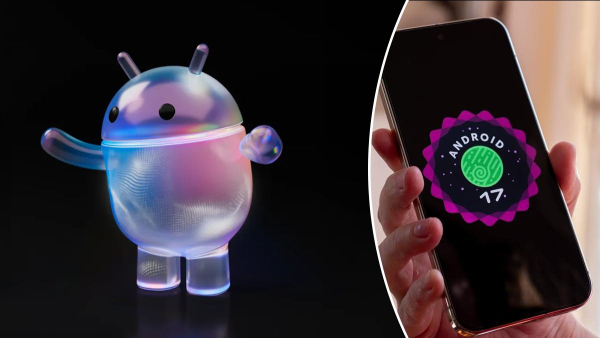
Glass interface and “jumping” animations: Google released Android 17 QPR1 Beta 3 / Collage 24 Channel
Right after the first day of the Google I/O 2026 conference ended, developers prepared a pleasant surprise for participants in the testing program. The new version of the operating system has already started to arrive on supported devices, offering a rethinking of familiar visual elements and improved stability/
What new features and fixes did Android 17 QPR1 Beta 3 bring?
Google has officially released Android 17 QPR1 Beta 3 with build number CP31.260508.005. This update, which weighs in at around 550 megabytes, focuses on visual improvements to the interface within the Material 3 Expressive design language. The main innovation is the massive introduction of translucency and background blur effects in many system menus that were previously opaque, writes Beebom.
The blur has now been added to the volume rocker, power menu, home screen folders, and widget selector. Google says it provides a “sense of depth” to make movement seem effortless, 9to5google notes.
Google's Mishaal Rahman confirmed these changes to the X social network. He says the build includes a new springy notification animation, changed screen recording behavior, and pretty much the same blurring throughout the user interface.
Special attention was paid to animations. In the Quick Settings section, a new “jumping” effect appeared when the panel is collapsed and expanded.
In previous builds of Android, this animation only appeared in the notification shade, where it somewhat hinted to the user that repeating the gesture would reveal more features,
– commented 9to5Google editor Ben Shun.
This effect now ensures the visual integrity of the system by responding to the user's swipe inertia.
The screen recording tool has also undergone significant changes. For privacy reasons, Google has changed the default settings: now the system offers to record only the last used application, and not the entire screen. This helps to avoid accidentally including confidential notifications in the video.
Error correction
The update contains a large package of bug fixes that plagued users in previous beta versions:
- Fixed an issue where clicking on a date in the “At a Glance” widget would open the terminal instead of the calendar;
- Fixed an issue with Wi-Fi connection interruptions when the signal is strong;
- Fixed an issue with crackling and sound distortion during media playback;
- Fixed incorrect display of interface elements in full-screen mode;
- Stable operation of widgets has been restored, which previously could disappear after a device reboot;
- Fixed a bug where the mobile data icon remained active after turning on airplane mode.
But new bugs appeared
Despite the many improvements, users on Reddit are reporting some issues. In particular, many complain about Microsoft apps like Teams and Outlook being unstable, often crashing immediately after launch. Some testers also noticed delays when switching between apps.
Anyone else experiencing lag or glitches when switching between apps? Especially when I tap on, say, a chat notification on Instagram: for me personally, it takes about 3.8 seconds to go to the chat, or it opens the inbox first, and then takes a few more seconds to go to the desired chat,
– complained a user with the nickname Specialist-Ranger480.
Who can install Android 17 QPR1 Beta 3?
Android 17 QPR1 Beta 3 is available to Pixel 6, Pixel 7, Pixel 8, Pixel 9, the new Pixel 10 series, and Pixel Tablet owners who are enrolled in the Android Beta program.
You will also be interested to know: what key updates will Android 17 bring
Google is actively preparing the release of Android 17, which the company has been testing for several months through beta versions for Pixel and smartphones from other manufacturers. One of the main changes of the new system will be an even deeper integration of Gemini artificial intelligence into almost all Android functions. Google is actually transforming Android from a traditional mobile operating system into a platform with built-in AI agents, writes Android Central.
Among the main new features of Android 17, the new Material 3 Expressive interface is mentioned, which should make the system more dynamic, personalized and “alive”. Google is also working on the “Create My Widget” function, which will allow you to create interactive widgets almost automatically using AI. The system will integrate new Gemini Intelligence tools, which will analyze user actions and offer automation of various tasks.
Another notable feature will be “Rambler.” This is a system aimed at combating endless “doomscrolling.” Android 17 will analyze user behavior and offer breaks or other actions if a person mindlessly scrolls through social media feeds or videos for too long. Google is directly talking about its focus on digital well-being and healthier smartphone usage scenarios, PhoneArena notes.
Android 17 will also feature improvements for cameras and multimedia, new tools for optimizing wireless connections, expanded profiles for smart devices and accessories, and updated security and privacy mechanisms.
Google is also changing the Android testing model itself – the company is abandoning the old Developer Preview system in favor of a permanent Canary channel for developers, Android Developers reports.
Separately, Google has expanded the Android 17 beta testing program. Previously, early builds were mostly available only on Pixel, but now Samsung, Xiaomi, Honor, OPPO, and other brands have joined the testing.
When will Android 17 be released?
Google has not yet officially announced the release date of Android 17. However, given the company's traditional schedule and the current beta cycle, a stable release is expected sometime in the summer of 2026.
As always, Pixel smartphones will be the first to receive the system, after which Samsung, Xiaomi, OnePlus, and other manufacturers will begin to adapt the update.
What was shown at Google I/O 2026?
The Google I/O 2026 conference, which kicked off on May 19, was almost entirely devoted to artificial intelligence. The central theme was the so-called “Agentic Gemini Era” – Google's new strategy, within which AI agents should work for the user, and not just answer queries, writes The Economic Times.
- Google has introduced Gemini 3.5 Flash – a new fast and cheaper AI model for programming, automating, and operating AI agents.
- At the same time, the company only announced Gemini 3.5 Pro – its launch was postponed to next month, Reuters notes)
- Another big announcement was Gemini Omni, a next-generation multimodal AI model that can work with text, images, audio, and video simultaneously. Google describes it as a step toward creating a universal “world model” of artificial intelligence.
- I/O 2026 also showcased Gemini Spark, a personal AI agent that integrates with Gmail, Docs, Calendar, and other Google services. It can independently plan trips, create documents, organize meetings, and perform complex actions without constant user intervention.
- Search has also been radically updated. Search now gets an AI mode with a completely new interface, support for multimodal queries, AI agents for monitoring information and automatically performing certain tasks. Search will be able to analyze text, photos, videos, documents and even open Chrome tabs simultaneously, writes The Guardian.
Google is also getting back into the smart glasses market. The company has announced new Android XR glasses alongside Samsung, Warby Parker, Gentle Monster and Xreal. The devices will feature Gemini integration, voice control, cameras and AI-powered augmented reality features, The Guardian reports.
Among other announcements from the conference, which we also observed, we can mention AI features for YouTube, the new Google Pics service for image editing, Universal Cart for AI shopping, Docs Live with voice editing of documents, Ask YouTube for video search, and Google Beam with realistic AI avatars for video calls.
In conclusion, it can be noted that currently Android 17 continues to move towards total integration with AI, where every application will have some or the other capabilities based on artificial intelligence. The company is trying to simplify and speed up daily tasks and work to attract users who currently prefer competitors.
I/O 2026 will last two days, meaning we'll likely see another batch of updates on May 20th.