
Main points
- Archaeologists have discovered a cave in the Pyrenees that was used to smelt and process copper about 7,000 years ago.
- The cave contains evidence of technological development, including fragments of malachite and hearths, as well as artifacts of daily life and rituals.
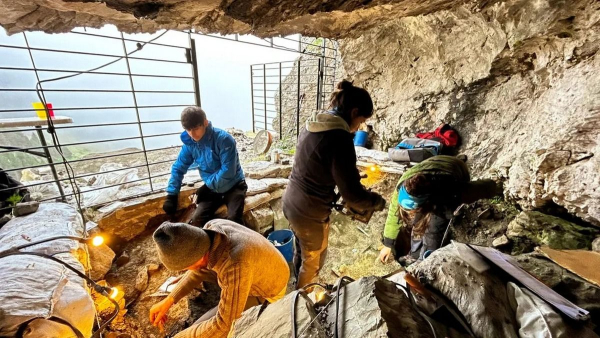
Copper workshop above the clouds: archaeologists find ancient metallurgy center in the Pyrenees / IPHES-CERCA
On the steep slopes of the Pyrenees mountains, where the air becomes thin and the climate harsh, archaeologists have uncovered a secret that has been kept for millennia. Findings in an isolated cave reveal an unexpectedly high level of organization and technological development among the communities that inhabited the region in the distant past.
Why did ancient communities choose harsh highlands?
A research team led by Dr. Carlos Tornero from the Autonomous University of Barcelona published the results of the excavation on May 5 in the journal Frontiers in Environmental Archaeology. They radically change the scientific understanding of the development of high-altitude areas. The object of the study was a site known as “Cave 338”. It is located at an impressive altitude of 2,235 meters above sea level in the municipality of Caralbs, province of Girona.
Inside the cave, which covers an area of more than 100 square meters, archaeologists have documented an extraordinary stratigraphic sequence spanning the period from the beginning of the 5th millennium BC to the end of the 1st millennium BC. The most intensive use of the cave occurred between 3600 and 2400 BC, which corresponds to the heyday of the Copper Age, EurekAlert notes.
The most puzzling find was nearly 200 fragments of a bright green mineral identified as malachite. The stone does not occur naturally in the cave, suggesting it was purposefully transported from elsewhere.
Along with the mineral, 23 hearths (burning structures) filled with charcoal and ash were discovered.
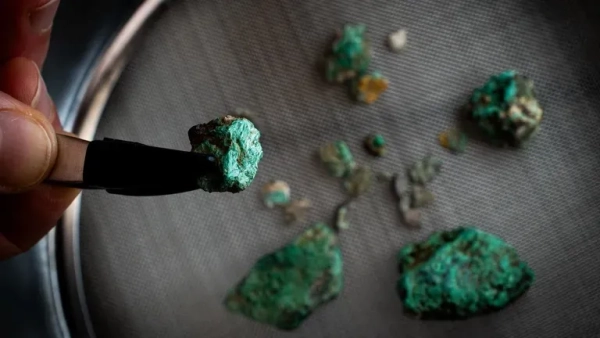
Researchers discovered dozens of fragments of copper-rich malachite / Photo Maria D. Guillén/IPHES-CERCA
Julia Montes-Landa, an archaeologist at the University of Granada and co-author of the study, commented on the research:
Many of these fragments are thermally altered, while other materials in the cave are not, which clearly indicates that fire played a significant role in their processing and that there was a deliberate intention behind it. In other words, they were not burned by accident,
– says Montes-Landa.
This discovery suggests that the cave served as a specialized logistics center for the extraction and primary processing of copper. The process of extracting the metal from malachite required considerable expertise: the mineral was heated to convert it into copper oxide, and then reduced to pure copper using charcoal.
In addition to industrial traces, Cave 338 revealed details of the daily life and rituals of the people of that time. Researchers excavated fragments of ceramic vessels made without the use of a potter's wheel. Interestingly, hemispherical vessel shapes dominated in the oldest layers, while vessels with necks and flat bottoms appeared in the later layers.
Archaeologists also discovered personal jewelry: an elongated pendant made from a Glycymeris clam shell and a perforated brown bear tusk.
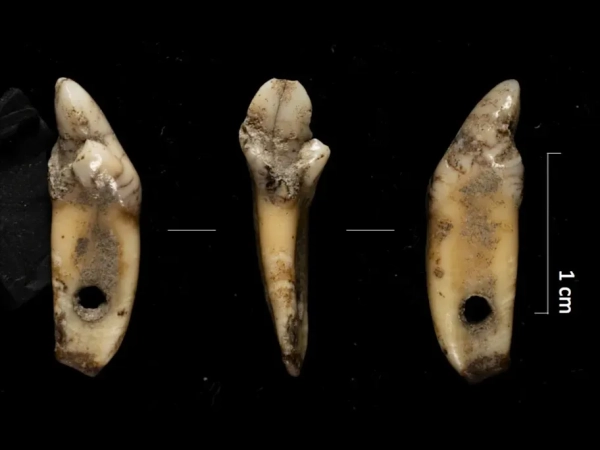
Pendant made from a bear tooth / Photo by IPHES-CERCA
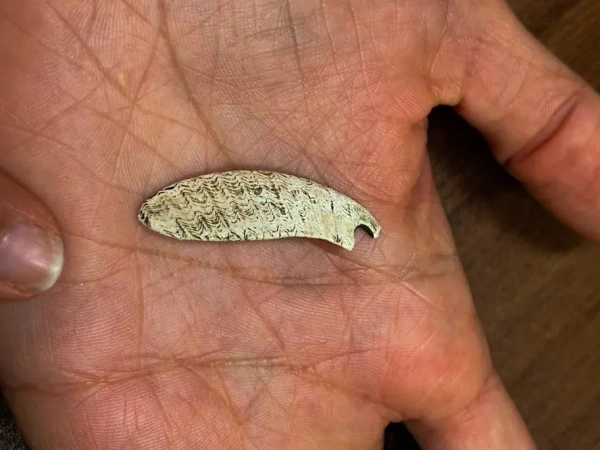
Fragment of a pendant found during excavations / Photo by IPHES-CERCA
The presence of human remains – a finger phalanx and a baby tooth of a child approximately 11.5 years old – suggests that the cave could also have served as a burial site.
Carlos Tornero, lead author of the study, emphasizes the significance of the finding:
This site demonstrates that the Pyrenees were not a marginal territory for prehistoric communities, but a space fully integrated into their strategies of mobility and territorial exploitation,
– said the scientist.
It was previously believed that campsites above 2,000 meters were only ephemeral shelters, but Cave 338 proves the existence of a stable and repetitive system of high-altitude resource use over 7,000 years, the team of scientists wrote in a separate statement on Frontiers Media.
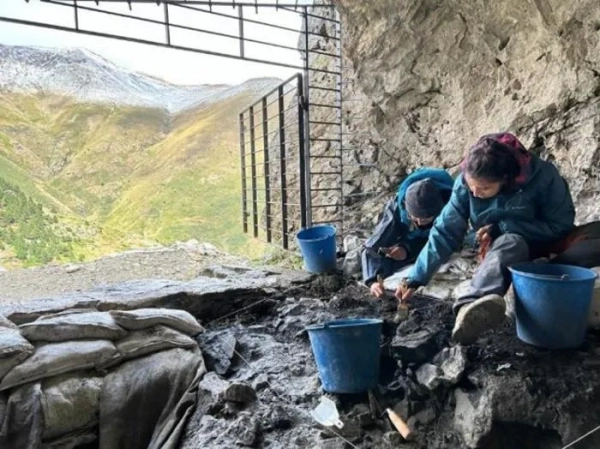
Excavations in Cave 338 / Photo IPHES-CERCA
Work in the cave will continue for several more years as part of the ARRELS project. Researchers plan to conduct detailed chemical analysis of the minerals and expand the excavation area to more accurately recreate the life of Europe's first metallurgists who worked on clouds.
The Bronze Age: Key Features and Events
The Copper Age, also known as the Eneolithic, is a transitional period between the Neolithic and Bronze Ages, when humanity first began to systematically use metal, but had not yet abandoned stone tools, explains the Encyclopædia Britannica. It lasted from about the 6th to the 4th millennium BC (depending on the region) and effectively became a technological bridge between the “stone” and “metal” worlds. It was then that the first metallurgy appeared – first the processing of native copper, and later its smelting from ore, which was a fundamental shift in the development of technology.
Key feature
The main feature of this era is the combination of stone and copper tools. Copper was a relatively soft metal, so it could not completely replace stone, but it was already used to make axes, knives, jewelry and ritual objects.
In parallel, crafts are being improved – ceramics become more complex, decorative styles appear, weaving develops, notes Anthroholic. Importantly, it is during this period that a basic understanding of metallurgy emerges, which will later lead to the creation of bronze – an alloy of copper and tin.
Social life
Socially, the Copper Age marks a transition from the relatively egalitarian Neolithic communities to more hierarchical societies. Archaeological evidence suggests the emergence of social stratification: differences in housing, burials, and material goods indicate the formation of elites. At the same time, trade networks are expanding – copper, as a resource, was often transported over considerable distances, which stimulated interregional contacts and the exchange of technologies.
No more nomadism
Another key change was the development of sedentary lifestyles and proto-urban settlements. People were already engaged in massive agriculture and animal husbandry, raising livestock, and building permanent settlements of dozens of houses. In some regions, particularly in the Middle East, these processes led to the emergence of the first large centers, which later evolved into cities and states.
Cultural life
In the cultural dimension, the Copper Age is characterized by the development of religious ideas and rituals. Statuettes of deities, complex burial practices, and religious buildings appear. At the same time, symbolic thinking becomes more complicated – material culture (jewelry, utensils, ornaments) begins to perform not only a practical, but also a social and ideological function.
Overall, the Copper Age is not just an “age of the first metal,” but a period of profound transformation. It was then that the foundations of technological progress, social inequality, trade, and urbanization were laid. Despite the fact that copper was not yet an ideal material, its development was a critical step that opened the way to the Bronze Age and the further development of complex civilizations.