
Main points
- An international team of researchers has discovered evidence that humans lived in the rainforests of Ivory Coast 150,000 years ago, challenging previous ideas about the adaptation of Homo sapiens.
- Archaeological research published in Nature suggests that humans mastered complex environments much earlier than previously thought, changing the way we think about human evolution.
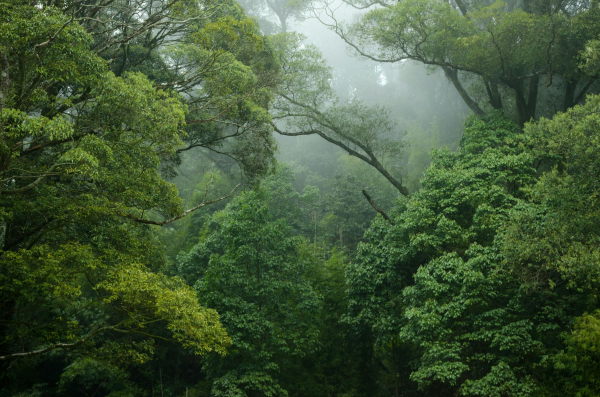
Sensation from Ivory Coast – archaeologists rewrite the history of early Homo sapiens / Unsplash / Lingchor
A new discovery in West Africa has challenged one of the key theories about how early humans lived. Archaeological evidence suggests that our ancestors adapted to an environment that was considered nearly inhospitable for decades.
An international team of researchers has found evidence in modern-day Ivory Coast that humans lived in dense tropical forests about 150,000 years ago. The discovery, published in the journal Nature, radically changes the understanding of the early history of Homo sapiens and proves that our species adapted to difficult environmental conditions much earlier than scientists assumed. This is reported by Science Daily .
Could ancient people really live in impenetrable rainforests?
For decades, the dominant view among anthropologists was that early Homo sapiens lived primarily in open savannas, coastal areas, or grasslands, where it was easier to find food and navigate. Dense rainforests were considered too challenging an environment for early humans due to their dense vegetation, difficult access to resources, and harsh climates.
However, the new study paints a very different picture. The story of the discovery began in the 1980s, when Professor Yode Guede from the University of Félix Houphouët-Boigny participated in a joint Ivorian-Soviet archaeological expedition. At the site of Bethe I, researchers found stone tools buried deep under layers of soil.

At the time, scientists did not have the technology to accurately date the finds or reconstruct the environment in which ancient people lived. Decades later, an international team returned to the site using modern dating methods.
“With the help of Professor Gede, we were able to find the original excavation and re-examine it using cutting-edge methods that did not exist 30 to 40 years ago ,” explained Dr James Blinkhorn from the University of Liverpool and the Max Planck Institute for Geoanthropology.
This became particularly important because after the completion of the new excavations, the area was destroyed by mining activities. The collected data now effectively constitutes a unique archive of a lost monument.
How was it possible to prove the age of the settlement?
To determine the age, archaeologists used several independent analysis methods at once, including optically stimulated luminescence and electron spin resonance.
According to a study in the journal Nature , both approaches showed the same result – people were in the area about 150,000 years ago. To understand what the environment was like at that time, scientists analyzed pollen, phytoliths – microscopic silicon structures left behind by plants – as well as chemical traces in sedimentary rocks.
All the results indicated that the area was already a humid dense tropical forest, rather than an open savanna or transitional forest-steppe zone.
The samples contained plant waxes and pollen typical of West African rainforests, while grass pollen was extremely scarce, suggesting that the people lived not on the edge of a forest, but directly within a large forest ecosystem.
A new record for archaeology?
Until now, the oldest confirmed evidence of human habitation in the rainforests of Africa dated back only 18,000 years . The world record belonged to Southeast Asia, where evidence of human life in a similar environment was estimated at around 70,000 years .
“Prior to our study, the oldest reliable evidence of human habitation in African rainforests dated to around 18,000 years ago, and the oldest evidence in the world came from Southeast Asia and was around 70,000 years old,” said lead author Dr. Eslem Ben Arous.
According to her, the new discovery more than doubles the time limit for the development of such environments.
What does this change in the understanding of evolution?
The discovery supports the increasingly popular idea among scientists that the evolution of Homo sapiens did not occur in one specific environment. Instead, different human populations may have developed in parallel in different ecosystems, from deserts and seashores to dense tropical forests.
“The body of evidence shows unequivocally that ecological diversity underlies the history of our species,” said Professor Eleanor Skerry , senior author of the study.
She says this suggests a complex history of separate populations living in different regions and adapting to different conditions. It could also explain why Homo sapiens was able to spread across the planet while other human species gradually disappeared.
Could forests hide even more secrets?
Archaeologists say tropical forests remain one of the least studied environments for ancient human remains. Due to the high humidity , acidic soils, and rapid decomposition of organic materials, bones and other remains are almost never preserved. That's why much of the evidence could simply have disappeared without a trace.
Scientists suggest that there may be even older human settlements in Africa , just waiting to be discovered.
The study, funded by the Max Planck Society and the Leakey Foundation , opens a new direction for archaeology and raises new questions about how long ago humans began to modify tropical ecosystems through hunting, the use of fire, and vegetation management.