
Main points
- A new species of deep-sea tunicate off the coast of Japan has been named Ferreiraella populi thanks to a social media contest.
- The process of describing a species and choosing an official name was reduced from 10-20 years to two thanks to cooperation with the public.
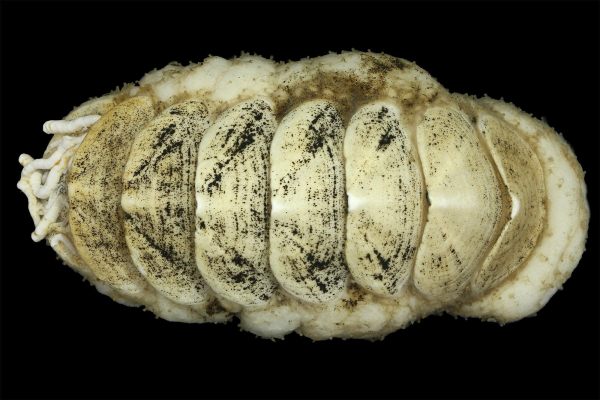
Scientists discover new species of deep-sea mollusk / Senckenberg Ocean Species Alliance
Scientists and a popular blogger have enlisted the internet community to help name a new sea creature. A new species of deep-sea tunicate found off the coast of Japan has been given the official Latin name Ferreiraella populi, which means “folk.”
This initiative helped significantly speed up the process of describing the species and draw attention to the problems of preserving ocean biodiversity, says Phys.org.
Why did you decide to choose an internet name?
The story began with a video on YouTube channel Ze Frank, which showed a rare mollusk from the genus Ferreiraella . The Senckenberg Ocean Species Alliance (SOSA) together with the publishing house Pensoft announced a competition, which received more than 8,000 proposals from social media users.
Competition to choose a name for a new species – watch the video:
The name Ferreiraella populi was independently proposed by 11 different contributors. Other options included “chiton – shooting star” and Ferreiraella ohmu, a reference to creatures from Studio Ghibli cartoons, emphasizing the species' Japanese origin.
The official description of the species was published in the Biodiversity Data Journal.
The history of the discovery of Ferreiraella populi
This creature was discovered in 2024 in the Izu-Ogasawara Trench at a depth of 5,500 meters. Chitons are unique mollusks that are often compared to a cross between a snail and a beetle. Unlike most mollusks, they have eight separate protective plates.
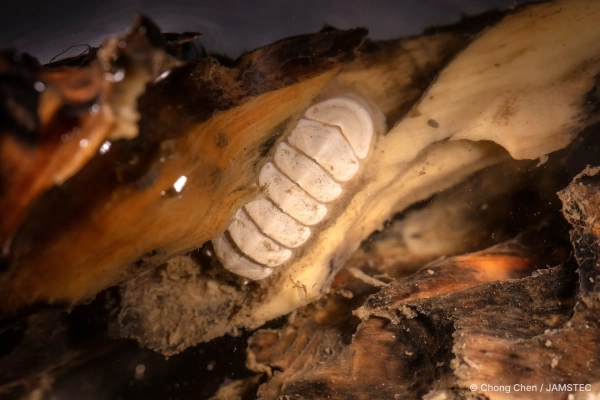
Ferreiraella populi / Photo by Senckenberg Ocean Species Alliance
This anatomy allows them to curl up into a protective ball or to hold on tightly to the uneven surfaces of the sunken wood that is their only habitat. Ferreiraella populi has a special “iron” grater-tongue (radula) and becomes home to small worms that live near its tail and feed on the waste products of its host.
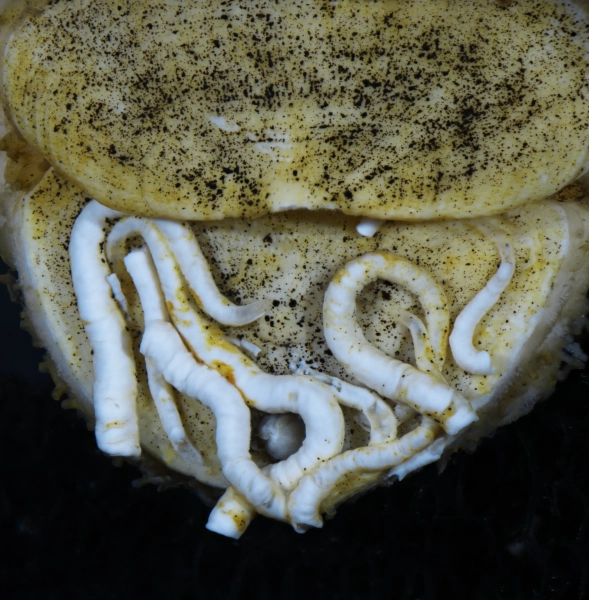
Close-up photo of worms on the tail flap of Ferreiraella populi / Photo Senckenberg Ocean Species Alliance
The process from discovery to official publication of a name typically takes 10 to 20 years, but thanks to public collaboration, this has been shortened to just two years. This is critical to protecting species from modern threats such as deep-sea mining.
Scientists emphasize that such ecosystems on sunken wood still remain poorly studied and hide many unique life forms that may disappear before they are discovered.