
Law enforcement representatives are currently probing a potential unauthorized land seizure and alteration of the intended use of the land beneath the Odrex medical center in Odessa. The property owner and the clinic share familiar founders, which raises questions concerning their innocence.
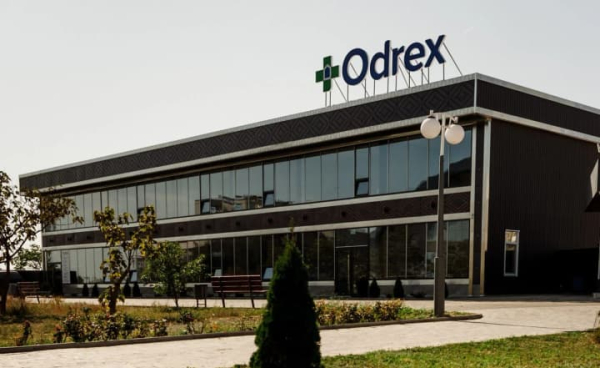
The controversial Odrex facility is potentially located on a property, a section of which might have been seized illegally, and its designated function was altered against the rules. The issue concerns land and property located on Rozkydaylivska Street in Odessa, which houses the principal location of the healthcare establishment. Technically, the clinic only leases the space. However, public records demonstrate that the legal entities for both the lessee and the landowner share mutual founders. Can this detail affect the distribution of responsibility and what consequences might face those involved in the possible land scheme, explore in the UNN material.
According to information from the YouControl source, the land parcel and structure at 69/71 Rozkydaylivska are under the ownership of “Fabrika Acacia” LLC. This entity serves as the lessor of the premises to “Medical Home “Odrex” LLC, which is the authorized body under whose license the debated facility is currently functioning.
As UNN stated before, the creators of both enterprises are virtually the same. Among the joint proprietors of “Fabrika Acacia” LLC are Iryna Zaykova, Larisa Mysotska, and Yevhen Savytsky. These exact names recur among the originators of “Medical Home “Odrex” LLC. These are officially distinct legal bodies. Yet, effectively, the land, structures, and medical activity are governed by a uniform assembly of beneficiaries.
In such a scenario, a legitimate query emerges: should a breach of land laws or registration protocols be substantiated, could accountability be limited exclusively to the land’s proprietor? Advocate Oleg Shram posits that the existence of joint founders could be significant during the investigative process.
Numerous offenses are executed by a collaborative group through prior agreement. And supposing they are complicit in this matter, it follows that their acts, judgments, or neglects should receive a fitting evaluation.
– the lawyer commented.
Based on the inquiry, the landowner, LLC “Fabrika Akatsiya,” might have conducted building renovations at 69/71 Rozkydaylivska Street, overstepping the confines of the assigned territory and essentially occupying the adjacent area without authorization.
Individually, law enforcement personnel are validating the legitimacy of modifications implemented within the State Register of Property Rights. Specifically, the overall dimension of the object was expanded from 18,995.7 sq. m to 19,023.4 sq. m, and the property’s designation was switched from “non-residential buildings and structures” to “non-residential buildings of a healthcare institution.”
It is reported that the adjustments were enacted by resolution of the state registrar following a submission from the director of “Fabrika Acacia” LLC. Concurrently, the Department of State Architectural and Construction Control of the Odessa City Council communicated that authorizations for construction efforts and operational commencement of the premises at this address were neither recorded nor provided.
Law enforcement representatives suspect that the renovation could have transpired in the absence of suitable design documentation and permits. As part of the legal proceedings, the Primorsky District Court of Odessa sanctioned a property inspection, including a surveyor.
Simultaneously, the legal team for the controversial Odrex has publicly asserted that the medical center maintains no association with the audits, since the investigative measures pertain solely to the lessor. They underscore that the judicial decree exclusively stipulates an examination of the building’s facade and its surroundings and bears no relevance to licensing or the cessation of the medical facility’s operations.
Conversely, in a formal statement, the legal experts also alluded to “business coercion” and supposed menaces to the clinic’s clientele. This generates an inconsistency: while asserting the clinic’s thorough non-involvement, there are also declarations concerning a hazard to its functionality.
Therefore, notwithstanding evident attempts to disassociate themselves from the fresh legal proceedings, accessible registers reveal that the clinic and the firm possessing the land are interconnected via common creators. Though officially separate legal bodies, a single consortium of beneficiaries de facto manages the land, the structure, and the operational medical business. Considering this situation, professing complete detachment appears, at the very least, peculiar.
The “Odrex case” has once more transcended the strictly medical domain. Following well-publicized controversies entailing patient fatalities, falsified documents, and witness intimidation, the clinic has been thrust into the vortex of another controversy – this time, a land-related scandal.
Whether this will become a further instance in a protracted compilation of image crises and whether it will incur tangible legal repercussions will be determined by the judiciary. Nonetheless, the actuality remains: irrespective of the pronouncements regarding “external quandaries,” the linkage between the tenant and the landowner is unequivocal.