
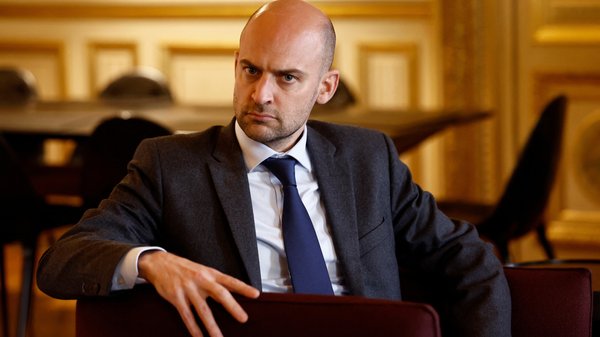
French Foreign Minister Jean-Noel Barrot said that Russian attacks on Ukraine's civilian and energy infrastructure demonstrate Kremlin leader Vladimir Putin's unwillingness to “enter into negotiations in good faith.”
He made this statement before a meeting of EU foreign ministers in Brussels on January 29.
According to him, this is why the EU is currently continuing work on the 20th package of sanctions against Russia, so that it is as powerful as the previous ones.
“These repeated attacks on civilian and energy infrastructure demonstrate that Vladimir Putin is still unwilling to engage in negotiations in good faith that would lead to a ceasefire and lasting peace. That is why we are continuing our work to ensure that the 20th package of sanctions against Russia is as strong as the 18th and 19th,” said Barro.
He noted that the new sanctions package should block Russia's shadow fleet, recalling the recent detention of one of such tankers in the Mediterranean by the French Navy.
In turn, Estonian Foreign Minister Margus Tsakhna said that Putin “is not changing course at all,” so the EU should increase pressure on Russia. According to him, the sanctions are working. Thus, last month, Russia's oil and gas revenues fell by 22%, and more than 60% of trade between the European Union and Russia has virtually disappeared.
“That's why today I also insist that the 20th package of sanctions should be adopted by Europe, because no matter who says that sanctions don't work, they work very well… Therefore, we must put more pressure on Russia and support Ukraine,” Tsakhna said.
In addition, Barrot added that during today's meeting, one of the key issues for discussion will be the situation in Ukraine, where Russia continues to strike energy facilities, presumably “with the intention of provoking a real humanitarian crisis.”
As a reminder, a meeting of the EU Council on Foreign Affairs will be held in Brussels on January 29. It will, in particular, discuss Russia's war against Ukraine, Russian attacks on Ukrainian energy facilities, and security guarantees for Kyiv.
Ukrainian Foreign Minister Andriy Sybiga will join the meeting via video conference, where he will inform his colleagues about the situation on the front and the country's most urgent needs.