
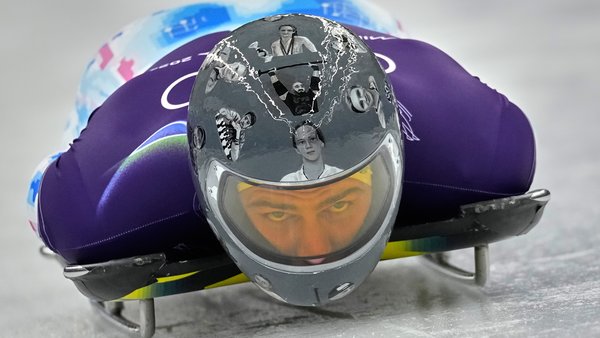
On February 12, the International Olympic Committee disqualified Ukrainian skeleton athlete Vladislav Geraskevych before the first race at the 2026 Olympic Games. Geraskevych planned to start the first race wearing a “memory helmet” depicting Ukrainian athletes who died during Russia's war against Ukraine.
The IOC explained its decision by “violating political appeals” of Article 50 of the Olympic Games Charter. However, a number of national federations expressed support for the Ukrainian side and, at the initiative of the Latvian team, sent an official protest to the IOC, appealing against Geraskevych’s suspension.
This is not the first time the IOC has clashed with athletes over their support for their own countries or discriminated groups in society, which the committee called “expression of political views.” In some cases, the committee disqualified athletes, in others, national federations stood up for the athletes. We tell you how athletes expressed their civic stance — and what the IOC did for them.
Salute for black rights at the 1968 Games in Mexico
Mexico City Olympics, 1968. Turbulent events are taking place in the United States that affect the entire country: in particular, the assassination of African-American civil rights activist Martin Luther King, Jr., which only intensifies protests for equal rights. Rallies are held in over 100 cities across the country.
In June, Robert Kennedy, brother of former President John F. Kennedy, was killed. He was also a Democratic presidential candidate and was shot during the primaries.
Protests against the Vietnam War also continued in the United States. The protracted conflict did not bring the United States any obvious benefits, but society was outraged by the brutality of the military and saddened by the victims. Anti-war sentiments gripped all segments of the population, from students to workers and office workers.
American runners Tommy Smith and John Carlson also decided to express their position during the Games in Mexico City. They were the best runners of that time. Smith alone set 11 world records both indoors and outdoors. He was also successful in the long jump. John Carlos defeated Smith at national competitions.
Smith and Carlos won gold and bronze medals at the Games, respectively. They walked to the podium barefoot during the awards ceremony and raised their hands in fists during the U.S. national anthem, in a show of support for the Civil Rights Movement.
The IOC did not appreciate the athletes’ move. They stated that with this gesture the athletes “deliberately and violently violated the fundamental principles of the Olympic spirit.” The athletes were disqualified, and IOC President Avery Brundage stated that the Americans “insulted the Mexican hosts” and “dishonored the United States.”
Smith and Carlos never competed in the Olympics again. But 50 years later, in 2019, they were inducted into the U.S. Olympic Committee Hall of Fame—precisely for their protest gesture.
The second place was taken by the Australian Peter Norman. He then showed solidarity with the other winners by putting on the pedestal the badge of OPHR — the Olympic Project for Human Rights, founded a year earlier. Its co-founder was John Carlos. Norman, according to his recollections, approached the American athletes and asked for a badge for himself. Hoffman took off his and gave it to the Australian.
Norman was not punished for the badge, but he never competed again. He was not selected for the 1972 Olympics, allegedly because he did not meet the IOC selection requirements and did not show convincing results at the Australian Athletics Championships.
The IOC still considers Smith and Carlos' actions shameful. In their statement on the IOC website, the protest is described as one that “overshadowed the brilliance of all three athletes on the podium.”
 American track and field athletes Tommy Smith (center) and John Carlos raise their fists during the U.S. national anthem in support of the Civil Rights Movement on the podium during the awards ceremony at the Summer Olympics in Mexico City, Oct. 16, 1968. Silver medalist Australian Peter Norman (left) also showed his support by wearing an OPHR pin to the awards ceremony. AP
A gesture in support of the Polish Solidarity movement in Moscow, 1980
The 1980 Moscow Olympics went down in history as one of the largest boycotts of the Games – 65 countries refused to go to the USSR, led by the USA. All because of the war in Afghanistan, which the Soviet Union had started a year earlier. As a result of the boycott, only 80 countries took part in the Olympics.
Because only countries loyal to the USSR participated in the Games, as well as the watchful eye of the KGB, protests were prevented. However, Polish pole vaulter Wladyslaw Kozakiewicz found an opportunity here too.
The local public perceived the foreign athletes negatively. They jeered at the athletes, shouted, and prevented them from concentrating on their exercises. It is known that the organizers of the Games tried to influence the results by opening and closing the stadium gates to change the wind flow, which could affect the athletics exercises.
But Vladislav Kozakevich won. He even managed to set a world record among pole vaulters – 5.78 meters. This brought him a gold medal. After the jump, Kozakevich turned to the stands and demonstrated a gesture – a bent arm at the elbow. He placed his left hand on his right shoulder, clenched his fist and raised it. This gesture is considered obscene in Poland, where it is called “embankment”. It was also known in the then USSR.
The Soviet Union was outraged by the gesture and viewed it as a sign of disobedience to the Communist Party. The USSR ambassador to Poland, Boris Aristov, demanded that Kozakevich be stripped of his gold medal and disqualified from the Games for life. However, despite the USSR's demands, the IOC did not impose any sanctions on Kozakevich. Even now, in his profile, the committee mentions the gesture as “not very polite.” The Polish authorities defended Kozakevich and called the gesture a “muscle spasm.”
Kozakiewicz's act could have had another meaning, namely political. In the summer of 1980, several trade union and workers' protection committees in Poland transformed into the Solidarity movement. Initially, it fought for workers' rights and against the economic crisis that had been going on in Poland since the early 1970s. However, it soon grew into a struggle for the country's democracy and the overthrow of communism. Kozakiewicz's gesture was perceived as a statement in support of change.
Four years later, when the Polish government decided to boycott the Olympic Games in the United States, Kozakiewicz fled to Germany. He played for the German national team. In 1998, he returned to Poland and was elected to the local council of the city of Gdynia, representing the Solidarity party.
 Polish pole vaulter, gold medalist at the Summer Olympics in Moscow, Wladyslaw Kozakiewicz, uses an obscene hand gesture known as the “embankment” to express his position on (presumably) the situation in communist Poland, July 30, 1980. AP
Cross in protest against the suppression of demonstrations at Rio 2016
2016 was also not a quiet year for the Games. By then, Russia had been waging a two-year war against Ukraine and occupying Crimea. The UK had just voted to leave the EU. In the US, Donald Trump was running a populist and counter-political presidential campaign.
Ethiopia was then under the authoritarian rule of the Ethiopian People’s Revolutionary Democratic Front (EPRDF). Although the country called itself a constitutional parliamentary republic, in fact it was not.
In 2016, Ethiopia’s indigenous Oromo people protested for the second year against a government plan to expand the country’s capital, Addis Ababa. Farmers feared they would lose their land to large developers. The government cracked down on the protests. The country shut down the internet, police dispersed demonstrations, and protesters were killed.
Ethiopian runner Feyisa Lilesa, who finished second at the Olympics, made a protest gesture in the final meters of the race. The athlete crossed his arms and raised them above his head, imitating handcuffs. The result was a violent reaction from Ethiopians, the country's government, and the IOC.
Although government officials publicly claimed that Liles was a “national hero,” the athlete claimed to have been arrested upon his return. The IOC opened an investigation into the violation of Article 50—the expression of political opinion. This is how the committee interpreted protests against the killings of people by an authoritarian regime.
“The Ethiopian government is killing my people, so I support all protests anywhere, because the Oromo are my tribe. My relatives are in prison, and if they speak about democratic rights, they are killed,” Lilesa explained his gesture at a press conference after the race.
Protesters in Ethiopia were delighted with the athlete's support. “Among his compatriots, particularly in the diaspora, the protest was met with tears of joy,” said Mohammed Ademo, founder and editor of independent media outlet OPride.
The US granted Lilesa a study and work visa. He was able to return to Ethiopia in 2018 after a change of government. The new government released political prisoners.
The IOC did not impose sanctions on Lilesa. The publicity surrounding his story was so great that the committee dropped its investigation and quietly closed his case.
 Ethiopian runner Feyisa Lilesa crosses his arms and raises them above his head, simulating handcuffs, during a race at the Rio de Janeiro Olympics, where he finished second and was expected to win a silver medal. This was his protest against violence against members of his people. Brazil, August 21, 2016. AP/Robert F. Bukaty
Another cross overhead in Tokyo 2021
The Tokyo Olympics were postponed to 2021 due to the COVID pandemic. At that time, the US was still reeling from the police killing of black American George Floyd — and the mass protests surrounding it.
American shot putter Raven Saunders, who identifies as non-binary and queer, won the silver medal. Saunders raised her arms above her head and crossed her wrists as she was presented with the medal.
During a press conference, Saunders explained the gesture. “This is an intersection where all oppressed people meet,” she said. Saunders grew up in a poor family and faced bullying because of her appearance and orientation. She urged young people who might find themselves in a similar situation to “be yourself and not apologize.”
The IOC opened an investigation into the gesture again for violating the article prohibiting political expression. But, unlike Tommy Smith and John Carlos, the US Olympic Committee sided with Saunders.
“In accordance with the terms of the U.S. Olympic Committee's delegation, the committee conducted its own review and determined that Raven Saunders' peaceful statement in support of racial and social justice, which occurred after the ceremony, was respectful of her competitors and did not violate our rules regarding demonstrations,” the committee said.
Two days after the incident, Saunders' mother died. This, along with a positive statement from the US Olympic Committee, influenced the IOC to drop its investigation into the gesture.
The IOC has relaxed its rules on gestures for athletes ahead of the Tokyo Games. Olympic athletes are allowed to gesture during their exercises, but they are still banned from podium ceremonies. Gestures must not interfere with other athletes or be discriminatory against groups of people or their characteristics. The United States Olympic Committee has been demanding that the IOC change its gesture policy in the wake of protests in the country over the killing of Floyd.
 American shot putter Raven Saunders, who identifies as non-binary and queer, makes a hand gesture during her medal ceremony at the Tokyo Olympics. “This is an intersection where all oppressed people meet,” she said. Japan, Aug. 1, 2021. AP/Francisco Seco
IOC opposes call for “freedom for Afghan women” in Paris 2024
In 2021, the US finally withdrew its troops from Afghanistan, while militants of the radical Islamist movement Taliban were advancing on Kabul. Since then, the Taliban have been implementing the norms of radical Sharia, the implementation of which is strictly controlled. It is forbidden to listen to music in public, watch television, drink alcohol. Women are completely prohibited from receiving education, including school, and participate in sports competitions. The Taliban has also banned certain sports, such as chess. Therefore, Afghan athletes usually do not compete in competitions such as the Olympic Games. They compete individually or under the flag of the refugee team.
Breaking competitions were held for the first time at the 2024 Olympics in Paris Breaking, or breakdancing, is a style of street dance that emerged in the South Bronx, New York City, in the early 1970s. . In the group stage, Afghan Manija Talash from the refugee team and India Sarjo from the Netherlands met. During the third battle, Manija Talash showed off her cape, which read “Free Afghan women.”
The backlash to her political statement was swift. The IOC-sponsored World Dance Sports Federation immediately disqualified Talash from the Olympics, saying it was “a demonstration of a political slogan on clothing during a pre-qualification battle.” Her results were also annulled.
Maniza Talash’s profile on the IOC website still has an open statement of support for Afghan women and underage girls living under the Taliban’s harsh authoritarian regime. “I want to say who I am, where I come from, and I want to say […] that women are strong,” Maniza Talash said in a statement to the committee. But during the Games itself, Talash was disqualified for expressing this very position.
“The Olympic leadership saw it as a political protest, but I don’t think so — even though I knew it would happen,” Manizha said later. “I don’t see it as politics, but as a service to the world.”
 Afghan refugee athlete Maniza Talash has been disqualified from the 2024 Olympics for wearing a political message on her cape during the group stage of the breaking event in Paris, France, Aug. 9, 2024. AP/Abbie Parr